The purchase price of an electric cargo bike varies greatly depending on the model and its options. Generally, expect to pay a minimum of around CHF 2,500–3,000 for an entry-level model, and rather CHF 4,000–6,000 for a well-equipped family cargo bike.
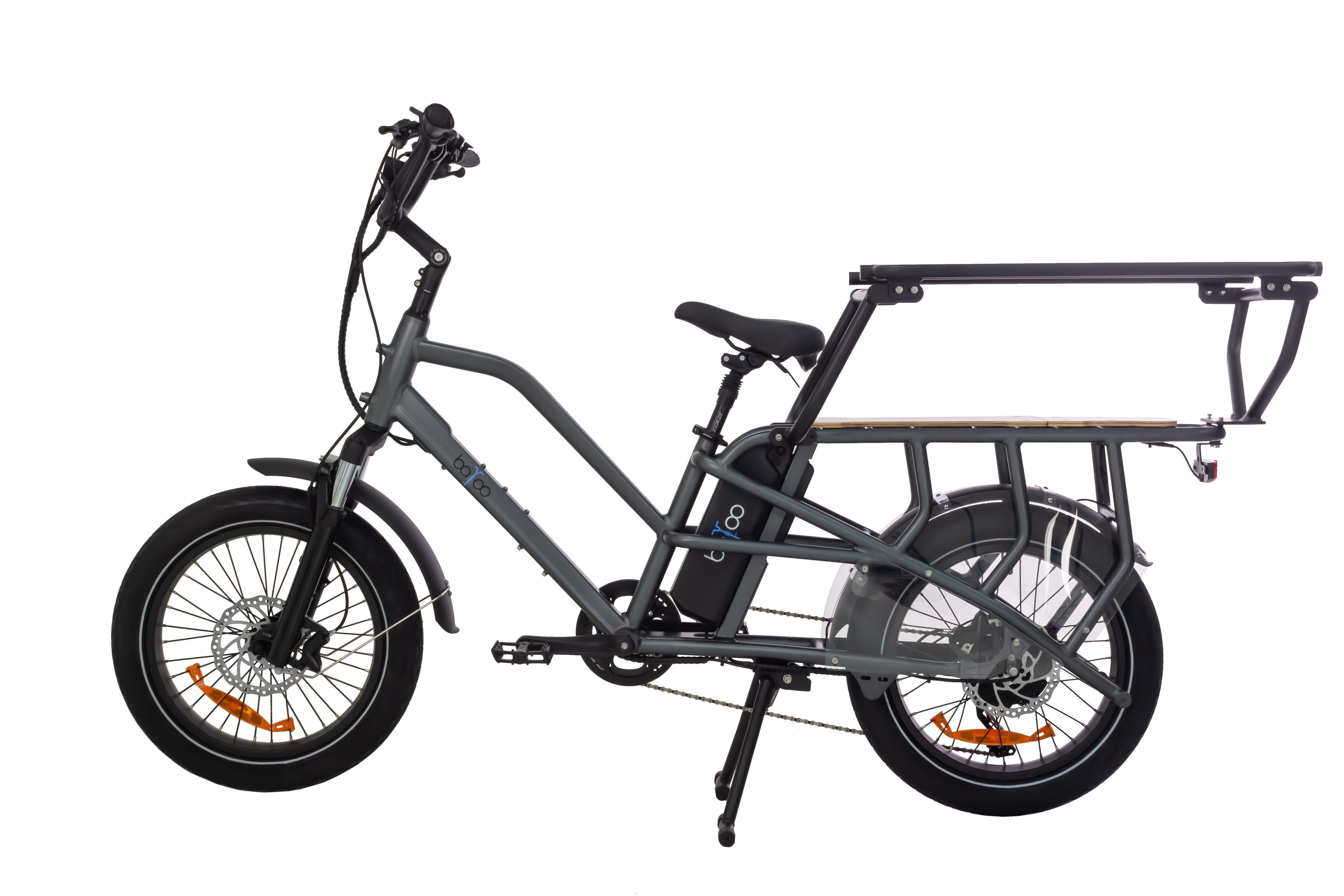
For example, the compact front-loader Batoo Colibri is priced at CHF 3,599 (2 children, 170 kg load) while a longtail like the Libbri starts at CHF 3,990. At the higher end, some professional cargo bikes (e.g., Urban Arrow Cargo/Tender) can reach CHF 8,000–10,000.
Therefore, a budget of around CHF 4,000–5,000 should be planned for a quality cargo bike, and up to CHF 6,000 or more for a very high-end model.
-
Price examples (CHF): Tern Quick Haul D8 longtail – CHF 2,499; Batoo Colibri front-loader – CHF 3,599; Tern GSD S10 front-loader – CHF 5,599; Urban Arrow Tender (cargo pick-up) – CHF 9,999. These examples show the price range (from entry-level to very high-end) while remaining within a reasonable bracket.
Different types of cargo bikes and their prices

Electric cargo bikes come in several formats, with costs typically linked to their size and capacity:
-
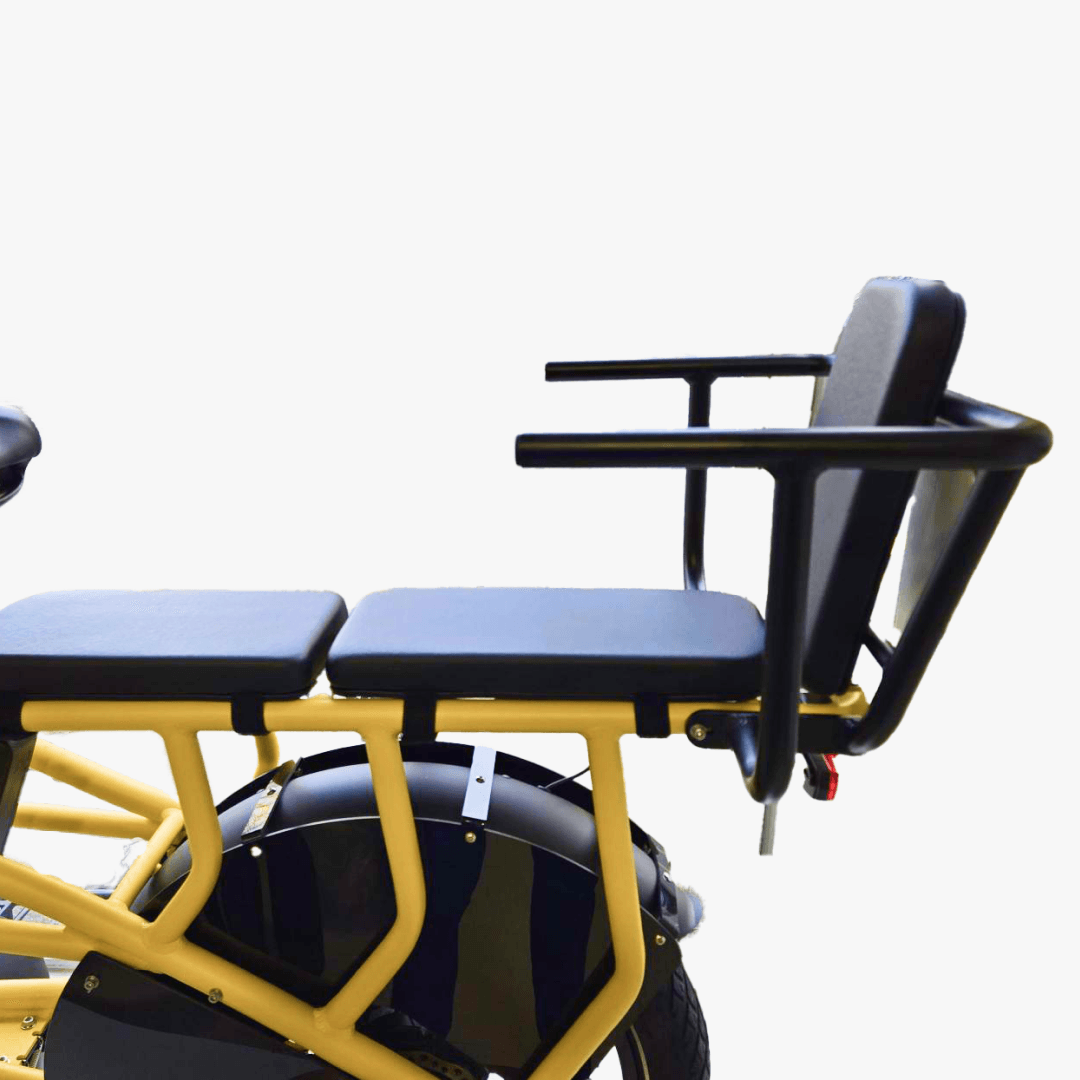
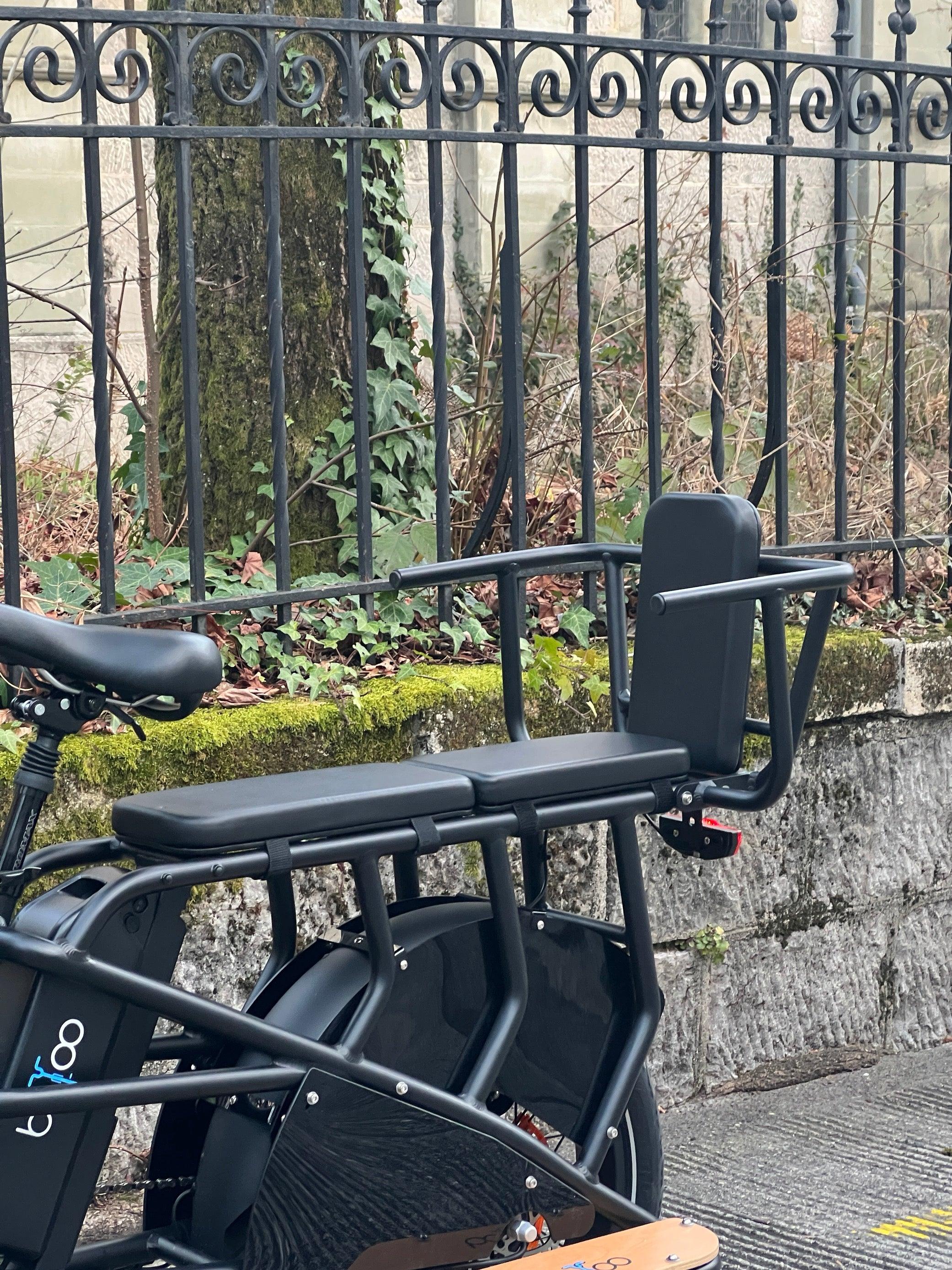
Longtails (extended frame): these are bikes with an extended rear. They are often more affordable. For example, the Tern Quick Haul D8 (compact longtail) sells for around CHF 2,499.
-
Front-loaders (two wheels, front box): larger, they cost a little more. The Batoo Colibri (Swiss-made front-loader) with two seats costs CHF 3,599. The high-end Tern GSD S10 front-loader is CHF 5,599.
-
Tricycles (three wheels, front box): generally the most expensive due to their large capacity. For example, the Urban Arrow Cargo (family tricycle) approaches CHF 8,000–9,000, and the Tender model (cargo with large box) can exceed CHF 10,000.
-
Compact or "pick-up" cargo bikes: new intermediate formats. The Tern Quick Haul P9 (compact longtail) is CHF 3,199. They offer a compromise between bulk and capacity.
Thus, depending on the format and capacity (number of children or loads), prices typically range from ~CHF 2,500 to CHF 8,000 for consumer models. High-end brands (Riese&Müller, Urban Arrow, Douze, etc.) tend to be at the higher end of this range.
Why a cargo bike costs more than a classic bike

Several factors explain why electric cargo bikes are much more expensive than a "normal" bike:
-
Reinforced materials and structure: the frame is designed to support very heavy loads (often 150–200 kg), which requires high-strength steel or aluminum and oversized parts.
-
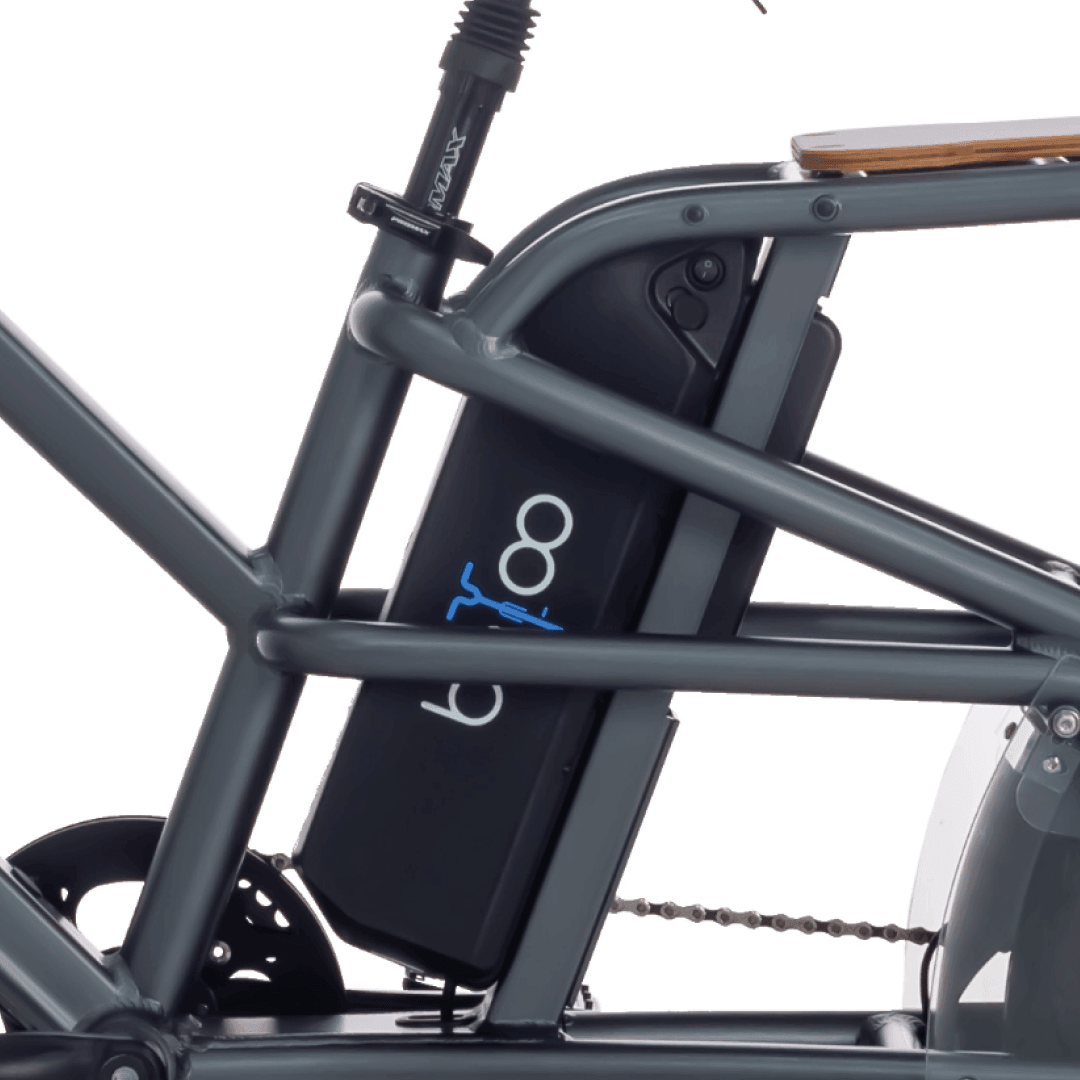
Advanced electrical technology: these bikes are equipped with a powerful motor (250–500 W) and a high-capacity battery (500–1000 Wh) to pull loads. The cost of the motor (Bosch Cargo, Shimano EP8, etc.) and battery is significantly higher than on a classic e-bike.
-
Superior quality components: high-performance hydraulic disc brakes, robust transmissions (multiple gears, carbon belts), and accessories (belts, safety bars, covers). These safety and comfort elements drive up the price.
-
Research and development: cargo bikes often involve more R&D (stability, specific regulations, modular integration, TÜV certification) than standard bikes.
In summary, the embedded technology (motor, battery, assistance) and the robustness required to transport heavy loads justify the additional cost. "Electric cargo bikes are more expensive due to their advanced technology: complete motor, battery, and electric assist system, as well as additional comfort and safety equipment."
Additional costs: maintenance, accessories, insurance

In addition to the purchase price, operating expenses must be anticipated:
-
Regular maintenance: like a normal bike, a cargo bike requires chain lubrication, brake adjustment, tire inflation, etc. The cost of an annual service is comparable to a high-end e-bike (approximately CHF 200–300 per year for 1,000–2,000 km). For example, the CARVELO study estimates approx. CHF 250 for maintenance for every 1,000 km travelled (chain, sprockets, tires, suspension, lighting). For 2,600 km/year (intensive family use), this represents ~CHF 500–600/year.
-
Battery: a battery loses about 5% capacity per year. It needs to be replaced once every 5–7 years (cost ~CHF 1,000–1,500 depending on capacity). This item therefore represents ~CHF 150–300/year spread over 7 years.
-
Accessories: child seats (approx. CHF 100–200), protective cover (CHF 100–200), modular baskets and boxes (a few hundred CHF), etc. These options can easily add CHF 200–400 to the base price.
-
Insurance: theft/damage insurance is recommended to protect this investment. In Switzerland, specialized bike insurance typically costs CHF 50–100/year.
In the end, a cargo bike costs approximately CHF 0.5 to 0.8 per km in expenses (maintenance + depreciation) depending on use. This cost remains much lower than that of a car, making the cargo bike profitable in the long term.
Aid and subsidies
In Switzerland, numerous local aids encourage the purchase of electric bicycles (including cargo bikes):
-
Municipal/cantonal subsidies: several cantons (VD, GE, NE, etc.) and cities (Lausanne, Montreux, Nyon, etc.) offer a percentage of the purchase price. In Lausanne, the subsidy dedicated to cargo bikes and longtails can reach CHF 1,000 (conditions and amounts to be checked before purchase). Official information on équiwatt – City of Lausanne.
-
Cantonal information: the State of Vaud offers a list of local aids (municipalities) for the purchase of electric bicycles: see the page Electric bicycle | State of Vaud.
These aids can significantly lower the final price (e.g., CHF 3,599 → CHF 2,599 after subsidy in Lausanne for the Colibri). It is therefore advisable to inquire about cantonal and municipal subsidies before purchasing.
Reducing the acquisition cost
To reduce the initial investment:
-
Used: buying a used (refurbished) cargo bike can lead to significant savings. A used cargo bike often sells at a 30–50% discount compared to new. For example, a new cargo bike around €4,500 can be found for €2,000–3,000 second-hand. Refurbished specialists offer up to –40% on almost new equipment. However, it is necessary to check the battery's condition (mileage and health) and take advantage of the after-sales service of a professional if possible.
-
Promotions and packages: some retailers offer promotional packages (bike + accessories at a reduced price) or launch offers. It may be worthwhile to wait for bike shows or the end of the season.
-
Installment payments: several brands offer leasing options or monthly payments (24–36 months) without additional fees, facilitating the purchase.
In summary, an electric cargo bike represents a significant investment, but it remains profitable in the long term given the savings on a car. The initial cost can be mitigated by subsidies, second-hand options, or promotional offers. Batoo Bike, like other Swiss brands (Libbri, Riese&Müller, Urban Arrow…), strives to offer good value for money in the range of Swiss cargo bikes, to make this mobility accessible to families and professionals.
FAQ - Price of an electric cargo bike (Switzerland)
What is the average price of an electric cargo bike?
For family use, expect approximately CHF 4,000 to CHF 6,000 for a well-equipped model (longtail or front-loader). Entry-level models start around CHF 2,500–3,500, while some professional cargo bikes or tricycles can exceed CHF 6,500.
Why are electric cargo bikes more expensive than classic bikes?
Their reinforced frame supports heavy loads, the motorization has more torque ("cargo" motors), the battery has a large capacity, and the brakes/wheels/transmissions are sized for the weight. Added to this are R&D, testing, and safety accessories (covers, belts).
What factors affect the price of an electric cargo bike?
The type (longtail < front-loader < tricycle), the motorization (torque, torque sensor), the battery capacity (e.g., 500–800 Wh, dual battery), the equipment (carbon belt vs. chain, 4-piston brakes, rain cover, child bars), the chassis quality, and the service/warranty.
Are there financial aids in Switzerland?
Yes, in several cities and cantons (e.g., contributions of 10–20% with a cap). Conditions vary depending on the place of residence and the type of bike (new/used). Check the mobility pages of your municipality/canton before purchasing.
Is it a good idea to buy a used electric cargo bike?
Yes, if you check the battery (health status, cycles), the straightness of the frame, the brakes/wheels, and the history (crashes, revisions). Used bikes often allow for –30 to –40% off new prices. Prioritize a trade-in/overhaul by a professional and do a test ride.
How much does it cost to maintain an electric cargo bike?
Expect ~CHF 150–300/year (adjustments, transmission, pads, tires) depending on mileage. A battery may need replacing after 5–7 years (budget often ~CHF 600–1,200 depending on capacity). If needed, add theft/damage insurance (approximately CHF 60–150/year) and some accessories (seats, cover, baskets).