What range can you realistically expect from an electric cargo bike when it's carrying two children, school bags, groceries, and still has to climb several hills?
The answer is rarely the maximum figure displayed on a product sheet. Battery capacity is important, but total weight, terrain, temperature, frequent stops, assistance level, and even tire pressure can significantly alter the distance traveled.
To accurately estimate the range of a loaded cargo bike, the best indicator is your actual consumption in Wh/km. Once this value is known, it becomes much simpler to compare a 720 Wh battery with a 1,440 Wh dual battery and determine the necessary margin for your family trips.
How many kilometers can an electric cargo bike travel?
There isn't a single range valid for all cargo bikes.
Two families using the exact same model can achieve very different results if:
- one carries 40 kg and the other 90 kg of load;
- one primarily rides on flat terrain and the other in a hilly city;
- one uses moderate assistance and the other the maximum level;
- one makes a continuous journey and the other stops every 500 meters;
- one rides in summer and the other in winter temperatures;
- the tires are not inflated to the same pressure.
The range advertised by a manufacturer should therefore be considered a value obtained under certain conditions, and not a guaranteed distance for every user.
Why does the advertised range differ from the actual range?
A battery stores a determined amount of energy, expressed in watt-hours or Wh. The bike then uses this energy to provide electrical assistance.
The harder the motor has to work, the more consumption per kilometer increases.
On a cargo bike, several elements particularly stress the motor:
- the mass of the bike itself;
- the rider;
- children;
- groceries and school bags;
- accessories;
- climbs;
- numerous starts in the city;
- a high assistance level.
This is why it is more relevant to think in terms of energy consumption than in terms of a simple advertised number of kilometers.
Key factors that reduce a cargo bike's range
1. Total weight carried
The motor needs to provide more energy to accelerate a large mass, especially when starting and going uphill.
With a family cargo bike, the difference can quickly become significant.
You need to consider:
- the rider;
- children;
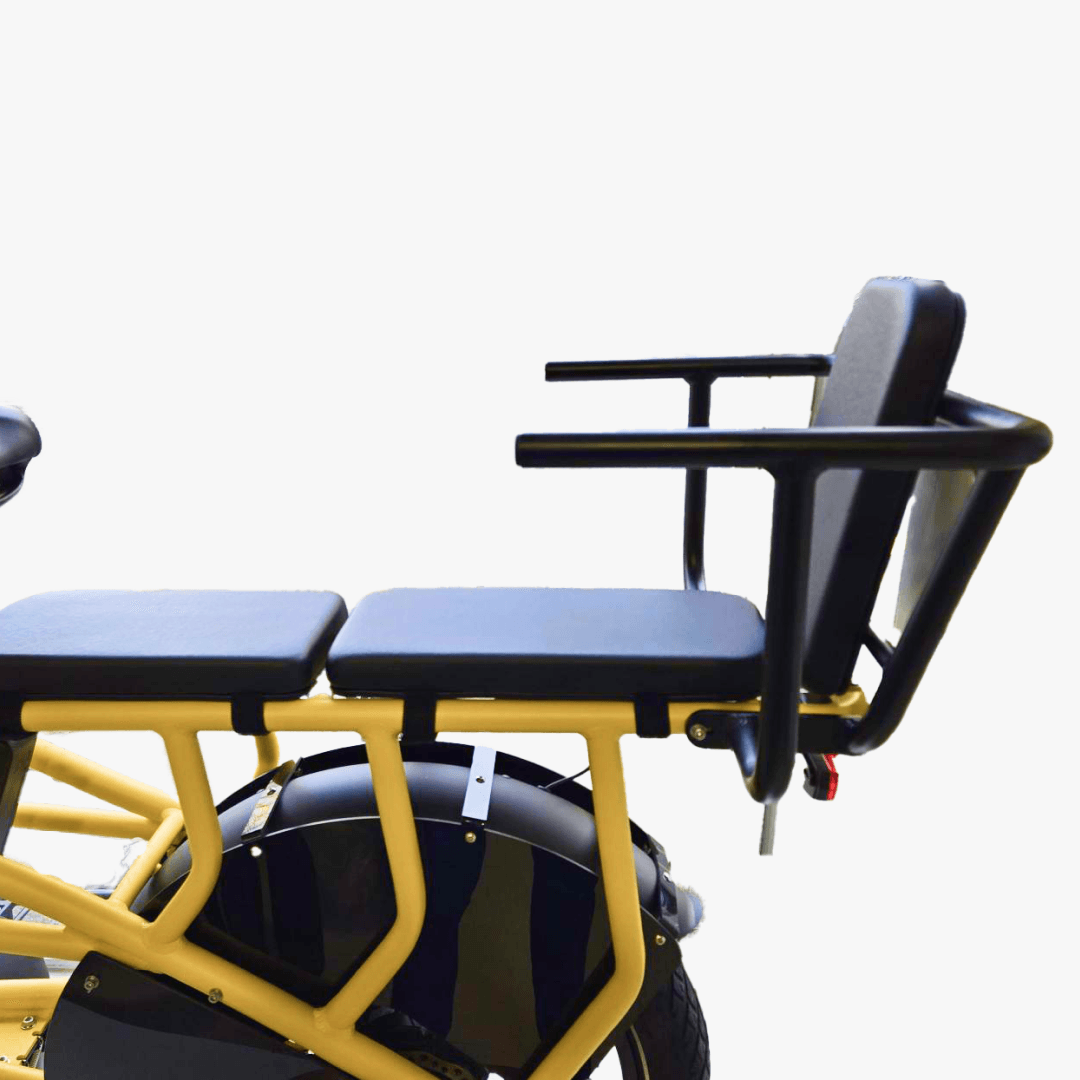
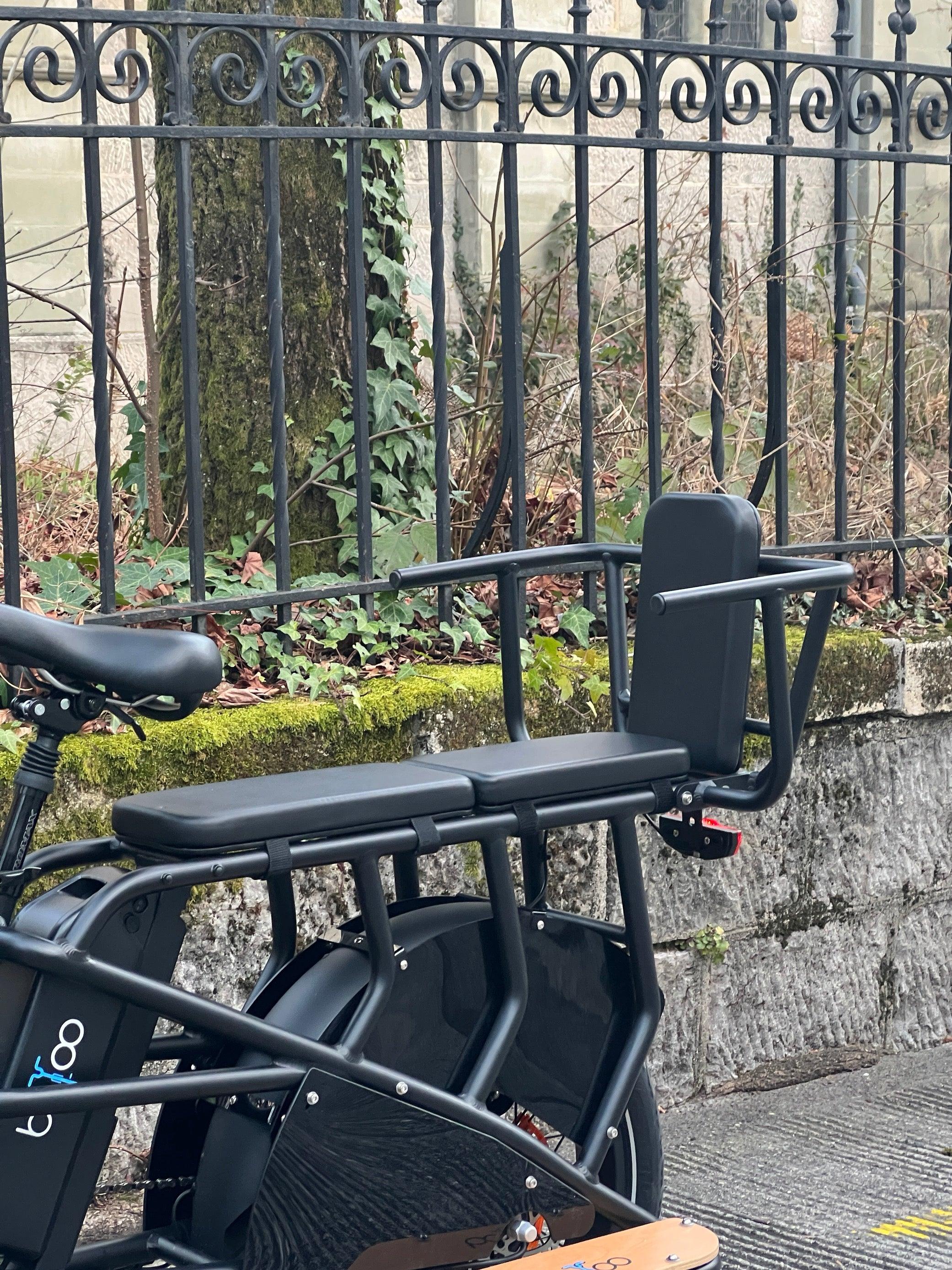
- seats and benches;
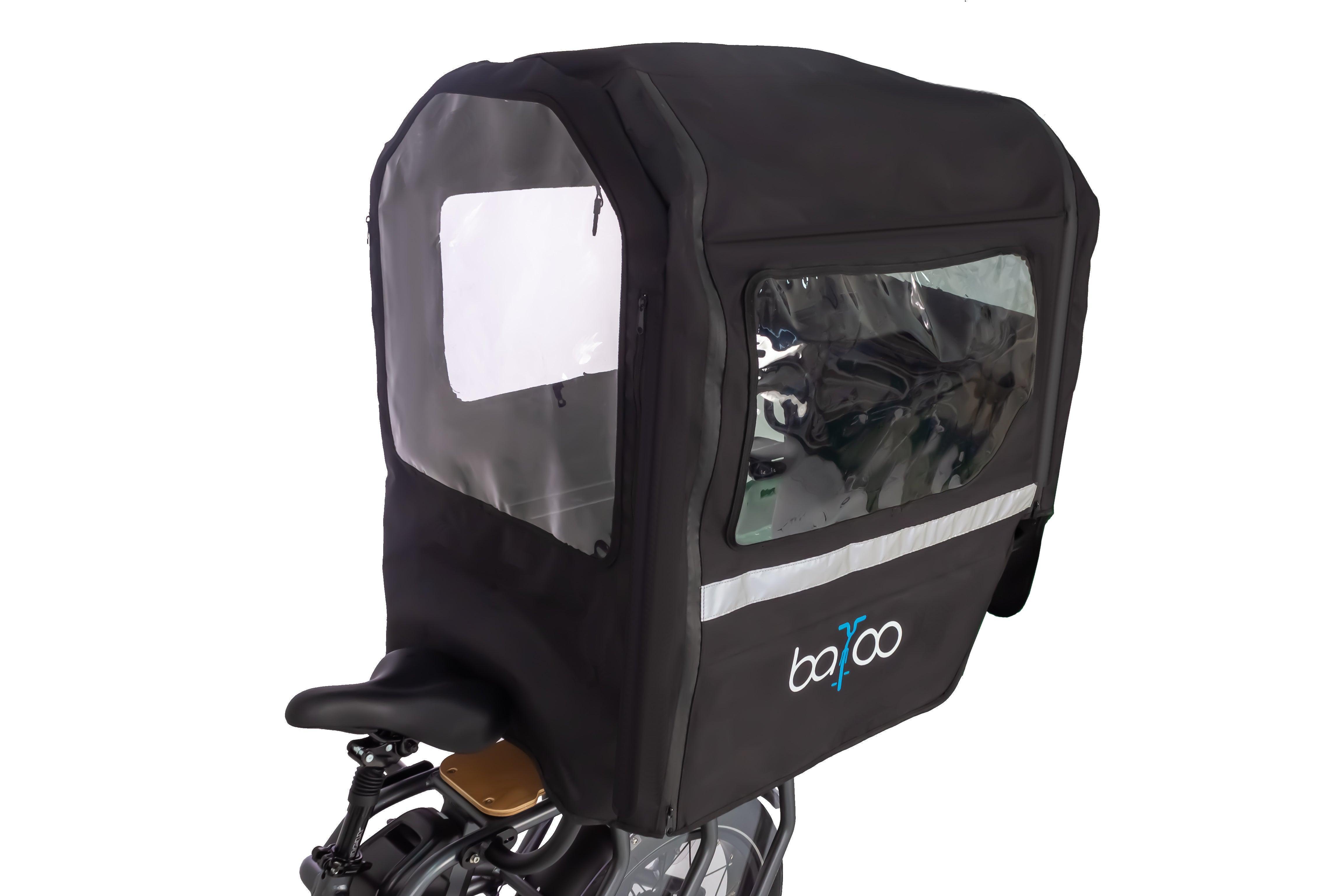
- rain cover;
- school bags;
- groceries;
- panniers;
- locks;
- other accessories.
This doesn't mean you should remove safety equipment to gain a few kilometers. The main goal is to avoid carrying unnecessarily heavy items for several days.
2. Hills and elevation changes
Terrain is one of the most significant factors for a loaded cargo bike.
On flat ground, the motor primarily helps maintain speed and compensate for accelerations.
On an uphill climb, it also has to move the entire mass against gravity. The steeper the slope and the more loaded the bike, the higher the consumption.
For a daily commute involving several hills, it's therefore better to evaluate the range on that route rather than on a test conducted only on flat terrain.
3. Frequent starts and stops
Family trips often involve numerous stops:
- traffic lights;
- intersections;
- school;
- daycare;
- shops;
- pedestrian crossings;
- urban traffic.
Restarting a loaded cargo bike requires more energy than maintaining a relatively constant speed.
An urban route of 20 km with many stops can therefore consume more energy than a smooth route of the same length.
4. Assistance level
The more assistance you request from the motor, the more energy the battery provides.
The maximum level can be very useful:
- on a climb;
- with a heavy load;
- to restart on a slope;
- when traffic requires a quick and controlled start.
But it is not always necessary on a flat section or downhill.
Changing the assistance level according to the terrain generally allows for more efficient use of available energy without compromising safety.
5. Gear selection
The motor operates more efficiently when the rider uses an appropriate gear.
When starting or climbing, select an easy enough gear before the effort becomes significant.
Avoid starting in too high a gear, especially when the bike is loaded.
A consistent cadence and proper gear shifting reduce stress on the motor and drivetrain.
6. Temperature
Lithium-ion batteries are sensitive to temperature.
In cold weather, their available performance may temporarily decrease. It is therefore normal to observe less range in winter than in summer for an identical journey.
When possible, store the battery at room temperature and install it on the bike shortly before departure on particularly cold days.
7. Tire pressure
Under-inflated tires increase rolling resistance and can therefore increase consumption.
However, pressure must always remain within the limits specified by the tire manufacturer and be adapted to the weight carried.
Never exceed the maximum pressure indicated on the tire solely to gain range.
8. Wind
A cargo bike has a large frontal area, especially when a rain cover is installed.
A strong headwind can therefore significantly increase the effort required to maintain speed.
Conversely, a tailwind can reduce consumption over part of the journey.
How to calculate actual consumption in Wh/km?
The most useful method is to measure how much energy your bike consumes to travel a known distance.
The formula is simple:
Consumption in Wh/km = energy consumed in Wh ÷ distance traveled in km
Suppose, for example, a 720 Wh battery.
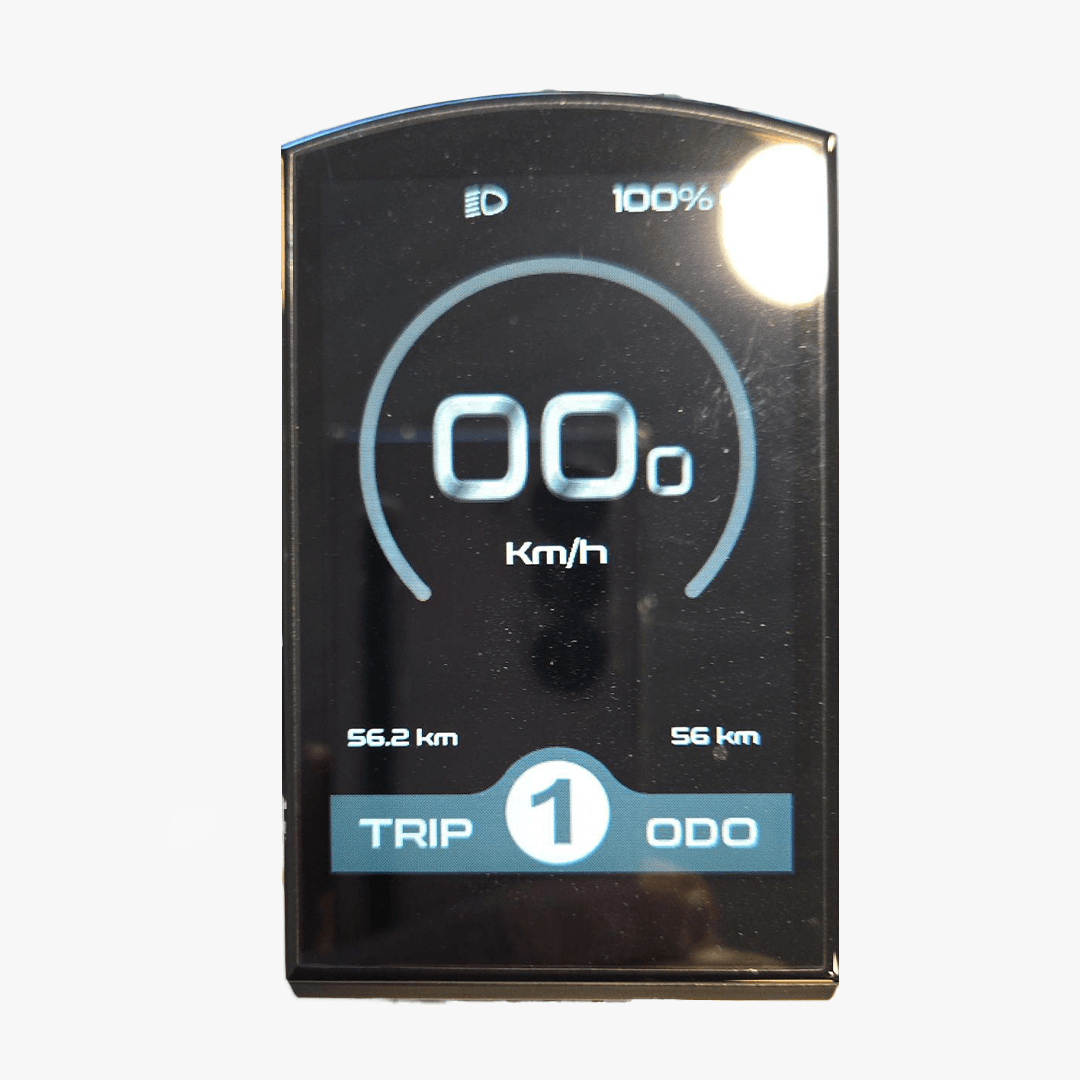
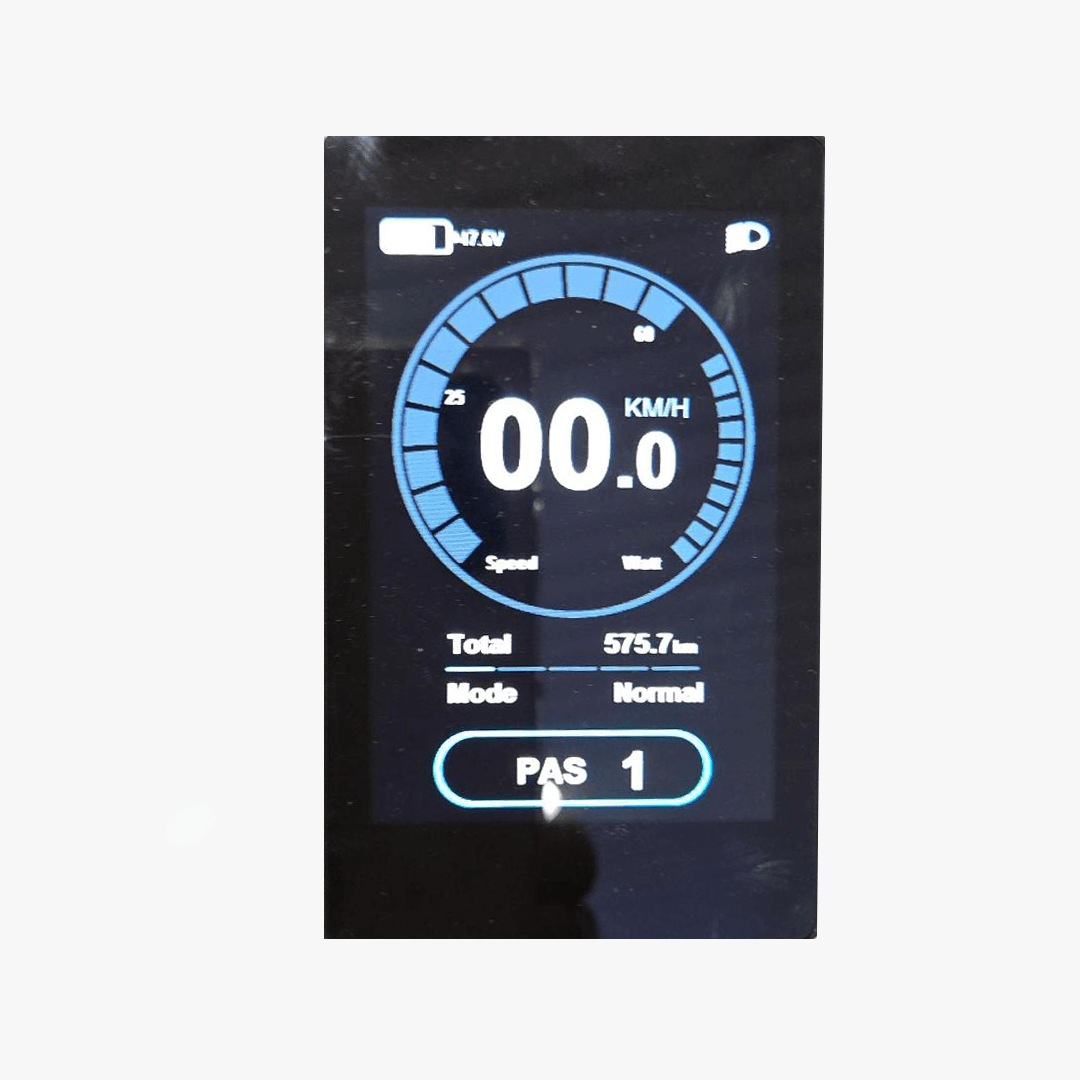
You start with 100% battery and, after 24 km, the display shows 58%.
You have therefore used approximately 42% of the battery.
42% of 720 Wh corresponds to approximately 302 Wh.
The estimated consumption becomes:
302 Wh ÷ 24 km = approximately 12.6 Wh/km
With this consumption, a purely mathematical estimate would be:
720 Wh ÷ 12.6 Wh/km = approximately 57 km
This value remains an estimate. The battery percentage display is not a laboratory instrument and a safety margin should always be maintained.
Theoretical range based on your measured consumption
The following table does not represent guaranteed ranges. It simply shows the mathematical result obtained from different measured consumptions.
| Measured Consumption | 720 Wh Battery | 1,440 Wh Dual Battery |
|---|---|---|
| 10 Wh/km | 72 km | 144 km |
| 12 Wh/km | 60 km | 120 km |
| 15 Wh/km | 48 km | 96 km |
| 18 Wh/km | 40 km | 80 km |
| 20 Wh/km | 36 km | 72 km |
| 24 Wh/km | 30 km | 60 km |
Important: These figures are for understanding the calculation only. They do not mean that a cargo bike will consistently consume 10, 15, or 24 Wh/km.
Your own consumption must be measured under your actual conditions.
Example: two children and groceries
Let's imagine a family that uses their cargo bike to:
- take two children to school;
- commute to work;
- do some grocery shopping;
- pick up the children;
- return home.
The day totals 32 km.
After several comparable days, the rider observes an average consumption of 16 Wh/km.
Daily consumption would then be approximately:
32 km × 16 Wh/km = 512 Wh
A 720 Wh battery could mathematically cover this trip with some reserve.
A dual battery would offer a much larger margin, but it wouldn't be automatically necessary if the bike can be recharged every evening and if the trips remain regular.
The right decision therefore depends on your actual consumption and not solely on the number of children.
Example: hilly route with frequent starts
Let's now consider a daily route of 28 km with:
- several climbs;
- two children;
- frequent stops;
- a high level of assistance on hills.
After measurement, let's imagine the bike consumes 20 Wh/km.
The day then requires:
28 km × 20 Wh/km = 560 Wh
A 720 Wh battery still leaves a theoretical reserve, but this margin will decrease if:
- the temperature drops;
- the children grow;
- the trip lengthens;
- additional groceries are carried;
- the battery gradually loses capacity over time.
It is precisely in this type of situation that the question of an additional battery becomes relevant.
720 Wh battery or 1,440 Wh dual battery?
A dual battery doesn't mean everyone needs to choose the maximum capacity available.
A single battery may be sufficient when:
- daily trips are relatively short;
- recharging is possible every evening;
- the terrain is mainly flat;
- the bike carries a moderate load;
- recharging at work is possible.
A dual battery becomes more interesting when:
- you travel long distances every day;
- the route involves a lot of elevation changes;
- you regularly transport several children and groceries;
- you use maximum assistance a lot;
- you cannot recharge during the day;
- you want to maintain a significant safety margin;
- the bike is used professionally for several hours.
The dual battery also increases the price and weight of the bike. So, you need to check that the extra range meets a real need.
To delve deeper into this topic, you can also consult our guide on dual battery and long distances.
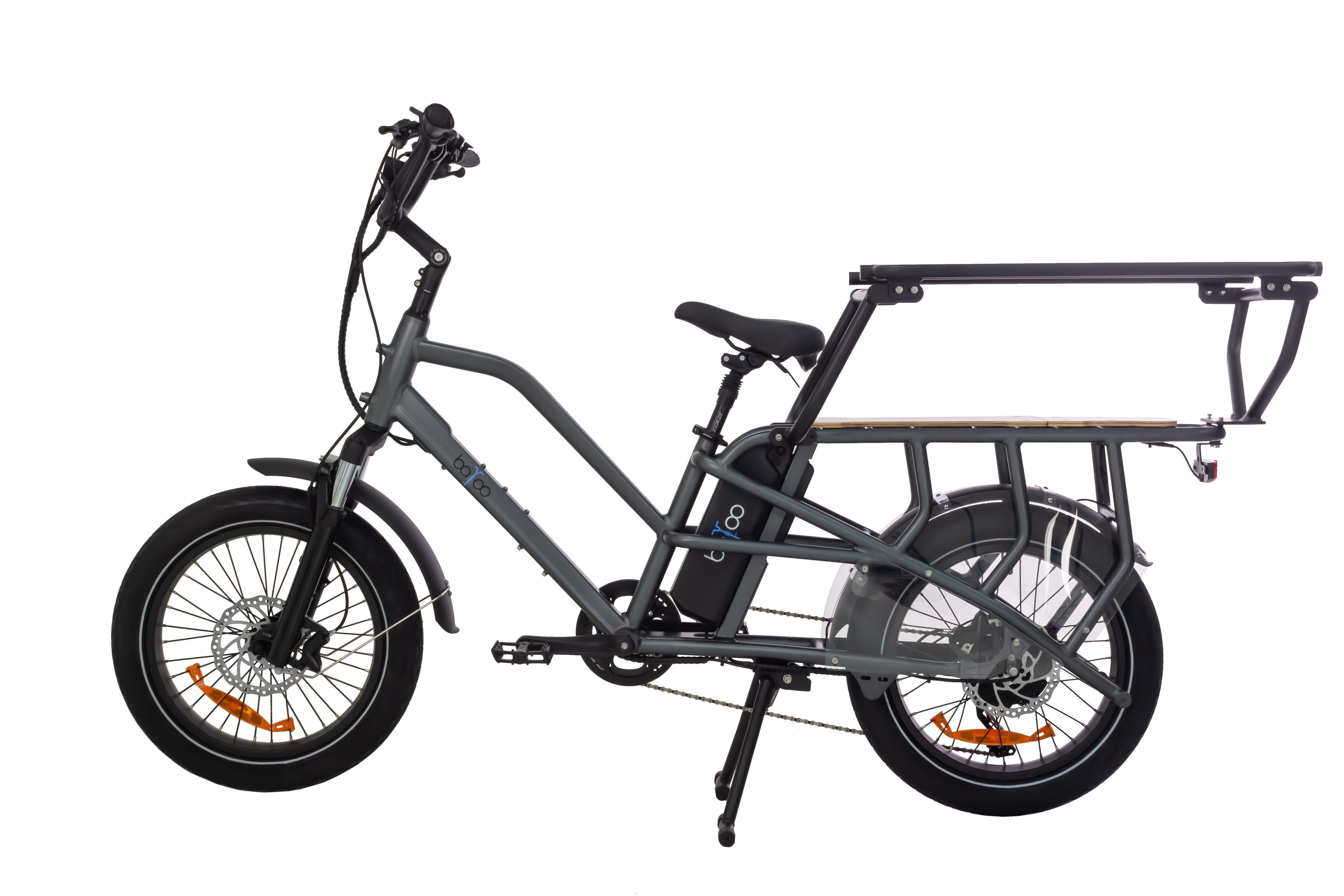
What range does the Colibri V2.0 advertise?
The current specification sheet for the Colibri V2.0 electric cargo bike notably indicates:
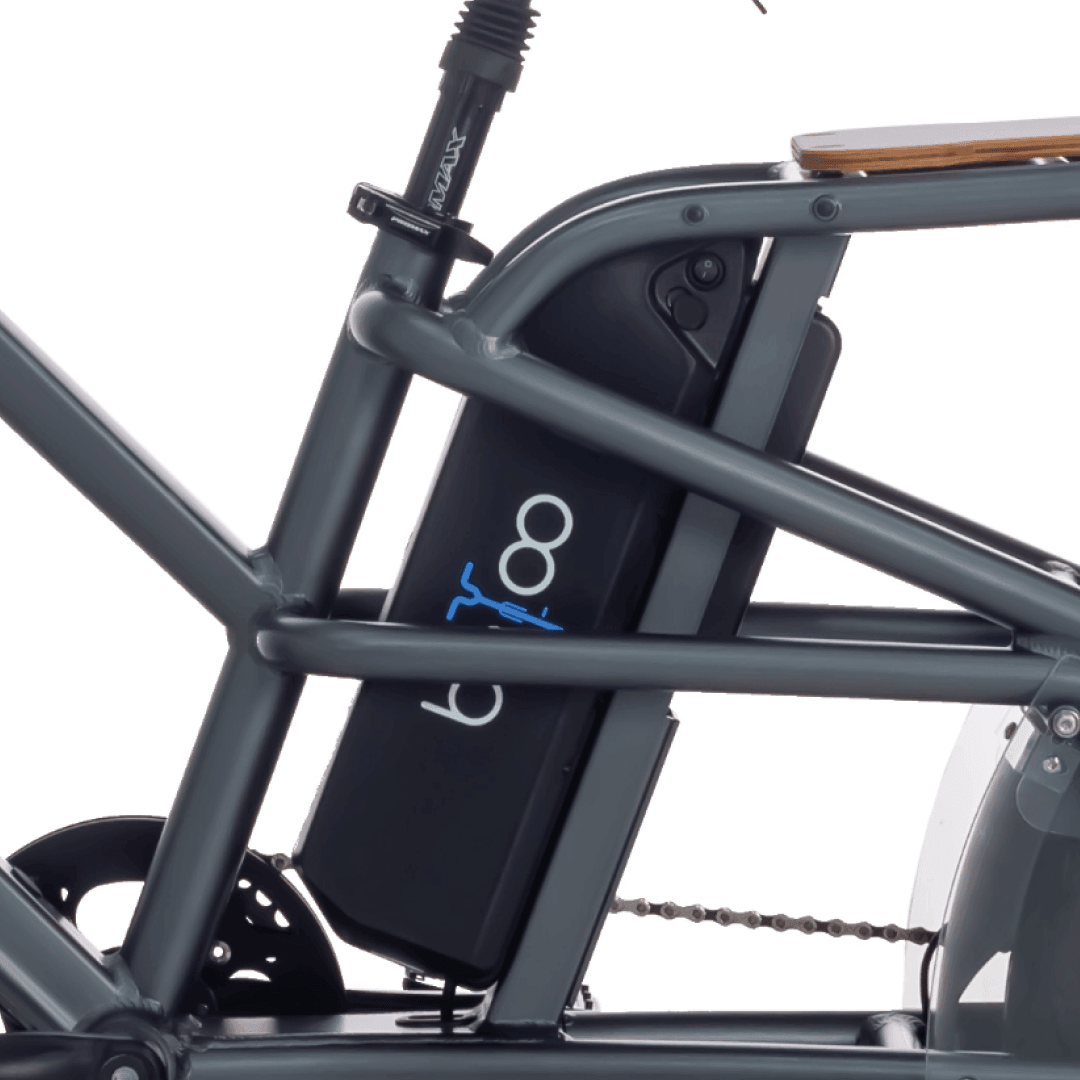
- a removable 720 Wh LG battery;
- a 1,440 Wh dual battery configuration;
- a 500 W and 85 Nm Bafang motor;
- an advertised payload of up to 160 kg;
- an advertised range of up to 120 km.
The figure "up to 120 km" should be interpreted as a maximum range advertised by the manufacturer, and not as a guaranteed distance with any load.
With children, groceries, and elevation changes, the actual range can differ.
The best way to size the battery is therefore to test the bike with a load similar to your daily use.
How to measure your consumption for a week?
One week is often enough to get a much more useful estimate than a catalog range.
Simply create a small table with:
- the date;
- the distance traveled;
- the battery percentage at the start;
- the percentage upon arrival;
- the number of children;
- the approximate load;
- the weather;
- the terrain;
- the primary assistance level used.
After several trips, compare the days.
You will quickly identify:
- normal consumption;
- the effect of climbs;
- the impact of a heavy load;
- the difference between summer and winter;
- the necessary margin before recharging.
How much battery margin should you keep?
Avoid planning a trip that requires exactly 100% of the calculated range.
Keep a margin for:
- a detour;
- an unexpected climb;
- an unfavorable wind;
- a drop in temperature;
- additional groceries;
- a change of route;
- battery aging.
This margin is particularly important when transporting children or when you need to meet daycare, school, or work schedules.
How to increase range without sacrificing safety?
Use the right gear
Shift to an easier gear before a climb or restart. The motor and drivetrain will work under better conditions.
Adjust the assistance level
Use high assistance when you need it, then reduce it on easy sections if conditions allow.
Anticipate slowdowns
Smooth riding avoids unnecessary accelerations. Anticipate traffic lights, intersections, and changes in direction.
Check tires
Regularly check the pressure and adhere to the values specified by the manufacturer for your load.
Avoid unnecessary weight
Remove heavy items that remain unnecessarily in the box for several days. Never remove safety equipment solely to improve range.
Protect the battery from cold
In winter, if possible, store the battery at room temperature and install it shortly before departure.
Maintain the bike
Under-inflated tires, rubbing brakes, or a poorly maintained drivetrain increase resistance.
Regular maintenance therefore also contributes to more efficient use of available energy.
Should you choose the battery before trying the bike?
Ideally, no.
Before deciding between 720 and 1,440 Wh, test the bike in a situation similar to your daily life.
If possible, come with:
- the children;
- their school bags;
- a weight similar to your usual groceries;
- the accessories you plan to use.
Choose a route that includes:
- a climb;
- several starts;
- a flat section;
- a sharp turn;
- a complete stop followed by a restart.
Note the battery percentage before and after the trip.
This information will already give a more useful indication than a simple maximum range figure.
Book a test ride of the Colibri with your actual load
Range checklist before purchase
- ☐ I have calculated the total distance of my longest day.
- ☐ I have taken into account school, work, and grocery trips.
- ☐ I have identified the main climbs.
- ☐ I have estimated the weight of children and luggage.
- ☐ I know my recharging options at home.
- ☐ I know if recharging at work is possible.
- ☐ I have planned a margin for cold weather and detours.
- ☐ I am not relying solely on the advertised maximum range.
- ☐ I have checked the recommended tire pressure.
- ☐ I have tested the bike with a load close to my actual use.
- ☐ I have compared the cost and weight of a single and dual battery.
- ☐ My configuration always respects the bike's payload capacity.
Conclusion
The range of a loaded cargo bike cannot be summarized by a single number.
Children's and grocery weight, climbs, starts, temperature, tires, and assistance level all impact consumption.
The most reliable method is to measure your consumption in Wh/km on a representative trip, then use this value to size the battery.
A 720 Wh battery can be perfectly suited for many family trips. A dual 1,440 Wh battery primarily offers extra margin for heavy users, hilly routes, and users who cannot recharge during the day.
Before choosing, test the loaded bike and measure your actual consumption. This will allow you to buy the capacity you truly need rather than the largest battery available.
Frequently asked questions about cargo bike range
How many kilometers can a cargo bike travel with two children?
There isn't a single distance. The range depends on the total weight, terrain, assistance level, temperature, tires, and number of starts. The best method is to measure Wh/km consumption with both children on board.
Does weight significantly reduce range?
Yes, particularly during acceleration and uphill. The heavier the bike, the more energy the motor must provide. The actual impact, however, depends on the route and riding style.
Is a dual battery necessary on a cargo bike?
Not systematically. A single battery may suffice for short to medium daily trips with regular recharging. A dual battery becomes more relevant for long distances, significant elevation changes, heavy loads, or when it's impossible to recharge during the day.
Does cold reduce the range of an electric bike?
Yes. The performance of a lithium-ion battery can temporarily decrease as the temperature drops. Therefore, lower range in winter compared to mild weather is normal.
How do you calculate Wh consumed per kilometer?
Divide the energy consumed in watt-hours by the distance traveled. For example, if you use 300 Wh to travel 25 km, your average consumption is 12 Wh/km.