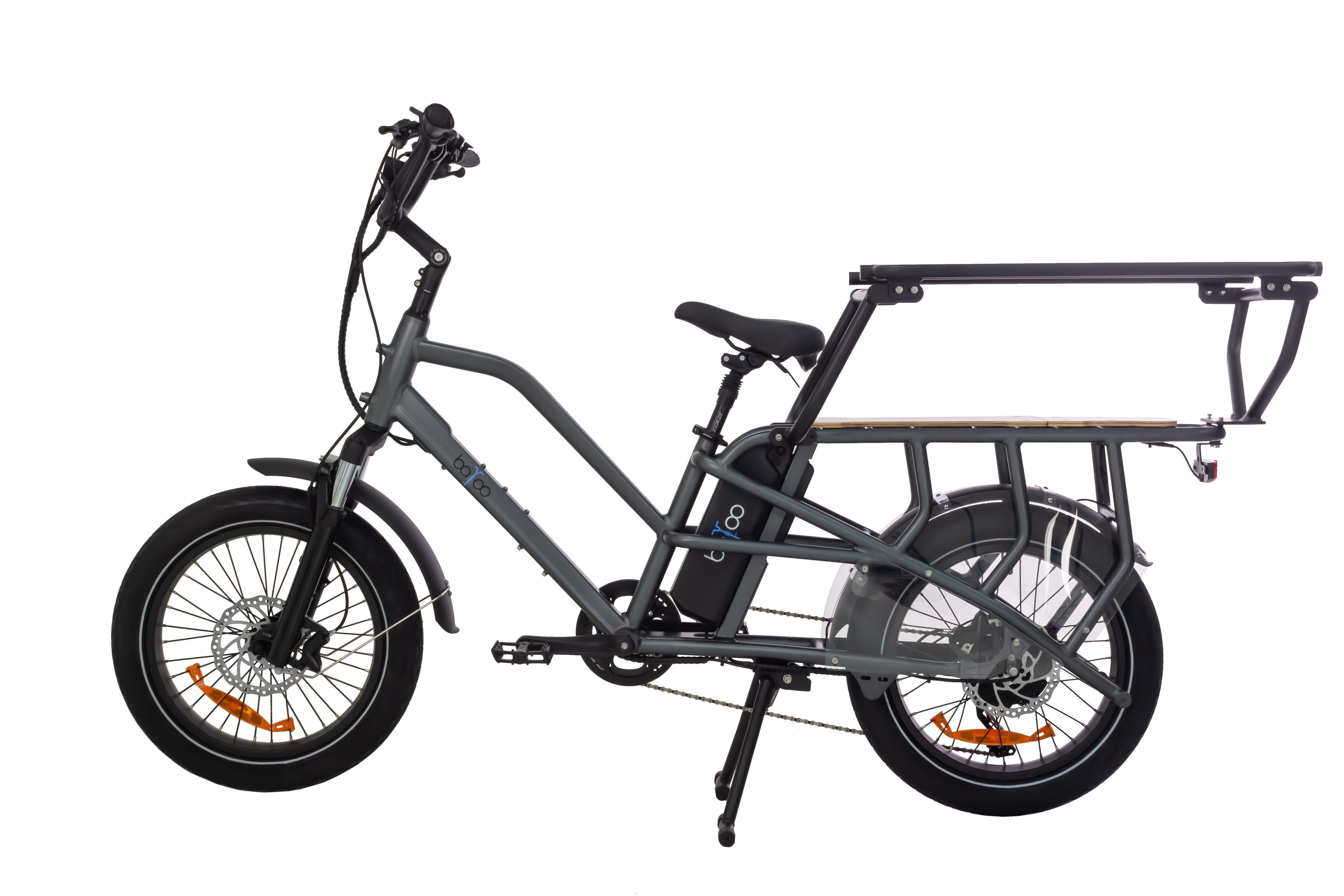
Many people interested in speed bikes dream of a dual battery system. On paper, the idea is simple: more battery means more range, which means less stress. For heavy users, long-distance commutes, or hilly routes in Switzerland, this can indeed be very useful.
But it's not always necessary. A dual battery adds to the price, weight, and sometimes makes the bike more complex to choose. Before paying more for two batteries, you need to ask yourself a real question: does your usage truly justify it?
A speed bike often consumes more than a 25 km/h e-bike, especially if you ride fast, with a lot of assistance, uphill, against the wind, or in the cold. That's why the need for a dual battery should be assessed based on your actual commute, not just on a promised range displayed on a product sheet.
To understand the basics, the BatooBike guide on speed bike batteries and motors is a good starting point. It explains why Wh capacity, the motor, torque, and actual usage matter as much as battery size. And if you are still comparing several electric mobility solutions for your daily commutes, you can also discover the BatooBike universe and its bikes designed for urban mobility in Switzerland.
What is a dual battery for?
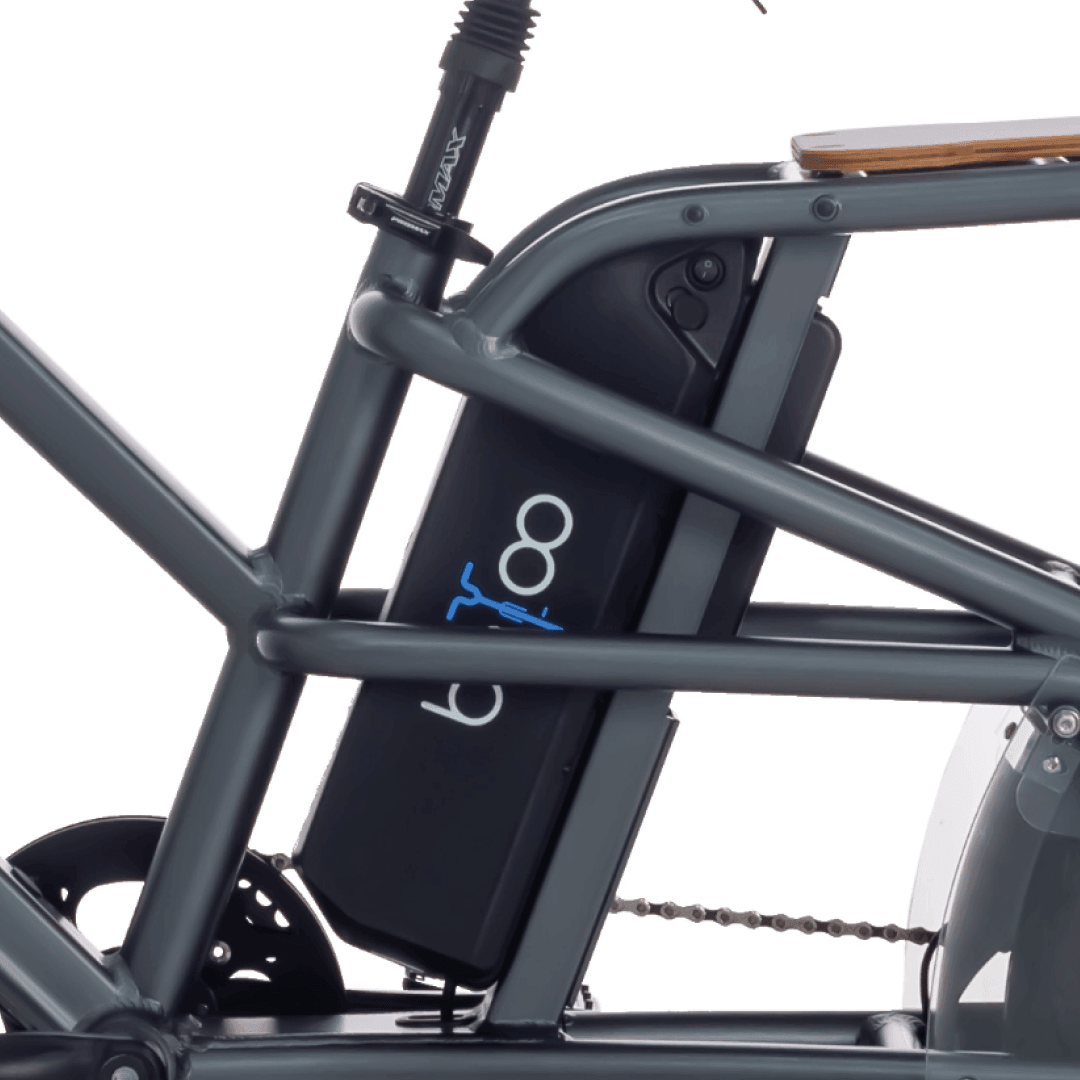
A dual battery system involves using two batteries on the same bike, either integrated into the frame or with a main battery and an additional battery. The goal is to increase the total available capacity to ride longer without recharging.
Specifically, it primarily serves three purposes:
- increasing real-world range
- reducing recharging stress
- maintaining a comfortable margin in difficult conditions
On a speed bike, this margin can be very useful. At 45 km/h, consumption increases rapidly, especially if you ride with high assistance. A battery that seems sufficient in summer may become less so in winter, with wind, cold, or a hilly commute.
So, a dual battery is not just for covering more kilometers. It also makes the journey more predictable.
Is a dual battery useful on a speed bike?
Yes, it can be very useful. But it is not essential for everyone.
If you ride 15 to 25 km per day, on a relatively flat route, and can easily recharge, a single good battery may be more than enough. In this case, a dual battery is likely to add cost and weight without real daily benefit.
However, if you ride 40, 50, or 60 km per day, ride fast, your route is hilly, or you cannot easily recharge, a dual battery becomes much more relevant.
Here's a simple way to think about it:
| Daily Usage | Dual Battery Useful? |
|---|---|
| Less than 25 km/day | Rarely necessary |
| 25 to 40 km/day | Useful depending on terrain, speed, and weather |
| 40 to 60 km/day | Often relevant |
| More than 60 km/day | Highly recommended |
| Hilly commute | More interesting |
| Recharging possible at the office | Less essential |
| Winter + long commute | Much more useful |
The real criterion is not just distance. It's the combination of distance + terrain + speed + weather + charging possibility.
From what distance is it worthwhile?
For daily use, a dual battery really becomes worthwhile when you start to exceed the comfort zone of a single battery. In practice, this often happens around 40 km per day if you want to maintain a good margin.
For 20 km per day, a dual battery is rarely a priority. It's better to invest in good comfort, good tires, good lighting, and a bike well-suited to your posture.
For 30 km per day, the answer depends heavily on the route. If it's flat, smooth, and you can easily recharge, a large single battery might be enough. If it's hilly, cold for part of the year, or without recharging possibilities, a dual battery becomes more interesting.
For 40 km per day and more, the issue becomes serious. This is typically the case for a commuter who does 20 km in the morning and 20 km in the evening. In this case, a speed bike is very relevant, but you should avoid choosing a battery that is too small.
To help you assess your needs, the BatooBike guide on which speed bike to choose for 20, 30 or 40 km per day complements this topic very well.
Why actual range varies so much
A speed bike's range is never calculated solely by battery capacity. Two people with the same battery can get very different results.
The factors that change everything:
- your weight and position
- the weight of the bike and transported items
- the level of assistance used
- average speed
- terrain
- wind
- temperature
- tire pressure
- motor type
- number of stops and starts
That's why you should avoid believing that a given battery automatically corresponds to a fixed number of kilometers. A large battery provides a better margin, but it does not guarantee the same range under all conditions.
In winter, for example, range can decrease. If you ride fast, with wind and high assistance, consumption increases. The BatooBike guide on speed biking in winter explains why you need more margin when it's cold.
Dual battery or large single battery?

This is an important question. In some cases, a single large battery is sufficient. In others, two batteries offer more flexibility.
A large single battery is often simpler to manage. It requires less handling and can be sufficient for average to long daily use, especially if you recharge at home every evening.
A dual battery becomes more interesting if you need a lot of range or if you want to maintain a very large margin without recharging during the day.
| Solution | Advantages | Limitations |
|---|---|---|
| Large single battery | Simpler, less weight than a dual system | Range limited to a single capacity |
| Dual battery | Very large margin, less stress, useful for long distances | More expensive, heavier, sometimes a more specific bike |
| Removable auxiliary battery | Flexible if compatible | Manual management, transport and compatibility to check |
| Recharge at the office | Can avoid a dual battery | Depends on access to a power outlet and internal rules |
For many users, the right choice is not automatically a dual battery. Sometimes it's a good battery + a clear charging solution.
This is also why you shouldn't think only in terms of a speed bike. If your main need remains urban, family-oriented or daily, a compact electric bike with a comfortable range can sometimes be more consistent than a dual-battery speed bike. The Colibri V2.0, for example, focuses on an integrated battery, a claimed range of up to 120 km, integrated GPS and anti-theft/geofencing functions, which can meet many needs without necessarily opting for a heavier configuration.
What is the impact on price?
A dual battery almost always increases the price of the bike. This is logical: a quality battery is expensive, especially on a high-end system. You also sometimes need a compatible frame, a specific mount, adapted electronic management, and a compatible charger.
The additional cost can vary greatly depending on the brand, system, and capacity. Therefore, you shouldn't only consider the battery price. On some models, the dual battery is part of a premium configuration. On others, it can be an option added at the time of purchase.
In practice, before choosing, ask yourself three questions:
- Does the dual battery really replace a need for recharging?
- Does it save you daily stress?
- Will it be used often or only twice a year?
If you commute long distances five days a week, the extra cost may be justified. If you mostly do short commutes and a few occasional long rides, it might be better to choose a good single battery and plan for occasional recharging.
For a more global overview, the BatooBike article on the real monthly cost of a speed bike in Switzerland helps to put the battery into the total budget: purchase, maintenance, recharging, insurance, accessories, and daily use.
Does the weight change much?
Yes, the weight changes. A second battery generally adds several kilograms. On a speed bike, this is especially noticeable when handling the bike when stationary, when you need to lift it onto a ramp, store it in a shed, push it, or move it in a tight space.
While riding, assistance compensates for some of the weight. But when stopped, no one compensates for you. This is an important point if you live in an apartment, if your bike shed is narrow, or if you often have to move the bike manually.
Additional weight can also influence:
- maneuverability at low speeds
- parking
- carrying
- handling in slow turns
- wear on brakes and tires
- the overall feel of the bike
This is not necessarily a problem. On a long-distance speed bike, the range gain can largely compensate. But if you don't need this range, the weight becomes less advantageous.
Who really needs two batteries?
The people who truly need two batteries are those who use their speed bike as their primary vehicle for long or demanding journeys.
A dual battery is particularly relevant for:
- commuters who ride 40 to 60 km or more per day
- people who ride fast with high assistance
- hilly commutes
- users who ride in winter
- cyclists who cannot recharge at work
- people who often carry heavy loads
- heavy users who want to avoid recharging every day
- journeys where a battery failure would be truly problematic
Conversely, it is less of a priority for:
- short urban commutes
- people who can easily recharge at the office
- very occasional use
- flat and short commutes
- cyclists who want a lighter and simpler bike
Therefore, a dual battery is an excellent solution for certain profiles, but not a universal requirement.
Dual battery and office charging
Before opting for a dual battery, you should also consider your ability to recharge at the office. If you can easily recharge during the day, the need for a dual battery significantly decreases.
For example, someone who travels 25 km in the morning and 25 km in the evening might need a long range if they never recharge at work. But if they can quietly recharge the battery during the day, a single, well-sized battery might suffice.
The question then becomes practical:
| Situation | Often logical solution |
|---|---|
| Long commute + no charging possible | Dual battery |
| Long commute + charging at the office | Large single battery possible |
| Medium commute + easy charging | Dual battery rarely necessary |
| Long commute + winter + hilly terrain | Dual battery very relevant |
| Bike parked outside | Removable battery and warm storage useful |
The BatooBike guide on recharging your electric bike at the office or in an apartment can help you evaluate this part before investing in two batteries.
Checklist before choosing a dual battery

Before validating a dual battery configuration, take a few minutes to answer these questions:
- How many kilometers do you really travel per day?
- Is your route flat or hilly?
- Do you often ride with high assistance?
- Can you recharge at the office?
- Do you ride all year round, including in winter?
- Do you regularly carry a heavy bag or equipment?
- Does the bike need to be handled in a tight space?
- Is the extra cost justified by frequent use?
- Does the bike remain pleasant to ride with two batteries?
- Is the system planned by the manufacturer or validated by a dealer?
This last question is important. You should not rig up a dual battery on a bike not designed for it. A battery must be compatible with the bike's electrical system, frame, motor, and electronic management.
Decision-making table
| Your situation | Dual battery recommended? |
|---|---|
| 20 km per day, flat route | No, unless there is a very specific need |
| 30 km per day, charging possible | Not necessarily |
| 30 km per day, hilly + winter | To consider |
| 40 km per day, daily use | Yes, if you want a real margin |
| 50 to 60 km per day | Yes, very relevant |
| More than 60 km per day | Yes, highly recommended |
| Long commute without charging | Yes |
| Short commute but heavy cargo bike | Depends on load and terrain |
| Looking for a lightweight bike | No, unless range is a priority |
| Regular long-distance use | Yes |
Conclusion
A dual battery on a speed bike is a great idea for heavy users, long-distance commutes, hilly routes, and people who want to ride all year round with a real margin. It provides peace of mind, less stress, and more stable range in difficult conditions.
However, it is not essential for everyone. For short or medium journeys, a good single battery, well-organized charging, and a comfortable bike can be enough. A dual battery should meet a real need, not just a desire for more.
The right decision is therefore simple: if your speed bike truly replaces your car for long daily commutes, a dual battery deserves serious consideration. If your use remains short, flat, urban, or easy to recharge, it is probably not a priority. In this case, it's better to compare with models that are simpler for daily life, such as the Colibri V2.0, or start by exploring the solutions offered on BatooBike.
FAQ
Is a dual battery useful on a speed bike?
Yes, it is useful if you make long journeys, ride fast, your route is hilly, or you cannot recharge easily. It mainly provides more leeway and less stress.
From what distance does it become interesting?
It becomes interesting around 40 km per day if you want to maintain a good margin, and even more so from 50 to 60 km per day. For 20 to 30 km per day, a good single battery can often suffice depending on the terrain and the possibility of recharging.
What is the impact on the price?
The dual battery increases the price of the bike, sometimes significantly. The cost depends on the brand, capacity, system, and whether the dual battery is integrated as original equipment or added as an option.
Does the weight change much?
Yes. A second battery generally adds several kilograms. While riding, the assistance partly compensates, but the weight is felt when stopped, during maneuvers, parking, and in narrow spaces.
Who really needs two batteries?
Heavy users, long-distance commuters, people who travel 40 to 60 km per day or more, those on hilly routes, winter users, and cyclists who cannot easily recharge are the most affected profiles.