Should you buy an electric cargo bike with one or two batteries? For some families, a single battery and well-organized charging are perfectly suited for their usual trips. For others, extra capacity provides a useful buffer when journeys are back-to-back.
The right choice starts with your actual week: school, work, errands, activities, and weekend outings. Compare the available capacity with your travel needs and charging possibilities, rather than just an advertised mileage figure.
Start by describing your most demanding day
Note the total distance between two possible charging points, without forgetting trips after work. Factor in the terrain, passengers, and regular loads. Also, identify times when you want to keep a reserve for a detour or an unplanned trip.
Imagine, for example, a day where you drop off a child, head to work, return, and then head out for activities. A battery sized only for a home-to-work commute may not be sufficient for this routine. This example is intended to help you prepare your comparison; it does not constitute an estimated range for a specific model.
For more information, our guide on the range of a loaded cargo bike covers trips involving children, errands, and elevation changes.
Understanding Wh without confusing them with kilometers
Watt-hours (Wh) describe an amount of energy. They allow you to compare nominal capacities, but do not directly indicate a distance. Two identical routes in terms of kilometers may require very different levels of assistance.
Temperatures, transported weight, starts, and usage conditions all influence range. Bosch's technical explanations on range illustrate these general factors; they do not constitute a prediction for a bike equipped with a different system.
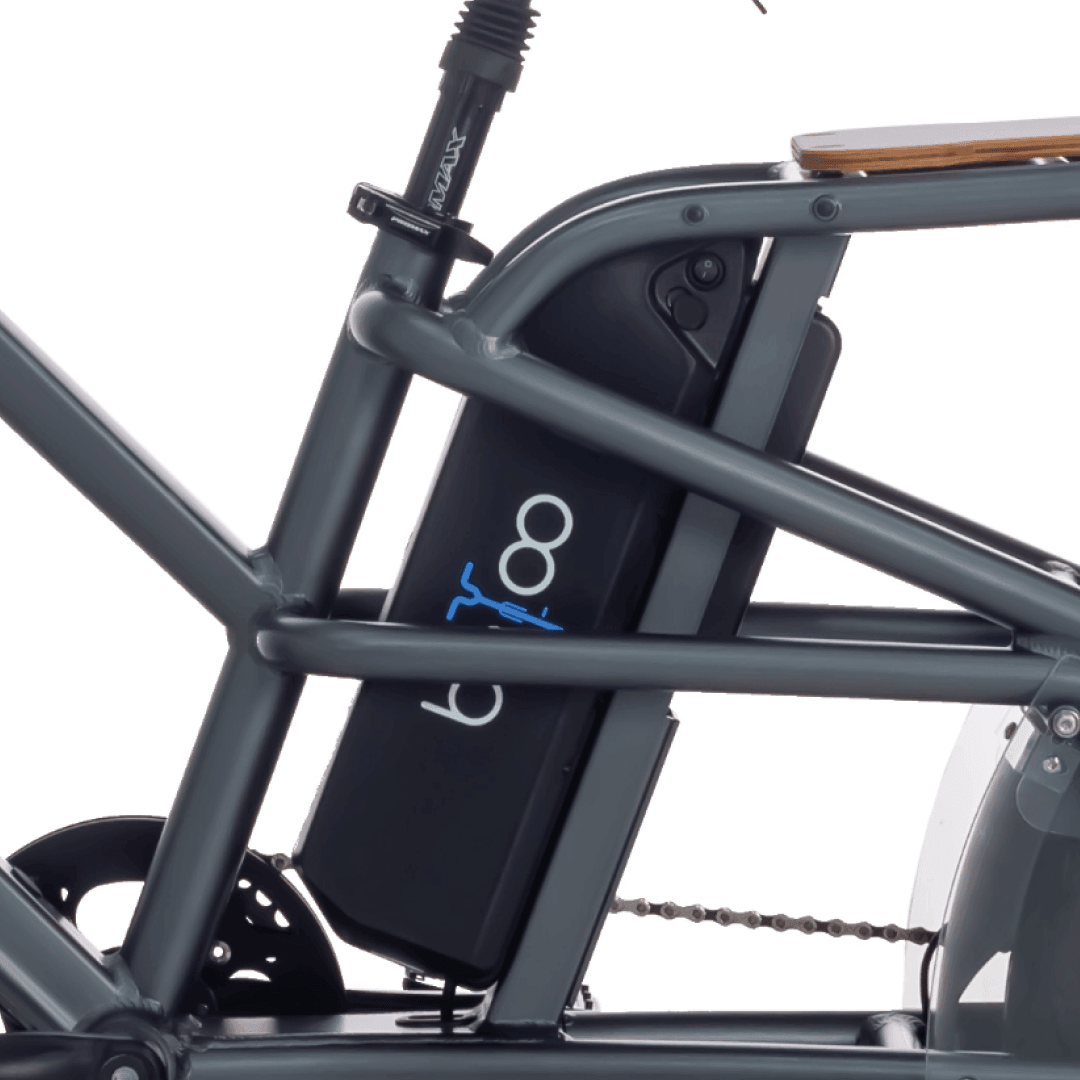
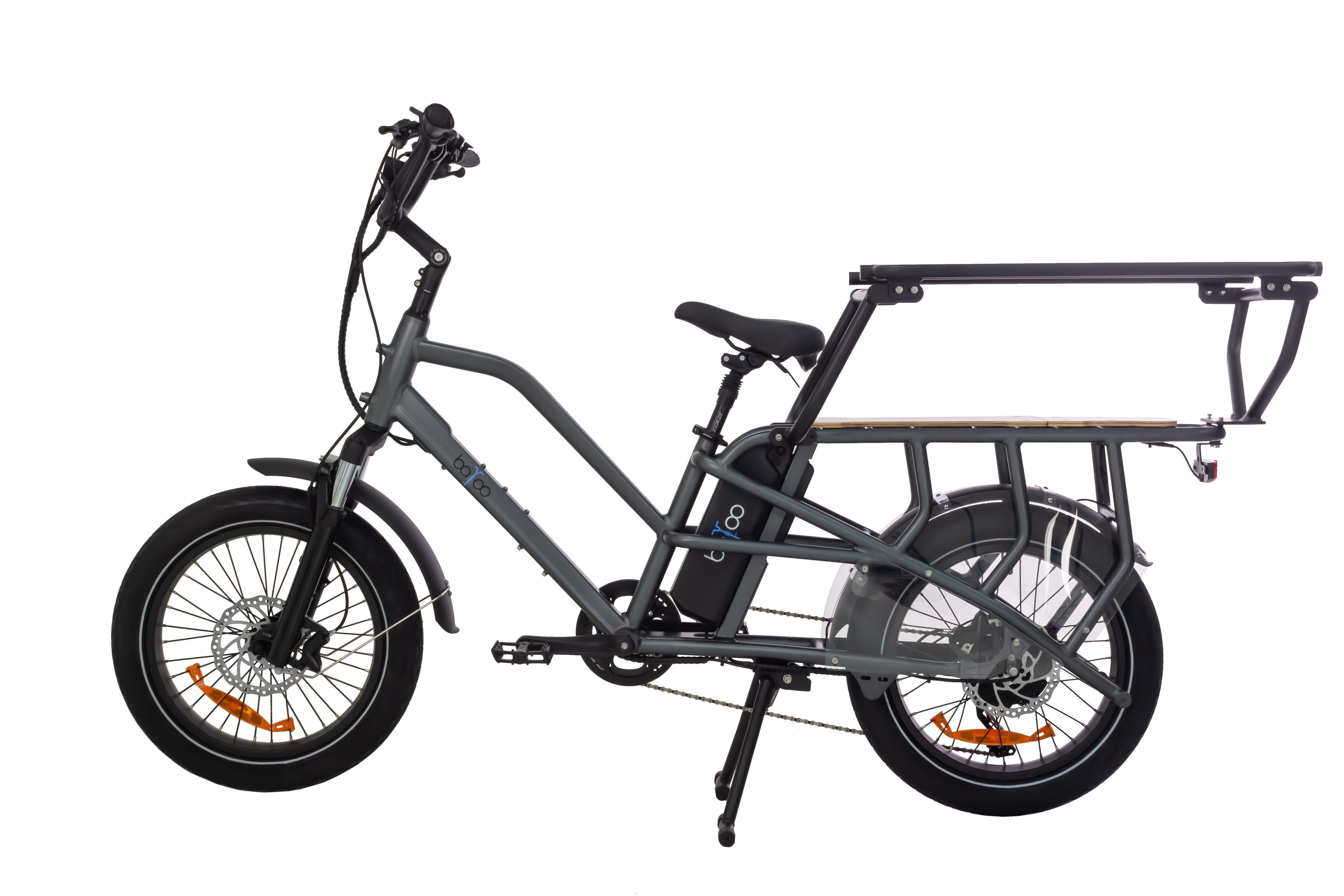
On this electric cargo bike offered with one or two batteries, the specification sheet indicates 720 Wh for the single version and 1,440 Wh for the dual version. The second configuration represents twice the stated nominal capacity. It does not automatically guarantee double the distance under all conditions.
When a single battery may be the most practical choice
Start with this option if your trips are well-defined and you can charge easily. The main goal is to choose a configuration proportional to your needs and budget, after discussing your routes with the dealer.
Check the handling of the removable battery. Can you remove it, carry it to the charging location, and replace it properly without difficulty? Simple access to an outlet may matter more on a daily basis than a large capacity that is rarely used.
Ask for a conservative estimate for your usage, then confirm the recommended charging habits. Keep an appropriate margin for your trips instead of planning every day to the limit of the advertised range.
When to consider two batteries
A dual configuration is worth considering if you combine several trips without being able to charge, if your routes regularly include hills, or if your days vary significantly. It may also be of interest to a household where two cyclists use the same cargo bike consecutively.
Compare the price of the option, the additional weight, the battery placement, and how to charge them. Ask if the chosen configuration leaves necessary access to the accessories and spaces you use. The comfort of use deserves as much attention as the capacity.
| Your situation | Deciding factor |
|---|---|
| Regular trips and easy charging | Evaluate the single version first |
| Back-to-back trips with no accessible outlet | Compare the reserve offered by the dual version |
| Shared usage throughout the day | Add up the needs of both cyclists |
| Occasional long outings | Compare the dual option with the planned charging possibilities |
Check compatibility before planning an upgrade
Do not buy a second battery assuming it can be added later. Have the manufacturer confirm the bike's compatibility, the necessary part numbers, the installation, and the warranty conditions. A battery with the same voltage or similar shape is not, by itself, proof of compatibility.
Only choose the configuration and charging equipment approved for the bike. The addition of a second battery must follow the solution provided by the manufacturer, without DIY modifications to the wiring.
To decide with confidence, book a cargo bike test ride and bring your list of trips. You will be able to examine the available configurations and the battery handling before ordering.
Frequently asked questions
Do two batteries exactly double the range?
They can double the nominal capacity if they are identical. However, the actual distance depends on travel conditions and system operation.
Can a second battery be added after purchase?
Only if a compatible solution is planned and confirmed for your bike. Ask for the conditions and cost before choosing the initial version.
What capacity should I choose for transporting children?
There is no universal capacity. Show the dealer your distances, terrain, load, and charging possibilities to compare options with an appropriate margin.