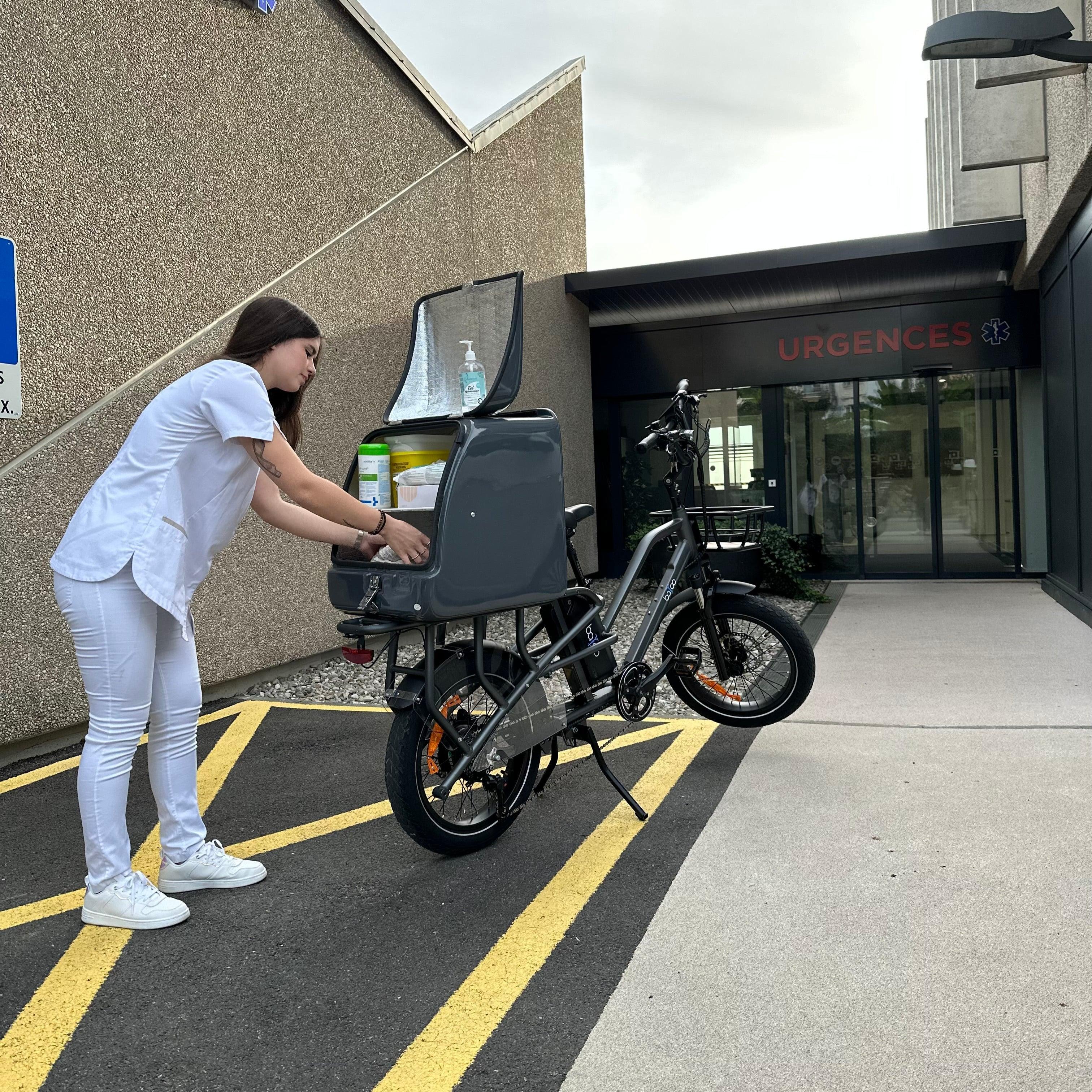
Are you around 1.50 m or 1.60 m tall and considering a cargo bike? The right model should allow you to pedal comfortably, but also to stop, start, and maneuver without apprehension. The frame height is only part of the answer.
To make your choice, start with concrete situations: getting out of your storage area, going through a door, waiting at a traffic light, and loading groceries. Here is how to compare bikes while taking your body type and usage into account.
The advertised height range: useful, but not sufficient
An indication like "from 1.50 m" is a pre-selection guideline. Two people of the same height can have different leg, torso, and arm lengths. Their ideal position will not necessarily be identical.
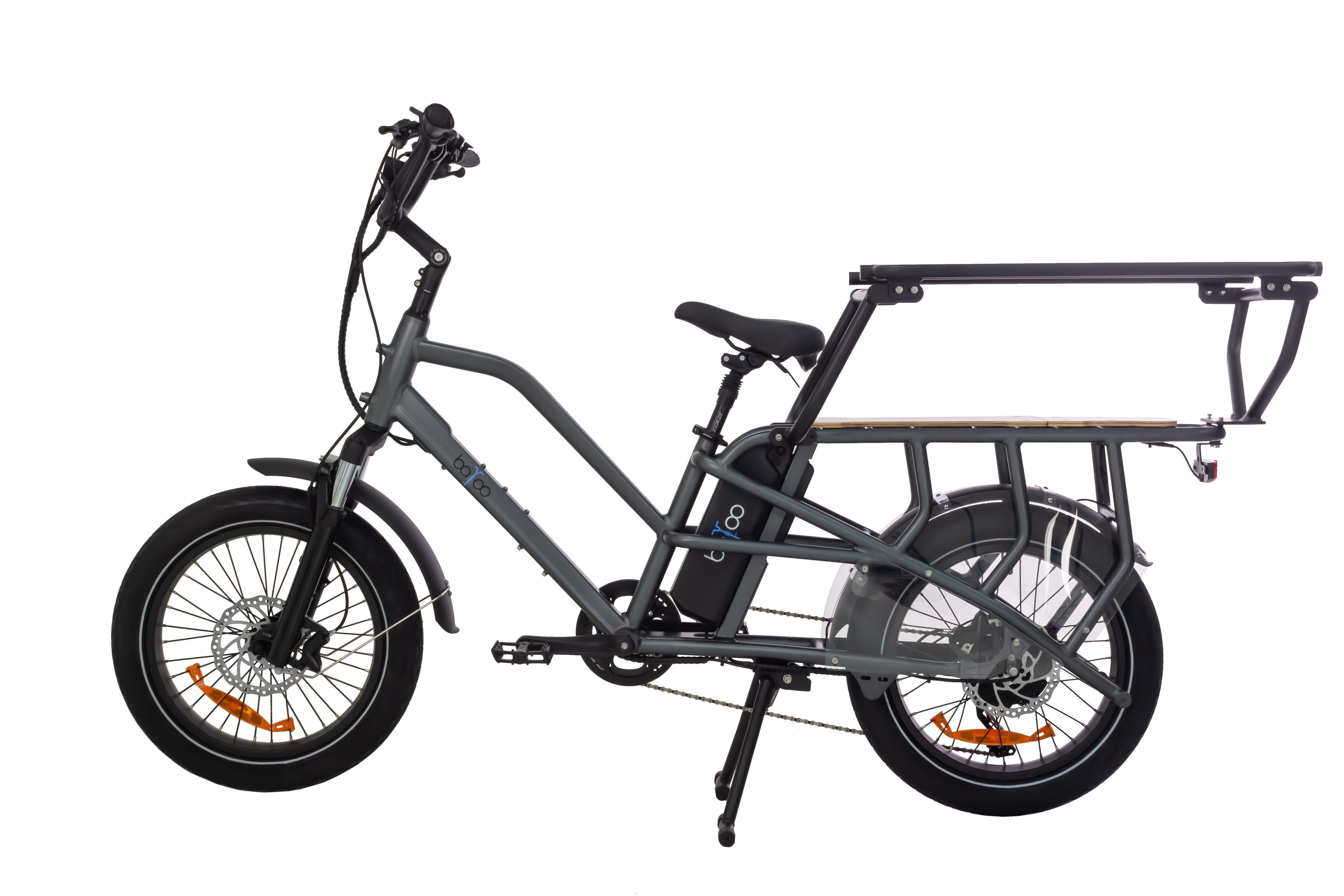
The product page for this low-step electric cargo bike advertises a range of 1.50 m to 1.85 m, with a telescopic seat post and adjustable handlebars. If you are near the lower limit, have the settings validated during a test ride. This range is no substitute for an individual check.
Low-step frame and saddle: two separate checks
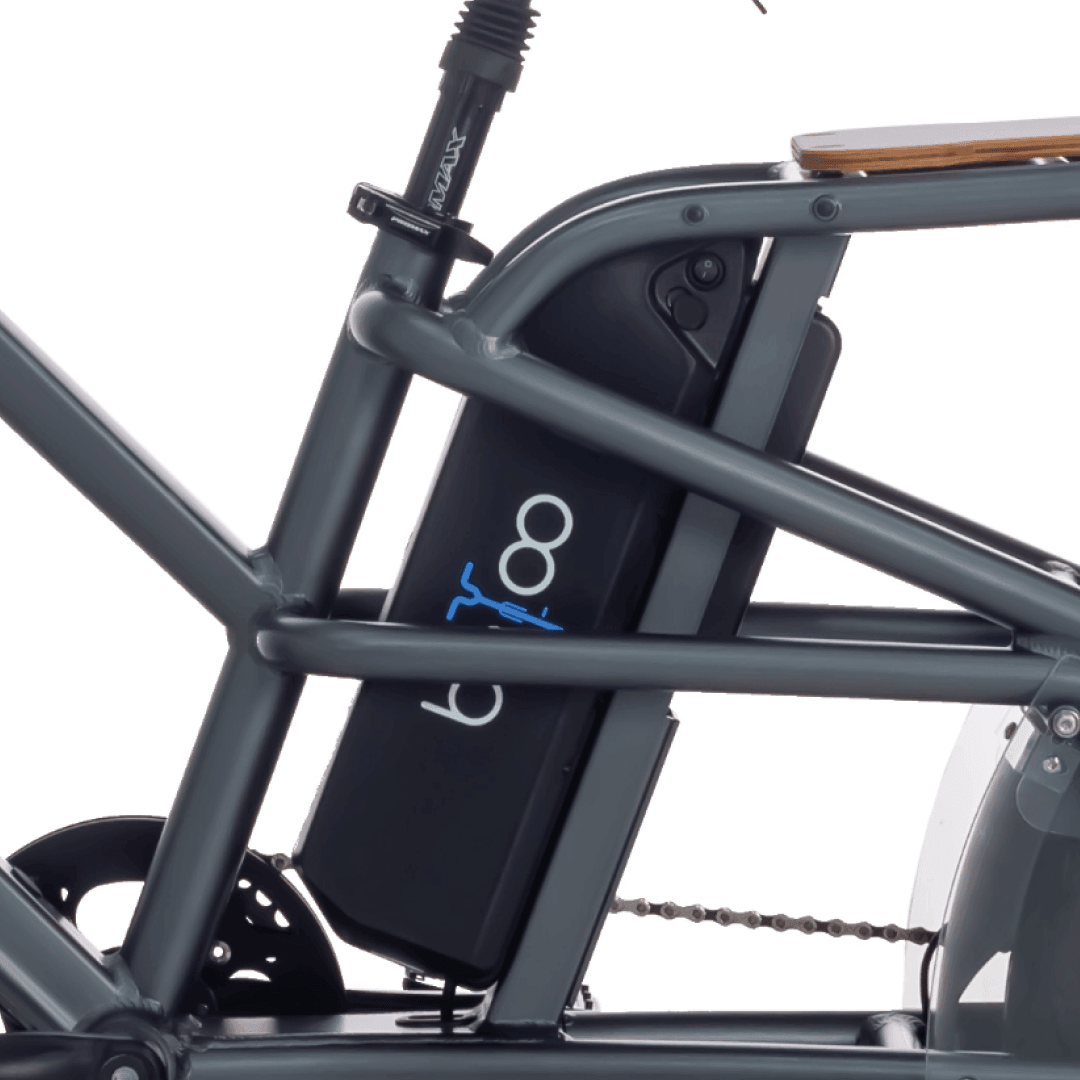
The low-step frame makes it easier to swing your leg over to mount and dismount. Check this movement with the shoes and clothing you usually wear. You should be able to do this without leaning the bike excessively, especially when it is loaded.
The saddle height is used to find a suitable pedaling position. Ask the salesperson to show you a stopping technique that allows you to place one foot down stably. A very low saddle may seem reassuring when stopped while being poorly suited for prolonged pedaling.
Always respect the markings and adjustment limits provided by the manufacturer. If no position suits you, look for another configuration rather than relying on an uncertain adaptation after purchase.
Handlebars and brakes must remain easy to reach
Once seated, observe your position: can you hold the handlebars with relaxed shoulders? Can you reach the controls without moving your hand? Does your posture remain comfortable in a turn?
The reach of the brake levers deserves special attention for those with smaller hands. Have the available adjustments checked and test the braking with the salesperson's guidance. Easy access to a lever matters more than a simple list of high-end components.
Test what happens when the bike is barely moving
A cargo bike may seem easy once moving but require more attention during maneuvers. Dedicate part of the test to these moments, in an open space and without passengers at first.
| Situation to test | Question to ask yourself |
|---|---|
| Stopping and starting | Do I maintain a stable and predictable position? |
| Walking the bike | Can I turn and back up without feeling overwhelmed? |
| Putting on the kickstand | Is the movement still achievable with my strength and balance? |
| Passing through a door | Do I have room to hold the bike and open the door? |
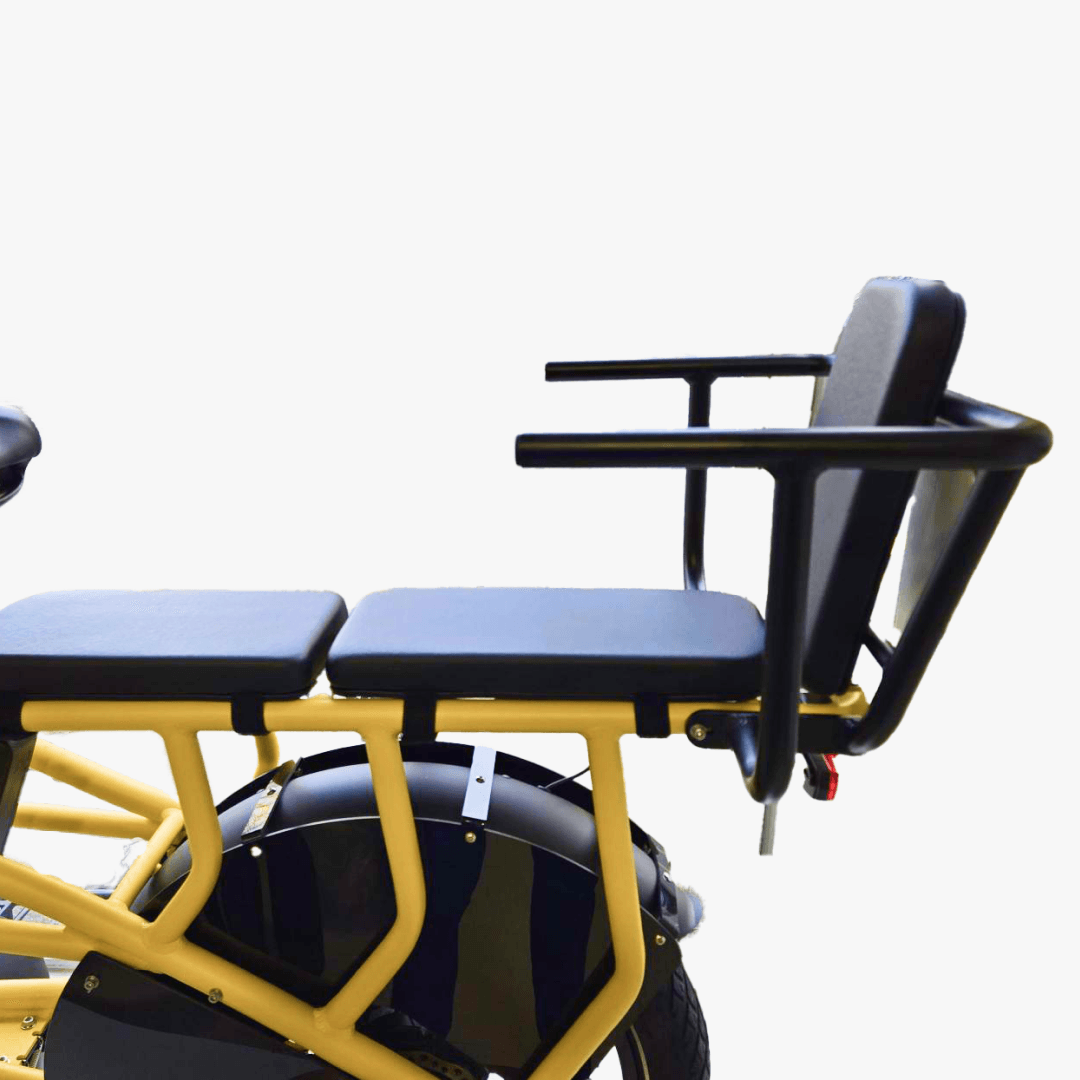
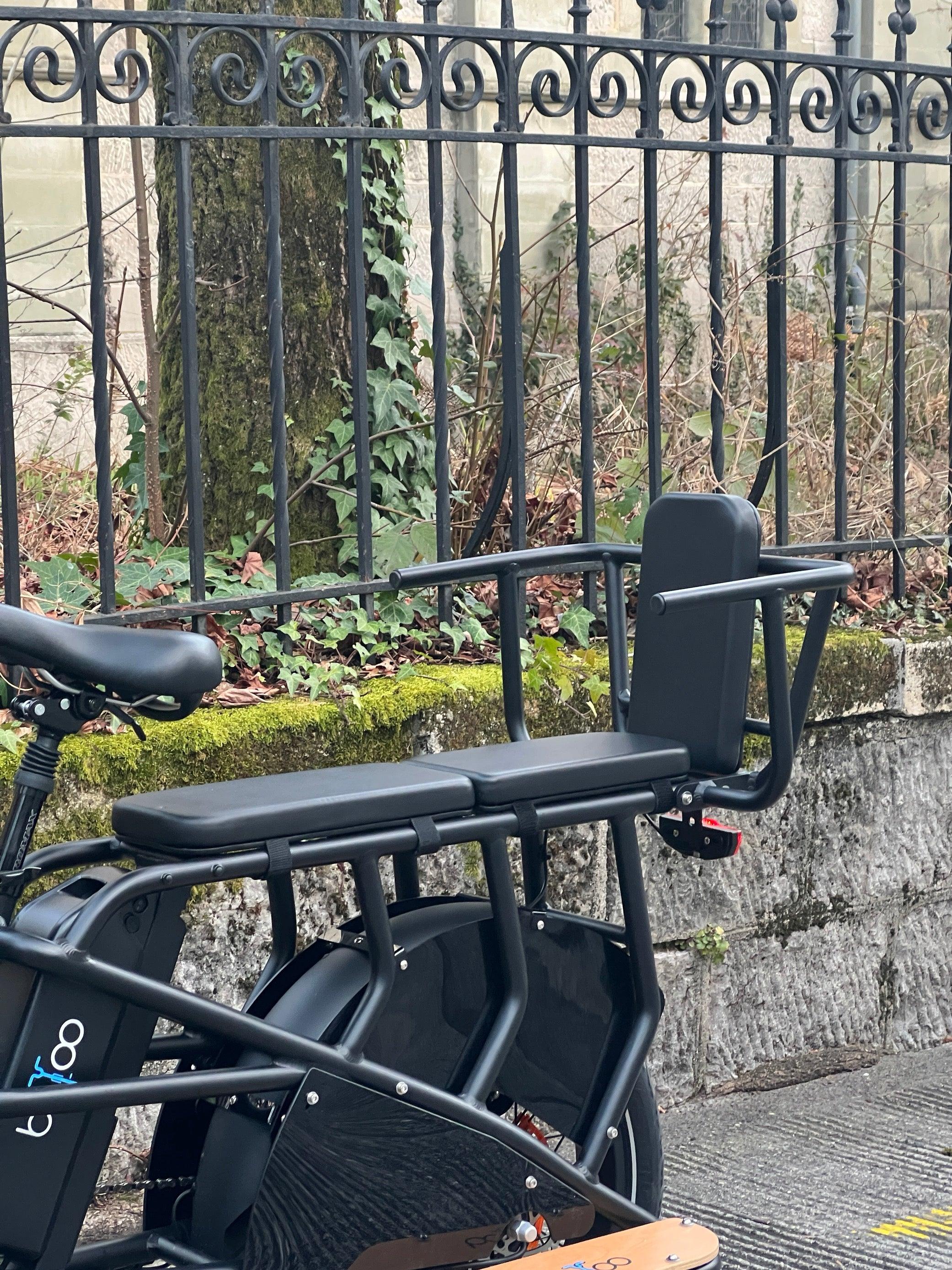
Then try again with a representative load, properly secured and within the permitted limits, with the professional's help. Only add passengers once you are comfortable and their equipment has been validated.
Small wheels and compact format: look at the whole bike
Do not deduce your comfort solely from the wheel diameter. The load position, frame, and settings also matter. A bike must suit your body and the place where you will store it.
To prepare for this second part of your choice, consult our guide on dimensions and maneuvering a compact cargo bike. Take measurements of your access points before the appointment and ask for the exact dimensions of the configuration you are interested in.
Prepare for your test ride with three pieces of information
Provide your height, the people or objects you will be transporting, and your main challenge: stopping, hills, access to the storage area, or loading. Come with your usual shoes. If the bike is to be shared, each rider should test their own settings.
Finally, ask what can be adjusted without tools and what requires assistance. This detail can make the difference when two people use the same cargo bike each week.
Frequently asked questions
Can you use a cargo bike if you are 1.50 m tall?
Some models advertise this minimum height. This makes them a viable option, provided you check your position, controls, and maneuvering during a test ride.
Should you be able to put both feet flat on the ground while staying in the saddle?
This is not a universal rule of adjustment. Have a professional help you find an efficient pedaling position and a stable stopping technique.
What is the best first step before buying?
Discover the low-step cargo bike and book a test ride. Your ease with everyday movements will help you decide with more confidence.