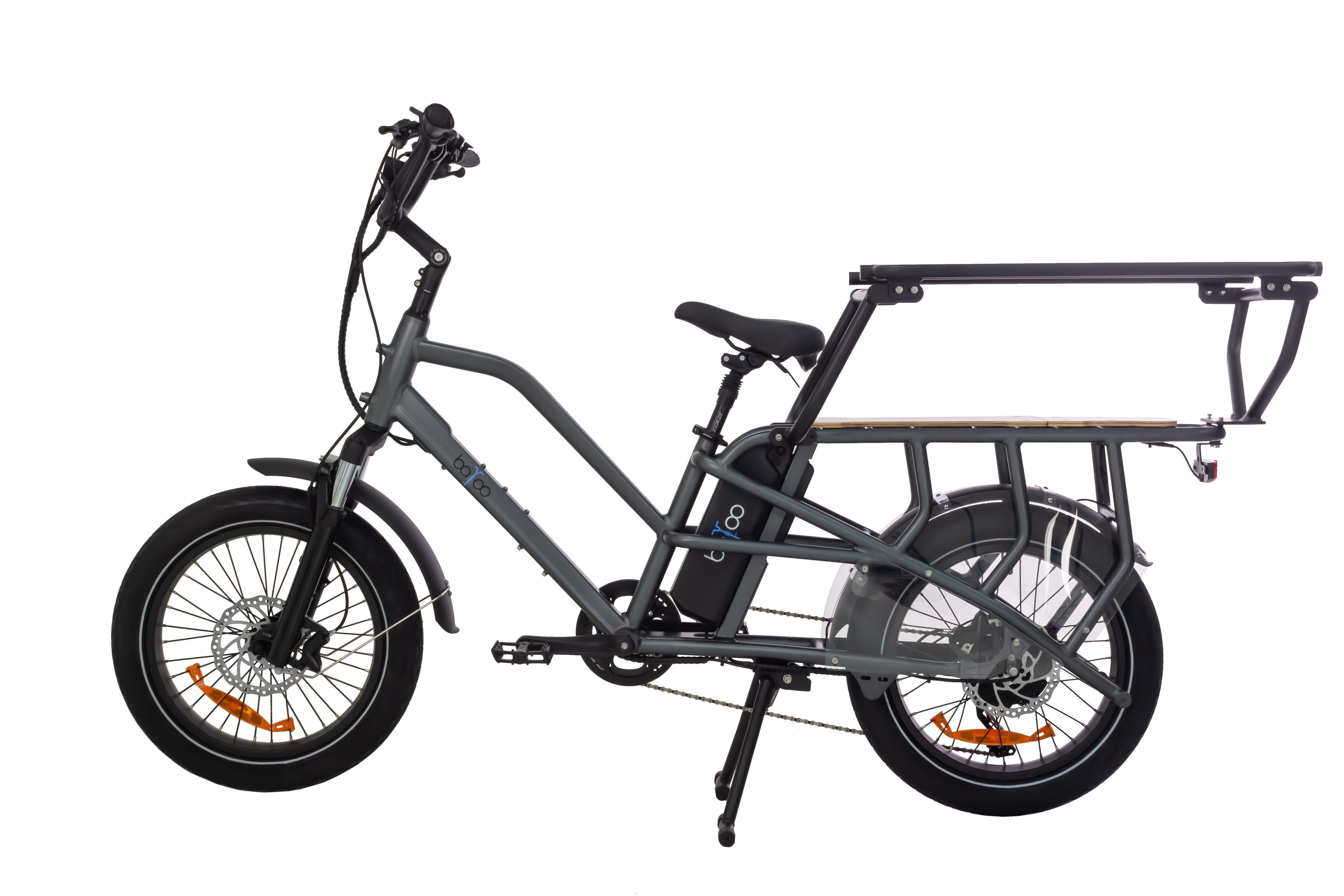
A high-end electric bicycle or a cargo bike isn't protected in the same way as a basic city bike. Its value is higher, its weight attracts attention, its components are expensive, and its daily use often requires it to be parked in front of a school, an office, a shop, or in a shared space. The right lock therefore becomes a real safety issue, not just an accessory to add at the time of purchase.
The first idea to remember is simple: no lock makes a bicycle impossible to steal. However, a good system can greatly reduce the risk, slow down attempts, and deter opportunistic thefts. For an electric bike, a cargo bike, or a speed bike, you need to think in terms of a "protection strategy" rather than a single lock.
This means combining several elements: a sturdy lock, a fixed point, a good fastening method, thoughtful parking, sometimes an anchor at home, and possibly a tracker. The BatooBike guide on bicycle theft in Switzerland and electric bike protection goes exactly in this direction: a good lock is essential, but it is not always enough on its own.
Why an electric or cargo bike needs more protection
A high-end electric bike, a family cargo bike, or a speed bike often represents several thousand francs. It is also more visible in public spaces. A cargo bike catches the eye due to its volume. A speed bike catches the eye due to its equipment. A premium e-bike catches the eye due to its battery, motor, screen, and components.
This is why a simple frame lock or a small, light cable is not enough. These solutions can be practical for a very short stop, but they are not suitable as primary protection for a valuable bicycle.
To properly secure an electric bike or a cargo bike, three objectives must be met:
- attach the frame to a solid fixed point
- protect at least one wheel or an important component
- make the theft longer, more visible, and less attractive
The TCS (Touring Club Switzerland) specifically recommends not just locking the bike, but attaching it to a fixed and solid structure. This is even more important for an electric bike, as some insurance companies may refuse coverage if the bike was not properly secured.
The main types of bike locks

There are several main types of bike locks. Each solution has its advantages and limitations. The best choice depends on your bike, your parking location, and your risk level.
| Lock Type | Strengths | Limitations | Recommended Use |
|---|---|---|---|
| U-lock | Very sturdy, compact, reassuring | Less flexible depending on the fixed point | Primary protection in the city |
| Robust chain | Flexible, practical for cargo bikes and wide points | Heavier to carry | Cargo bike, garage, long-term parking |
| Folding lock | Easy to carry, more flexible than a U-lock | Variable level depending on models | Daily use with moderate risk |
| Frame lock | Very practical for blocking the wheel | Not sufficient on its own | Secondary protection |
| Fixed anchor | Very effective at home or in the garage | Not mobile | Cellar, garage, courtyard, private premises |
| GPS or connected tracker | Helps locate the bike | Does not replace a lock | Complementary layer |
For a high-end electric bike, the right logic is rarely to choose only one of these systems. It is better to combine a solid main lock with a second protection adapted to your use.
The U-lock: the most reassuring choice in the city
The U-lock remains one of the most serious solutions for protecting an electric bike. Its rigid shape limits weak points, and its compact structure generally offers good resistance. For a high-end e-bike or a speed bike, it is often the best choice as a primary lock, especially in the city.
Its main advantage is its solidity. Its main drawback is its lack of flexibility. On a cargo bike, the frame is sometimes wider, longer, or less easy to bring close to a classic bike rack. In this case, you need to check before purchasing that the U-lock is large enough to secure both the frame and the fixed point.
A good U-lock is particularly suitable if you park:
- in front of an office
- in front of a shop
- near a train station
- on a busy street
- on a sturdy bike rack
For a cargo bike, it may be useful to supplement the U-lock with a chain, especially if the fixed point is far from the frame or if the bike remains in the same place for a long time.
The chain: very useful for cargo bikes

A robust chain is often very practical for a cargo bike. It makes it easier to reach a fixed point, even if the frame is wide or the rack is not perfectly placed. This is a real advantage with a longtail, a two-wheeled cargo bike, or a three-wheeled cargo bike.
Its other advantage is versatility. A chain can secure the frame, a wheel, or connect the bike to a fixed anchor in a garage. The BatooBike high-security padlock, for example, follows this logic of robust protection for electric cargo bikes.
The limitation is weight. A serious chain can be heavy to carry every day. For a cargo bike, this problem is less bothersome, as the bike often has panniers, a box, or storage space. For a speed bike used for commuting, a good compromise between security and transport must be found.
A chain is particularly interesting for:
- family cargo bike
- long-term parking
- garage or cellar
- distant fixed point
- complement to a U-lock
The folding lock: practical, but to be chosen with care
The folding lock is very popular because it is easy to transport. It often attaches to the frame, takes up little space, and offers more flexibility than a U-lock. For daily urban use, it is a convenient solution.
However, not all folding locks are equal. Some models are very decent, while others are better suited for short stops or bikes of lesser value. For a high-end electric bike, you need to choose a truly robust model, ideally certified or tested by a recognized organization.
A folding lock can be relevant if you are looking for:
- an easy-to-carry system
- a solution for short or medium stops
- a more flexible lock than a U-lock
- secondary protection as a complement
However, for a very expensive cargo bike or long-term parking in a risky area, it is better not to use it alone.
The frame lock: practical, but never alone
The frame lock blocks the rear wheel. It is very practical for a quick stop, for example when you stay close to the bike. It prevents someone from simply rolling away with the bike.
But it does not attach the bike to a solid point. A bike can therefore be lifted and carried away. On an e-bike or a cargo bike, this is not sufficient as primary protection.
The frame lock can be useful as a second barrier. It complements a U-lock or a chain very well. The ideal is to use it to block the wheel, while the main lock attaches the frame to a fixed point.
The fixed anchor: essential at home if the bike sleeps outside or in a shared space
Many thefts do not only occur on the street. A bike can also disappear from a garage, a cellar, a courtyard, or a shared bike room. That's why a fixed anchor can be very useful.
The idea is simple: install a solid point on the ground or wall, then attach the bike to it with a robust chain. For a cargo bike, this is often one of the best solutions at home, as the bike is heavy, expensive, and sometimes difficult to bring into an apartment.
A fixed anchor is particularly interesting if you park your bike:
- in a private garage
- in a cellar
- in an inner courtyard
- in a building's bike room
- under an outdoor shelter
If you live in the city and parking is already an issue, the BatooBike guide on where to park a cargo bike in the city can help you consider space, access, and security.
The GPS or connected tracker: useful, but not sufficient

A GPS or connected tracker can be very useful, especially for an expensive electric bike. It doesn't replace a lock, but it adds a layer of security. Its role is not to physically prevent theft. Its role is rather to help locate the bike if it is moved or stolen.
This is a good option for high-end bikes, family cargo bikes, and speed bikes used daily. It becomes even more interesting if the bike regularly stays outside the home or in a shared space.
However, you must remain realistic. A tracker should never become an excuse for improperly securing the bike. It comes after the basics: good lock, fixed point, smart parking, saved frame number, and appropriate insurance.
Should you use two locks?
For a high-end electric bike or a cargo bike, yes, it's often a very good idea. Two different types of locks make theft more complicated. An opportunistic thief will often look for an easier target, especially if the bike is well attached to a fixed and visible point.
The most logical combination is often:
| Situation | Recommended Combination |
|---|---|
| Short-term parking in the city | Sturdy U-lock + frame lock |
| Long-term parking in the city | Sturdy U-lock + chain |
| Family cargo bike | Robust chain + U-lock or frame lock |
| Garage or cellar | Robust chain + fixed anchor |
| Premium speed bike | High-level U-lock + second lock + tracker |
| Shared bike room | Chain + fixed point + battery removal if possible |
The goal is not to turn every stop into a complicated operation. The goal is to create a simple routine: always the frame to the fixed point, always a second protection if the bike stays for a long time, always easily stolen accessories removed when possible.
How to properly secure a cargo bike?
A cargo bike sometimes requires more attention than a classic bike, simply because it is longer, heavier, and less easy to place near a bike rack. Therefore, you need to choose the parking spot before choosing the fastening method.
The basic rule: attach the frame, not just a wheel. If possible, include the front wheel or the rear wheel in the system, especially if the bike remains in the same place for several hours.
Here's a simple method:
- choose a solid and authorized fixed point
- bring the frame as close as possible to the support
- pass the main lock around the frame and the fixed point
- add a second protection on a wheel or another point of the frame
- remove the battery or removable accessories if parking is long
You should also avoid fragile supports, easily removable barriers, or too thin panels. A good lock is not very useful if the fixed point is weak.
Where to park to reduce risk?
Parking plays almost as big a role as the lock. A well-protected bike left for a long time in an isolated place remains more exposed. Conversely, a visible, busy, well-lit place equipped with a sturdy support already reduces the risk.
The best places are generally:
- closed or supervised premises
- garages with anchors
- sturdy bike racks in a busy area
- frequented bike parking lots
- locations visible from a shop or office
To avoid as much as possible:
- isolated streets at night
- dark entrances
- weak or removable supports
- long-term parking always in the same place
- places where the bike obstructs traffic
For a cargo bike or a speed bike, it is also useful to vary habits. Leaving a very recognizable bike in the same place, at the same times every day, can increase exposure.
Insurance, frame number, and proof of purchase
Theft protection is not limited to the lock. You also need to prepare the file in case the bike disappears. This may seem administrative, but it is very important for a valuable bike.
Always keep:
- the bike invoice
- the frame number
- recent photos of the bike
- the battery and accessory references
- proof of purchase of the lock
- your insurance conditions
Some insurance companies require the bike to be properly secured to cover theft. It is therefore important to read the conditions of your contract, especially for a speed bike or a high-end electric bike.
Simple comparison: which solution to choose?
| Your Need | Most Suitable Solution |
|---|---|
| Primary protection in the city | Robust U-lock |
| Cargo bike difficult to attach to a rack | Robust chain |
| Easy daily transport | Quality folding lock |
| Very short stop | Frame lock as a complement |
| Bike stored in the garage | Chain + fixed anchor |
| Very high-end bike | Two locks + tracker |
| Long-term parking | Fixed point + double protection |
| Shared bike storage | Anchor if possible + chain + battery removal |
Mistakes to avoid
The first mistake is buying an expensive bike and a too-light lock. This is very common. However, the more valuable the bike, the more serious the protection should be.
The second mistake is only locking the wheel. A wheel can be removed, especially on some bikes. The frame must always be secured.
The third mistake is leaving the battery or easily removable accessories on the bike during long-term parking. If the battery is easily removable, it's best to take it with you in high-risk areas.
The fourth mistake is always parking in the same spot for a long time, in an inconspicuous area. Even with a good lock, repetition increases exposure.
Finally, you shouldn't confuse a tracker with an anti-theft device. A tracker can help after the theft, but it never replaces real mechanical protection.
Conclusion
For a high-end electric bike, a cargo bike, or a speed bike, the best anti-theft device is rarely a single item. It's a smart combination: a solid main lock, a robust fixed point, a second protection if the bike stays for a long time, good parking, and possibly a tracker.
If you need to remember one simple rule, remember this: always lock the frame to a solid fixed point, then add a layer of security depending on the bike's value and parking duration. For a family cargo bike or a premium speed bike, two different types of locks are often the most reassuring choice.
A good anti-theft device does not completely eliminate the risk of theft, but it clearly changes the equation. It makes the bike less easy to steal, less attractive to opportunists, and much harder to quickly take away.
Final FAQ
Which anti-theft device is most effective for an electric bike?
For a high-end electric bike, a robust U-lock or a high-security chain are generally the most serious choices. The ideal is to lock the frame to a solid fixed point and add a second protection if the bike stays outside for a long time.
Do I need two anti-theft devices?
Yes, it is highly recommended for a cargo bike, a speed bike, or a premium e-bike. Two different types of anti-theft devices complicate theft and further discourage quick attempts.
How to properly lock a cargo bike?
You need to lock the frame to a solid fixed point, then secure a wheel or a second point of the bike if possible. A robust chain is often practical for a cargo bike, as it offers more flexibility than a U-lock when the bike is long or wide.
Is a GPS tracker useful?
Yes, especially for a valuable bike. It can help locate a misplaced or stolen bike. But it never replaces a real anti-theft device. It should be seen as an additional layer.
Where should I avoid leaving my bike?
It's best to avoid isolated, dark, uncrowded places, fragile supports, very long outdoor parking, and places where the bike always stays in the same spot. For a high-end electric bike or a cargo bike, an enclosed, visible space or one with a solid fixed point is preferable.