Parking is one of the real barriers to buying a cargo bike. Many families and professionals are convinced by its utility, but then get stuck when they ask a very simple question: where will I actually put it every day? This is not a minor detail. The Swiss manual on bicycle parking reminds us that a bike that is difficult to get out or put away often ends up being used less.
For a cargo bike, the question is even more important because we are not just talking about a slightly longer bike. Sometimes we're talking about a two-wheeled cargo bike over 2.5 m long, a three-wheeled cargo bike nearly 90 cm wide, or a compact model that is much simpler for daily life. Before choosing, you therefore need to consider your home, bike shed, garage, work parking, and overnight street parking. And to get a good sense of the different formats, it's helpful to re-read this guide on types of cargo bikes as well as the article on how to choose your electric cargo bike.
Why parking often prevents purchase
On paper, a cargo bike meets many needs. It carries children, groceries, equipment, and can replace many car trips. But in real life, parking often decides everything. If the bike doesn't fit in the shed, if you have to lift it, if it bothers other residents, or if it sleeps outside without real protection, the experience quickly becomes frustrating. PRO VELO Switzerland rightly points out that parking is an integral part of daily bike use, just like the route or safety.
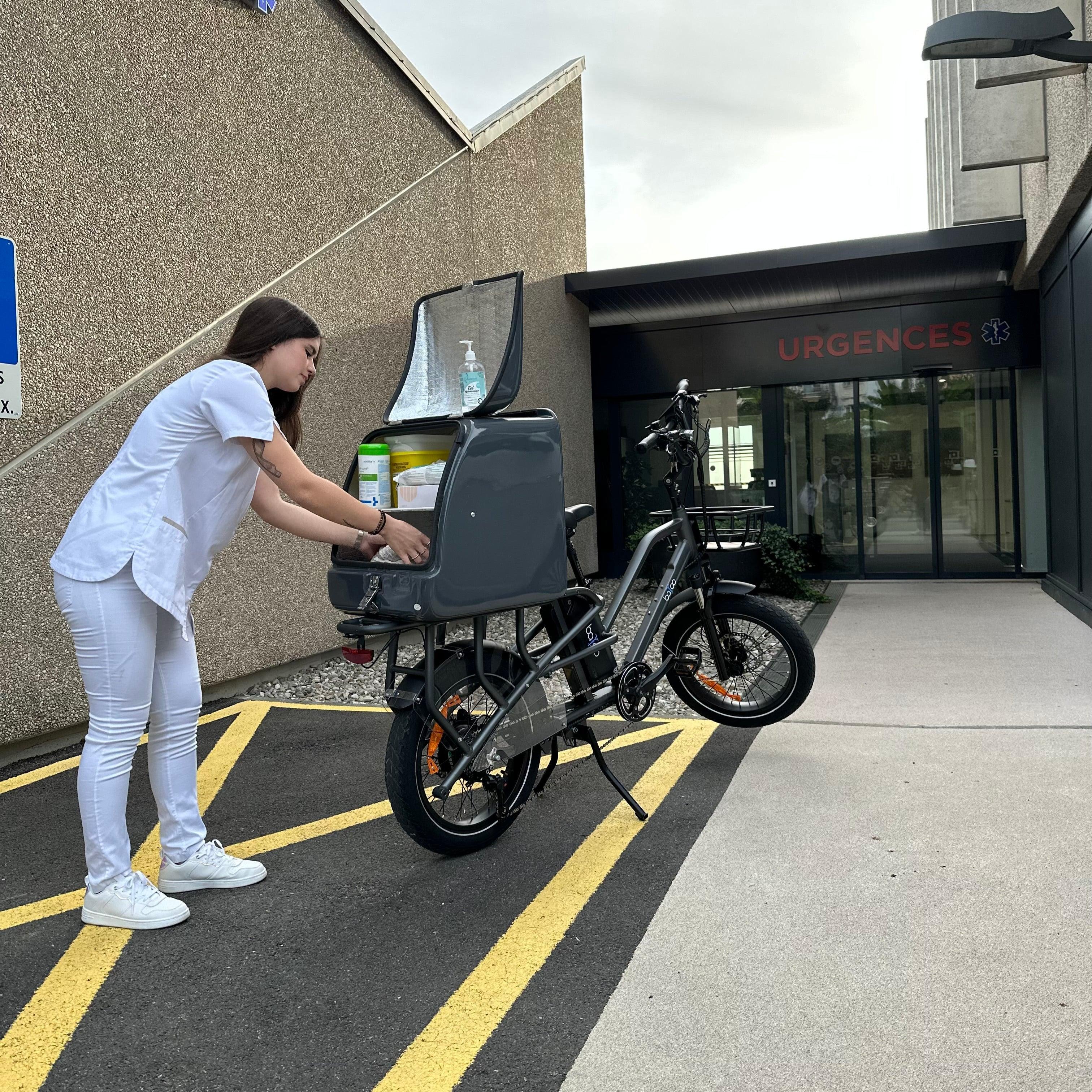
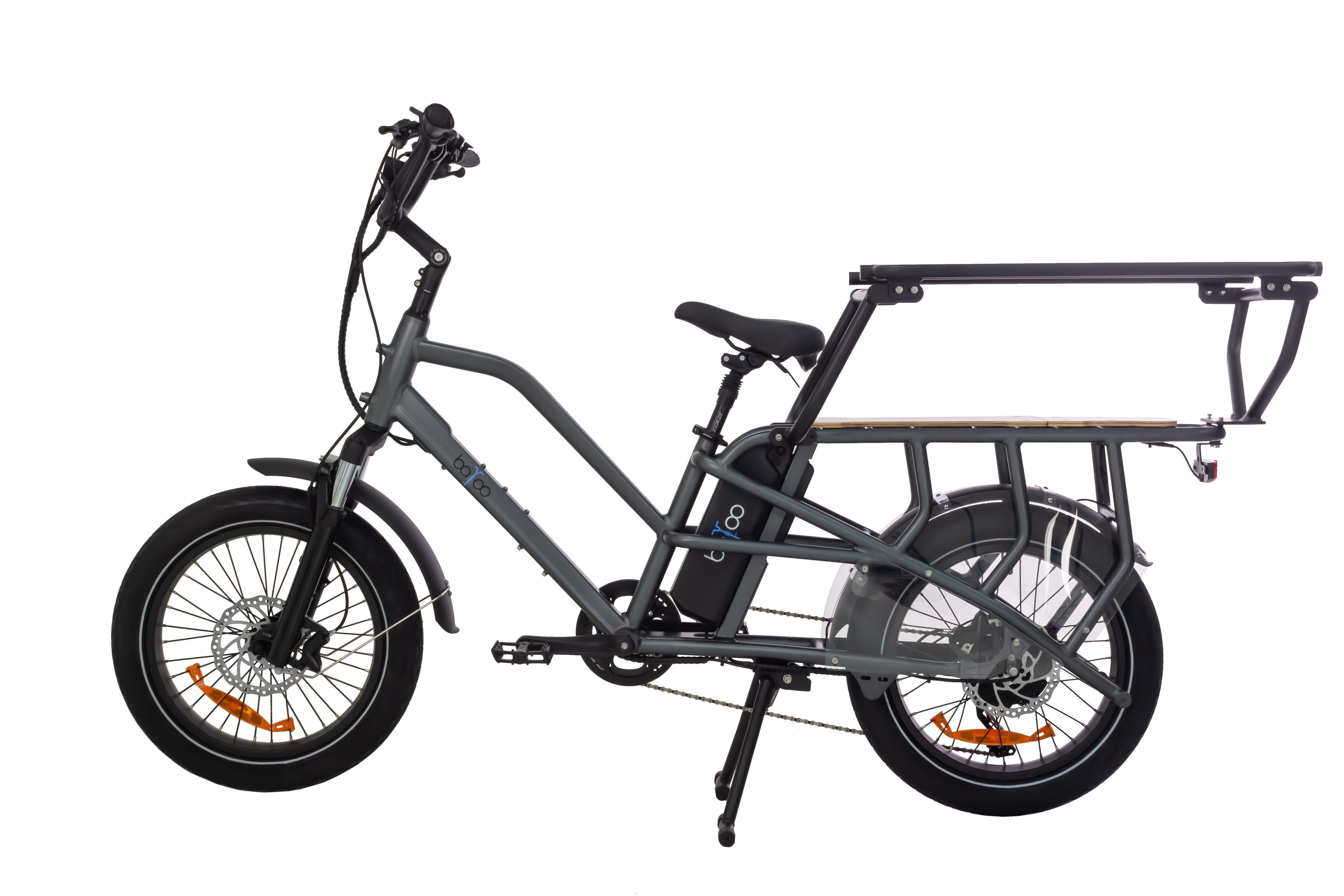
This is also why you need to think about actual use and not just carrying capacity. A cargo bike that's perfect on the road can become a bad purchase if it doesn't fit in your home or if you can never properly secure it. Conversely, a slightly more compact model might be the best choice if you use it every day without hassle. The Colibri V2.0, for example, follows this logic with a more compact format, a low frame, and useful features like integrated GPS and anti-theft with geofencing, which directly addresses the issue of urban parking.
Dimensions to check before buying
The first thing to do is measure before you dream. Many classic bike sheds are designed for standard bikes. PRO VELO Lausanne reminds us that a parking space with a frame hoop is designed for a minimum of 0.50 m x 2.00 m, plus access area. This is sufficient for a classic bike, but not necessarily for a two-wheeled or three-wheeled cargo bike.
Here's a simple guideline to keep in mind before buying:
| Bike Type | Typical Size | What it changes for parking |
|---|---|---|
| Classic bike / Standard e-bike | approx. 2.00 m max length for a standard space | Fits in most hoops and sheds |
| Compact longtail | often similar to a classic bike in width, approx. 1.80 m on some models | Can still fit in some classic sheds |
| Two-wheeled cargo bike | often around 2.60 to 2.74 m long and approx. 70 cm wide | Requires much more length |
| Three-wheeled cargo bike | often around 2.00 to 2.30 m long and approx. 89 cm wide | The real sticking point is often the width |
Before buying, check at least:
-
door width
-
available floor length
-
turning radius for entry and exit
-
presence of stairs or overly steep slopes
-
possibility of attaching the frame to a fixed point
-
usable height if you have a rain cover or wide handlebars
A tape measure is often worth more than a long hesitation. And if you test a bike, ideally try the actual entry and exit route from your home, not just the road.
Solutions by housing type: house, apartment building, cellar, garage
In a detached house, the situation is often the simplest. A garage, covered shelter, or space in the yard generally allows for serene living with a cargo bike, provided there is easy access. The best parking is not always the most hidden, but the easiest to use every day. If getting the bike in takes five minutes and several complicated maneuvers, you'll quickly feel it.
In an apartment building, the subject becomes more sensitive. A classic bike shed may suffice for a longtail or a compact cargo bike, but it quickly becomes limited for a two-wheeled or three-wheeled cargo bike. The Sion private land bike parking guide reminds us that you need to allow approximately 1 to 2 m² per bike without circulation space and 2 to 4 m² with circulation space. For a cargo bike, you quickly reach the limit of what a standard shed can absorb without specific organization.
The cellar is often a false good idea. If it is only accessible by stairs, it quickly becomes dissuasive. For a loaded cargo bike, or for a parent in a hurry in the morning, this point becomes decisive.
The garage, on the other hand, remains an excellent solution if the depth is sufficient. In many cases, the real blockage is not the total surface area, but the entry angle. A long two-wheeled cargo bike can theoretically fit in the garage, but can be difficult to get in if the access is narrow. This is where a more compact model sometimes has an advantage, especially if the use is urban and daily.
Parking at work
Parking at work is often underestimated, yet it conditions commuter use. If you use a cargo bike to drop off a child and then go to the office, you need a simple, secure, and large enough space. The SBB recommendations for bike stations clearly state that a sufficient number of spaces must be provided for special bikes, such as cargo bikes and bikes with trailers. They also emphasize short, obstacle-free access, covered spaces, the possibility of attaching the bike, and protection against theft.
In practice, good corporate parking for a cargo bike often ticks these boxes:
-
direct access, no steps
-
covered location
-
possibility of attaching frame and wheel
-
adequate lighting
-
sufficient space for special bikes
-
ideally a secure or controlled area
If your company only has a simple standard hoop against a wall, this may be enough for a classic bike, but not necessarily for a cargo bike. For daily use, work parking should be thought of from the outset as part of the journey, not as an improvisation.
Leaving your cargo bike outside: risks and precautions
Yes, you can leave a cargo bike outside. But you need to know what that entails. Outdoors, the two main risks are theft and accelerated wear and tear due to weather. For long-term parking, a covered spot is always preferable.
The problem with a cargo bike outside is that it's more visible, more expensive, and sometimes harder to attach properly depending on the frame shape. Its weight isn't enough to protect it. A cargo bike remains an attractive target, especially at night. And even without theft, rain, cold, and humidity degrade accessories, saddles, covers, connectors, and sometimes the battery more quickly if the bike sleeps outside permanently.
If you have no other choice but outdoor parking, you need at least:
-
a solid fixed point
-
a visible or lit area
-
if possible, a covered location
-
appropriate rain protection
-
a real plan for the battery and removable accessories
Outdoor parking can work, but it must be thought of as an organized solution, not just a simple "I'll just put it there for the night."
Useful accessories for secure parking
The first useful accessory is not necessarily the one you imagine. It's not always a second anti-theft device. Sometimes it's simply a bike that's better suited to your storage reality. A compact cargo bike, easier to bring inside, will often be better protected than a very large model left outside due to lack of space. This is also why you should first choose the right format. The BatooBike guide on how to choose your electric cargo bike and the comparison between cargo bike or trailer are useful before buying too large.
Then, for parking itself, the most useful accessories are often:
-
a serious main anti-theft device for the frame
-
a second anti-theft device to secure the wheel or box depending on the model
-
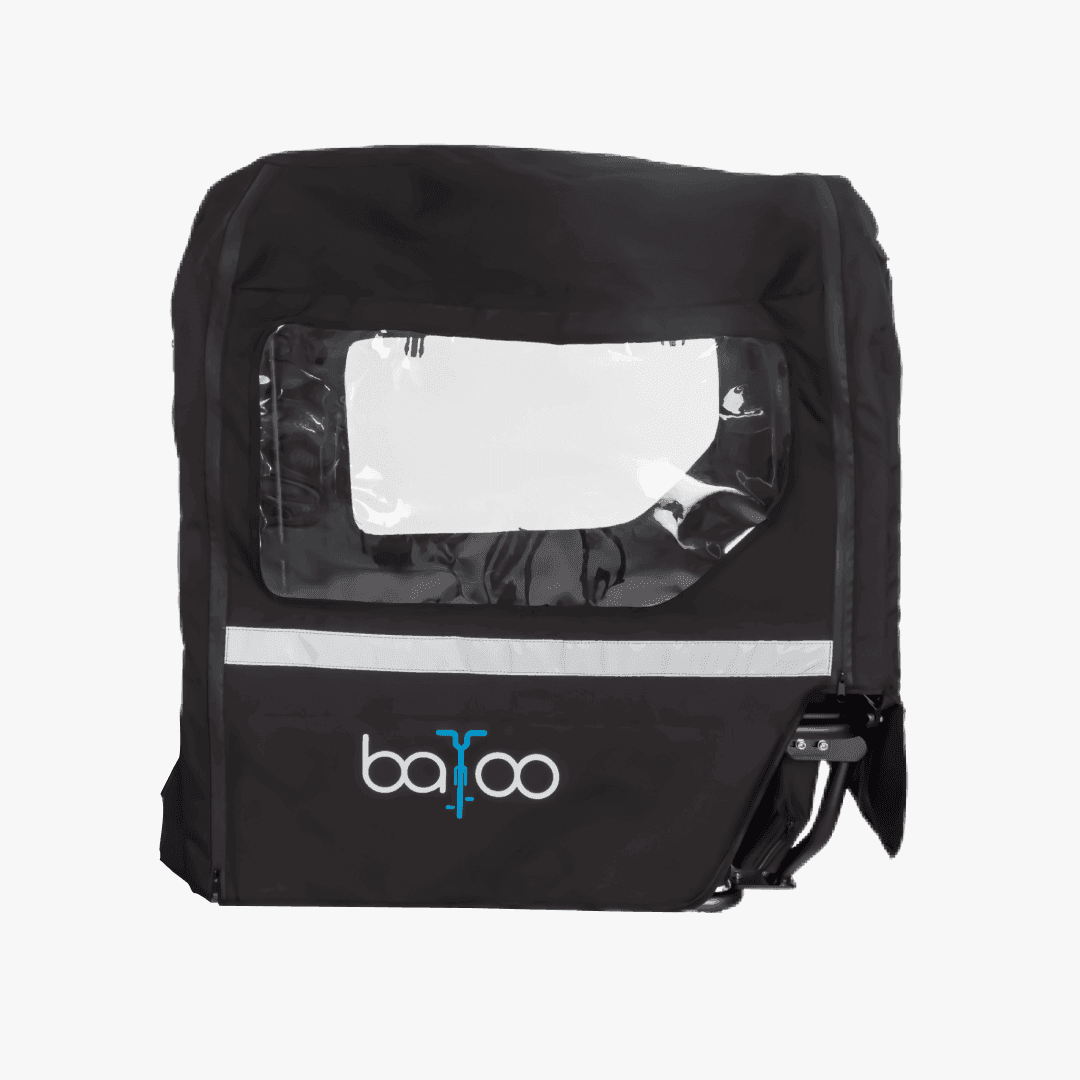
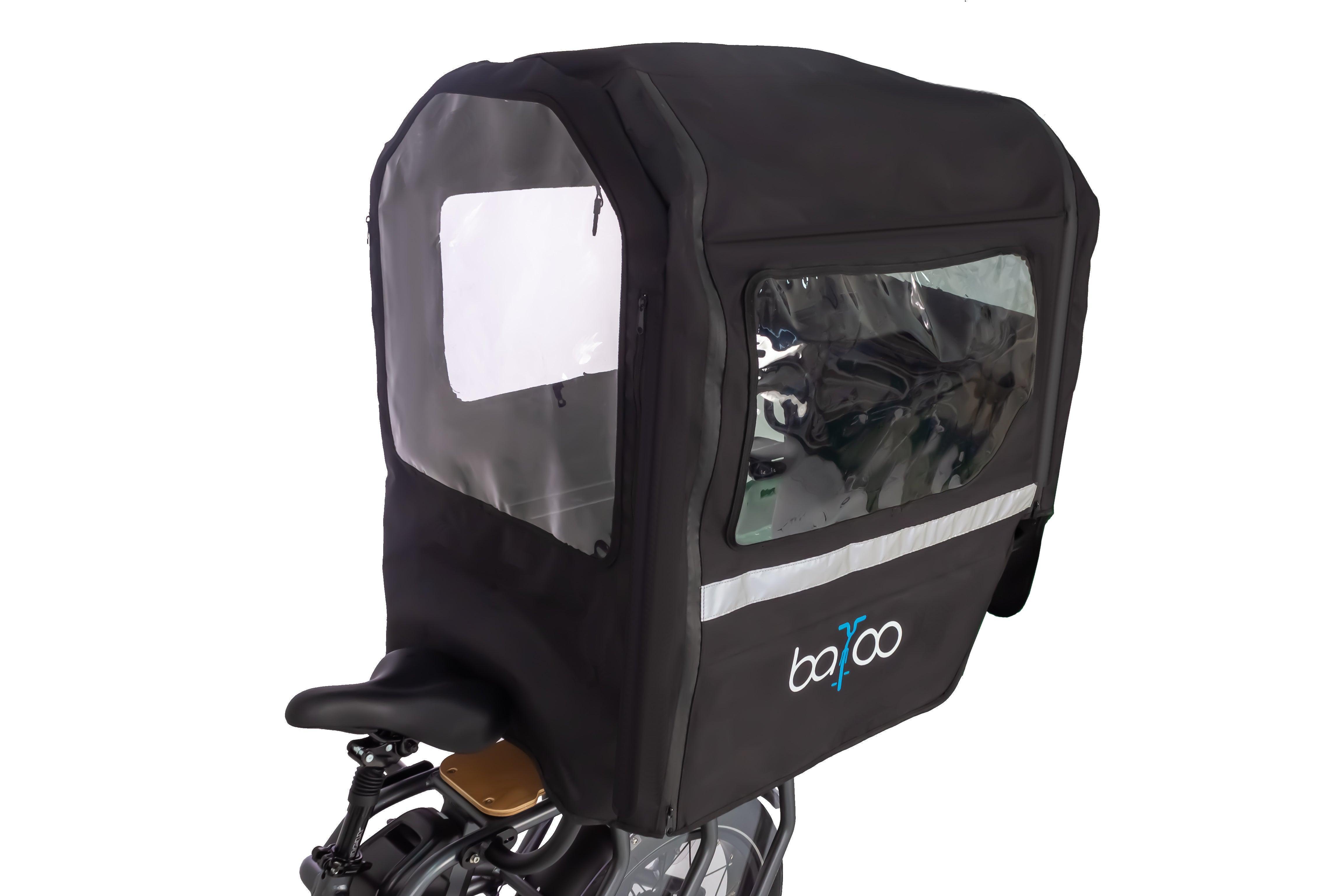
a rain cover if the bike stays outside
-
a tracker or a connected system if the bike allows it
-
a stand or a fixed point truly compatible with the bike's dimensions
On this point, features like integrated GPS, anti-theft, and geofencing announced on the Colibri V2.0 can represent a real plus for urban use. This doesn't replace good parking, but it significantly reinforces peace of mind, especially in the city.
Checklist before trial
Even before testing a cargo bike, check this:
| Question | Why it's important |
|---|---|
| Does it fit through my door or gate? | Width often blocks before length |
| Do I have stair-free access? | Complicated access discourages daily use |
| Can I attach it to a fixed point? | Without an anchor point, security drops sharply |
| Can it sleep dry? | Cover changes the lifespan of the bike and equipment |
| Does work parking accept special bikes? | Good daily use also depends on arrival |
| Do I need a two-wheeled cargo bike, or is a compact one enough? | The right format avoids many parking hassles |
The best advice before buying remains simple: don't just test the bike, also test its parking. Look at the building entrance, the bike shed, the gate, the space in the cellar, the turning space, the office parking. These details determine whether the cargo bike will be a pleasure or a constraint.
Conclusion
Parking a cargo bike in the city is not impossible, far from it. But it's also not a question to be dealt with after purchase. It's one of the most important criteria, on the same level as carrying capacity, range, or budget. For many people, the right cargo bike is simply the one they can truly bring inside, attach, and protect without complicating their lives every day.
Before you start, measure, observe, and project yourself into your actual routine. A longtail or a compact cargo bike may be sufficient where a two-wheeled cargo bike would be too bulky. Conversely, if you have the space, a more generous format will sometimes be the best choice. The most important thing is to match the bike with your city, your home, and your habits, not just with a technical sheet.
Final FAQ
Where to park a cargo bike when living in an apartment?
The simplest option is a ground-floor bike shed, a garage, or a private space accessible without stairs. In an apartment, the real critical point is often access: door, width, turning space, and the presence or absence of stairs. A longtail or compact cargo bike often integrates more easily than a two-wheeled or three-wheeled cargo bike.
Does a cargo bike fit into a classic bike shed?
Sometimes yes, sometimes no. A compact longtail can still fit in some standard sheds, especially if it remains close to the dimensions of a normal bike. However, a long two-wheeled cargo bike or a wide three-wheeled cargo bike often exceeds the format intended for a classic bike space of 0.50 x 2.00 m.
What dimensions should be checked before purchase?
You need to measure the width of the doors, the available length, the maneuvering space, the absence of stairs, and the possibility of attaching the frame to a fixed point. For daily use, these elements are often more important than a few centimeters on a technical sheet.
Can a cargo bike be left outside?
Yes, but it is never the ideal long-term solution. Outside, you must anticipate theft, rain, humidity, and the protection of the battery and accessories. Covered, visible, and attachable parking remains significantly preferable.
How to secure a cargo bike at night?
The best option is a locked shed or a secure area with a fixed point. Failing that, you need a strong anti-theft device for the frame, a second security point if possible, a well-lit, and ideally covered location. A connected system like GPS or geofencing can also provide real additional security.
Can a cargo bike be accepted in a co-ownership or apartment building?
Yes, but it depends on the regulations, available space, and the organization of the premises. In practice, a cargo bike is more likely to be well-accepted if its parking is clean, stable, secure, and does not hinder other users.