An e-bike or cargo bike is a significant investment. Depending on the model, equipment, and intended use, the budget can quickly reach several thousand francs. For many families, the problem is not necessarily the total cost of the bike, but the amount to pay at the time of purchase.
Fortunately, several solutions are available to finance an e-bike in Switzerland. You can pay in cash, spread the cost over several monthly payments, use a financing plan, or look for a local subsidy. Some companies also contribute to their employees' mobility expenses.
The best option is not necessarily the one with the lowest monthly payment. You need to consider the total cost, any interest, administrative fees, ownership conditions, insurance, and the possibility of receiving local aid.
Before comparing financing options, start by choosing a bike that suits your needs. The BatooBike homepage allows you to discover the cargo mobility solutions available in Switzerland, as well as test ride and installment payment options.
The three main ways to finance your bike

To finance an e-bike in Switzerland, three main options are generally available:
- buying the bike in cash;
- spreading the payment over several months or using a leasing plan;
- reducing the price through a communal, cantonal, or professional subsidy.
These solutions can sometimes be combined, but this is not automatic. Some aids require a fully paid invoice. Others reject purchases made on lease or with deferred payment. Therefore, you must check the subsidy conditions before signing any financing agreement.
Here is an initial comparison:
| Solution | Main Advantage | Main Limitation |
|---|---|---|
| Cash purchase | Generally the lowest total cost | Large amount to pay immediately |
| Installment payment | Budget spread over several months | Possible interest or fees |
| Leasing | Predictable monthly payment and more accessible entry | Ownership and final cost to be checked |
| Local subsidy | Reduction of the real cost | Variable conditions depending on location |
| Employer aid | Can significantly reduce personal effort | Depends on company policy |
The right choice depends on your available savings, financial stability, the bike's price, and how often you plan to use it.
Cash purchase
A cash purchase is the simplest solution. You pay for the entire bike at the time of order and become its immediate owner.
This option generally avoids interest and fees associated with financing. It also facilitates future resale, as the bike is not tied to a leasing contract or retention of title.
A cash purchase is particularly advantageous if:
- you already have the necessary savings;
- the payment does not deplete your safety reserve;
- you plan to keep the bike for a long time;
- you want to avoid any monthly commitment;
- you have obtained a sufficient subsidy or aid.
However, you shouldn't use all your savings just to avoid a few monthly payments. Maintaining a financial reserve remains important for unforeseen expenses, bike maintenance, or other family needs.
A good rule of thumb is to distinguish between the purchase budget and the safety budget. If paying cash leaves you with no margin for several months, installment payments may be more reasonable, even if they cost slightly more.
Advantages of cash purchase
A cash purchase offers several benefits:
- no commitment over several years;
- no interest if the price is paid directly;
- immediate ownership;
- simpler resale;
- easy-to-understand total cost;
- better budget visibility.
It can also offer more freedom to choose insurance, a workshop, or accessories without being tied to the conditions of a financing contract.
Limitations of cash purchase
The main problem remains the immediate financial effort. For a well-equipped family cargo bike, the budget can reach several thousand francs.
The BatooBike guide on the price of an electric cargo bike in Switzerland shows that family models are generally in a higher price range than classic e-bikes.
In addition to the bike's price, you also need to factor in:
- a good anti-theft device;
- children's accessories;
- rain protection;
- panniers;
- suitable insurance;
- initial maintenance costs;
- possibly a helmet and visible equipment.
A bike listed at CHF 4,000 can therefore represent a slightly higher actual budget once properly equipped.
Installment payment or leasing
Installment payments allow you to spread the cost over several months. BatooBike currently offers payment in several installments, from 3 to 36 times, depending on the conditions offered at the time of purchase.
This solution reduces the initial financial effort. It can make it possible to buy a suitable bike immediately rather than waiting several months or choosing a less reliable model just to stay within a cash budget.
However, a low monthly payment does not necessarily mean that the financing is advantageous. The longer the duration, the greater the risk of paying interest or fees.
Before signing, always ask for:
- the cash price of the bike;
- the amount of the down payment;
- the number of monthly payments;
- the amount of each monthly payment;
- the total cost at the end of the contract;
- the annual effective rate;
- administration fees;
- early repayment conditions;
- the consequences of late payment.
You must compare the total cost of financing with the cash price, and not just look at the advertised monthly payment.
Example of monthly payments
Let's take a bike listed at CHF 4,500. Without interest or additional fees, the budget would be approximately as follows:
| Duration | Indicative monthly payment |
|---|---|
| 12 months | 375 CHF |
| 24 months | approximately 188 CHF |
| 36 months | 125 CHF |
These amounts are only to help understand the price distribution. The actual contract may include a down payment, interest, fees, or specific conditions.
Financing over 36 months makes the monthly payment lighter, but you remain committed for three years. You must therefore ensure that this burden remains comfortable even if your situation changes.
Installment payment and leasing are not always the same thing
The terms are sometimes used imprecisely. However, an installment payment and a lease can function differently.
With an installment payment, you generally buy the bike and pay its price progressively. Depending on the contract, ownership may be immediate or reserved until the last payment.
With a true lease, the bike may remain the property of the financing company for the entire duration of the contract. At the end, several possibilities may exist:
- return the bike;
- extend the contract;
- buy the bike for a residual value;
- automatically become the owner, if the contract provides for it.
Before signing a lease, clearly check:
- who owns the bike;
- what happens at the end of the contract;
- if there is a buy-back value;
- who pays for maintenance;
- who assumes the risk of theft or damage;
- if particular insurance is mandatory;
- the conditions in case of early termination.
Leasing can be practical, but it is not automatically cheaper. Its main advantage is to smooth out the budget, not necessarily to reduce the final price.
Is leasing advantageous?
Leasing can be relevant when you need the bike immediately but do not want to tie up several thousand francs.
It can suit a person who:
- uses the bike daily;
- replaces a significant part of their car journeys;
- has regular monthly income;
- prefers to keep their savings;
- fully understands the total cost of the contract.
It is less advantageous if:
- interest and fees are high;
- you can pay cash without straining your budget;
- you plan to resell the bike quickly;
- you are not yet sure if the model suits you;
- the contract prevents access to a significant subsidy.
Before any commitment, a real test ride is highly recommended. You can book a free test ride at BatooBike to check comfort, parking, maneuverability, and family use before financing the bike.
Subsidies and local aid
In Switzerland, there is no single national subsidy valid everywhere for the purchase of an e-bike. Aid depends mainly on the canton, the municipality, the type of bike, and the buyer's profile.
Some municipalities support:
- classic e-bikes;
- electric cargo bikes;
- replacement batteries;
- purchases by individuals;
- purchases by self-employed individuals or SMEs;
- professional mobility programs.
The BatooBike page dedicated to subsidies for electric cargo bikes lists various local aids and indicates that some can reach up to CHF 1,000 depending on the municipality.
This information should always be verified directly with the municipality. Budgets, criteria, and deadlines can change throughout the year.
Most frequent conditions
Local aid often imposes several conditions:
- residing in the municipality concerned;
- buying a new bike;
- choosing an eligible type of bike;
- providing a nominative invoice;
- submitting the application within a defined period;
- keeping the bike for a minimum period;
- using an accepted store or supplier;
- submitting the application before or after purchase, depending on the program.
Some subsidies are paid after purchase. You must then be able to temporarily finance the entire bike before receiving the refund.
Other programs require validation before ordering. Buying the bike too early can therefore lead to losing the aid.
Can financing and subsidy be combined?
This depends entirely on the aid regulations.
Some municipalities accept a financed purchase if a complete invoice is issued in the beneficiary's name. Others require the bike to be fully purchased and exclude leasing or deferred purchase.
In Geneva, for example, the cantonal program for certain self-employed individuals and SMEs for the purchase of cargo bikes currently excludes leasing and deferred purchase.
The correct method is therefore as follows:
- check the aid before ordering;
- ask if installment payment is accepted;
- check who will appear as the owner on the invoice;
- confirm the submission deadline;
- keep all supporting documents;
- await approval when regulations require it.
Do not sign a financing agreement assuming the subsidy will be automatically granted.
Employer aid
Some companies offer benefits related to sustainable mobility. This can take several forms:
- contribution to the purchase of an e-bike;
- mobility allowance;
- reimbursement of part of the equipment;
- provision of a company bike;
- contribution to a rental subscription;
- coverage of annual maintenance;
- possibility of charging at the office.
This aid depends on the company's internal policy. It is not always clearly displayed. It can therefore be useful to ask human resources directly.
Employer participation can sometimes be combined with communal aid, but again, the rules of each program must be checked.
What monthly budget should you plan for?
The financing installment represents only part of the budget. You also need to plan for maintenance, insurance, and accessories.
Here is an example for an e-bike or cargo bike used regularly:
| Item | Indicative monthly budget |
|---|---|
| Bike financing | 100 to 250 CHF depending on price and duration |
| Recharging | A few francs |
| Routine maintenance | 10 to 25 CHF (smoothed average) |
| Insurance | Varies by coverage |
| Accessories | Mainly at the beginning |
| Battery reserve | To be anticipated over several years |
To establish a realistic budget, add up:
monthly payment + insurance + maintenance + accessories + any administrative fees.
A bike financed at 125 CHF per month can actually cost 150 CHF or more once other expenses are included.
This is often still much lower than the monthly cost of a second car, but the comparison must be made on a comprehensive basis.
Total long-term cost
To find out which option is the most cost-effective, compare the total cost over the period you expect to keep the bike.
Let's take a simple example:
| Option | Immediate cost | Long-term cost |
|---|---|---|
| Cash purchase | High | Generally the lowest |
| Interest-free payment | Low to medium | Close to cash price |
| Financing with interest | Low | Higher than cash price |
| Leasing with buyback option | Low | Depends on monthly payments and final value |
| Purchase with subsidy | Reduced after reimbursement | Often very advantageous |
| Used | Lower | Highly dependent on battery condition |
Cash purchase with a subsidy is often the cheapest option in the long term. But it requires having available liquidity.
An interest-free installment plan can be an excellent compromise, as it keeps the cost close to a cash purchase while spreading the financial effort.
Financing with interest can remain reasonable if the bike genuinely replaces car expenses. However, it becomes less attractive if the bike is used infrequently.
Should transport savings be included?
Yes. The bike should be compared with the expense it replaces.
If it replaces:
- fuel;
- a parking subscription;
- transport tickets;
- part of a car lease;
- a second car;
- several taxi rides;
then its net monthly cost can become much lower.
For example, a monthly payment of 150 CHF might seem significant. But if the bike saves 200 CHF in car and parking fees each month, the operation becomes positive from the start.
The BatooBike guide on replacing your second car with a cargo bike helps identify truly transferable journeys and possible savings.
Which option suits your profile?
The best financing depends on your situation.
| Profile | Often the most logical option |
|---|---|
| Comfortable savings | Cash purchase |
| Stable budget but little savings available | Installment payment |
| Professional need | Financing or company assistance |
| Municipality offering significant aid | Subsidy then cash or compatible financing |
| Still uncertain use | Trial or rental before purchase |
| Replacing a second car | Financing possible if monthly savings are greater |
| Seeking minimum total cost | Cash + subsidy |
| Need to preserve cash flow | Reasonable monthly payments |
| Very limited budget | Checked used bike or simpler model |
Do not choose a monthly payment that leaves too little margin at the end of the month. Even if the bike allows for savings, some expenses will continue during the transition.
Buy new or used to reduce the budget?

Buying used can significantly reduce the initial cost. But it requires more checks, particularly regarding the battery, motor, maintenance, and documents.
For a used bike, financing is also sometimes more difficult to obtain. Local aid often concerns new bikes and may refuse purchases between private individuals.
The BatooBike guide on used electric bikes in Switzerland explains the checks to perform before purchase.
New remains more reassuring if you need:
- a warranty;
- a recent battery;
- after-sales service;
- an invoice compatible with a subsidy;
- financing offered directly at the time of purchase.
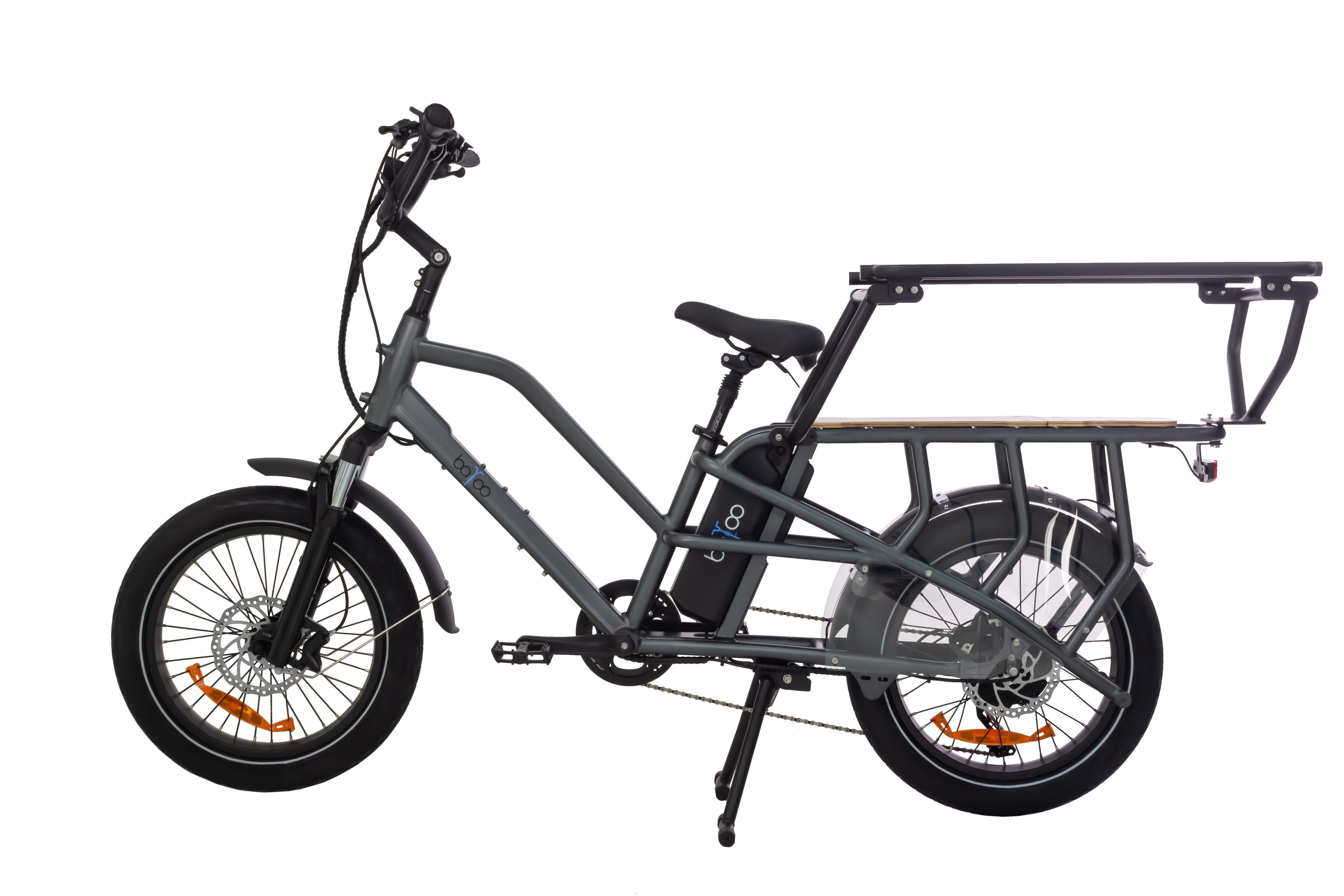
A model like the Colibri V2.0 can be compared by integrating its price, necessary accessories, available aid, and actual monthly payment rather than just looking at the advertised price.
Checklist before choosing financing
Before making a decision, check the following points:
| Question | Verification |
|---|---|
| What is the cash price? | Ask for the exact amount |
| What is the total financed cost? | Add up all monthly payments and fees |
| What is the effective annual rate? | Read the contract |
| Is a down payment required? | Include it in the calculation |
| Who owns the bike? | Check the leasing terms |
| What happens at the end? | Return, buyback, or ownership |
| Is insurance mandatory? | Check its cost |
| Is a subsidy available? | Contact the municipality |
| Is the financing accepted by the subsidy? | Obtain confirmation |
| Does the employer contribute? | Ask Human Resources |
| Has the bike been test ridden? | Test before committing |
| Is the monthly payment comfortable? | Maintain a safety margin |
Don't rely solely on the "from 99 CHF per month" tag. An offer is only attractive when the total cost and all conditions are clear.
Decision example
Imagine a family that wants to buy a cargo bike for 4,500 CHF.
They have three options:
| Option | Example |
|---|---|
| Cash | 4,500 CHF immediately |
| Payment over 24 months | Approximately 188 CHF/month before fees |
| Payment over 36 months | 125 CHF/month before fees |
Next, assume a subsidy of 500 CHF is available and compatible with the purchase.
The net cost can then drop to 4,000 CHF. But if the subsidy is paid after the purchase, the family must first pay or finance the 4,500 CHF, then receive the aid later.
This example shows why three questions need to be separated:
- how much needs to be paid now?
- how much needs to be paid each month?
- how much will the bike actually cost in the end?
Mistakes to avoid
The most common mistakes are:
- choosing based solely on the monthly payment;
- not looking at the total cost;
- assuming a subsidy will be granted;
- buying before checking the aid conditions;
- confusing installment payment and leasing;
- forgetting insurance and accessories;
- financing a bike that has not been test-ridden;
- choosing too long a duration;
- using all savings without keeping a reserve;
- underestimating costs in case of early termination.
A monthly payment should facilitate the purchase, not weaken the family budget.
Conclusion
To finance an electric bike in Switzerland, three main options exist: cash purchase, installment payment or leasing, and local aid. The most cost-effective long-term solution generally remains a cash purchase, especially when combined with a subsidy.
However, payment in several monthly installments can be an excellent compromise. It allows you to preserve your savings and use the bike immediately, provided you compare the cash price, total cost, interest rate, and fees.
Subsidies can significantly reduce the entry cost, but they vary by municipality and are not always compatible with leasing. You should therefore start by checking for aid, then choose the financing.
The best decision is one that matches your use and actual budget. Compare offers, try the bike, estimate transport savings, and keep a comfortable financial margin. A well-chosen and actually used bike can become a much more profitable investment than a cheaper model left in the garage.
Final FAQ
What solutions exist for financing an electric bike?
The main solutions are cash purchase, payment in several monthly installments, consumer credit, leasing, local subsidies, and any employer assistance. Their availability depends on the seller, the bike, and your place of residence.
Is leasing worthwhile?
Leasing can be interesting for spreading the cost and preserving savings. However, you need to check the total cost, interest, insurance, bike ownership, and the conditions for buyback or return at the end of the contract.
Can financing and subsidies be combined?
Sometimes, but not always. Some municipalities accept installment payments, while others exclude leasing or hire purchase. You must check the official conditions before signing the financing agreement.
What monthly budget should I plan for?
Depending on the price and duration, the monthly payment can be around 100 to 250 CHF. You need to add insurance, maintenance, and accessories to get the true monthly budget.
Which option is the most cost-effective in the long term?
A cash purchase combined with a subsidy is generally the least expensive option. An interest-free payment can also be advantageous. Leasing or credit with interest often costs more, but can facilitate the purchase if the monthly payment remains reasonable.
The best way to choose a cargo bike is to ride it.
Test the Batoo Colibri for free and experience its comfort, stability and electric assistance in real-world conditions.
Book my free test ride