Replacing a second car with a cargo bike might seem ambitious. Yet, for many families in Switzerland, the question is becoming very real. A second car is often used for short trips: school, daycare, shopping, kids' activities, small appointments, the train station, the city center, or neighborhood errands. These are precisely the trips that a cargo bike can most easily handle.
But we need to be realistic. A cargo bike doesn't replace a car in all situations. It works very well when distances are reasonable, family organization is clear, and trips are repetitive. It works less well if you live far from everything, if you often transport very large volumes, or if your daily life depends on long, fast journeys.
The right question, therefore, is not "can a cargo bike replace a car?". The real question is rather: "which trips from our second car can switch to a cargo bike without complicating our lives?". To discover the family mobility solutions offered in Switzerland, the BatooBike homepage already provides a good starting point.
Why the second car is often the most replaceable
In many households, the first car is still used for long journeys, holidays, business trips, or situations where a lot needs to be transported. The second car, however, often serves for shorter and more frequent trips.
This is exactly where the cargo bike becomes interesting. It doesn't try to do everything. It aims to replace short trips where a car is convenient, but not necessarily essential.
Typical examples:
- dropping children off at school or daycare
- going for neighborhood groceries
- getting to the train station
- going to sports or an activity
- stopping at the pharmacy
- transporting two children and a few bags
- commuting a few kilometers to the office
- avoiding a 5 to 15-minute car trip
The cargo bike works particularly well when it replaces a car used "by reflex." If your second car is mostly used for short urban or suburban trips, the potential is real.
Can a cargo bike really replace a car?
Yes, but not in all households. It can replace a car if your daily life is suited for it. This depends on five factors: distance, children, weather, storage, and organization.
Here's a simple initial benchmark:
| Family situation | Replacement potential |
|---|---|
| School or daycare less than 5 km away | Very good |
| Regular local shopping | Very good |
| Urban trips with difficult parking | Excellent |
| Second car used mostly in the city | Very good |
| Children to transport daily | Good to very good |
| Frequent long intercity trips | Limited |
| Very regular heavy, bulky items | Limited |
| No bike parking space | More complicated |
| Trips with significant elevation changes | Possible, but needs testing |
| Family with very variable schedules | Depends on organization |
A cargo bike is therefore less a "mini-car" than a daily mobility tool. It becomes very powerful when it replaces repetitive journeys, not when it's asked to fulfill all the uses of a car.
For which journeys does it work best?
The best journeys are those that are short, frequent, and predictable. The more repetitive the journey, the more natural the cargo bike becomes.
The most favorable cases:
- home → school
- home → daycare
- home → local shop
- home → train station
- home → nearby office
- school → sports activity
- weekly shopping
- short trips downtown
- travels with children within a 2 to 8 km radius
A cargo bike is often more efficient than a car in areas where parking is difficult. Even if a car is fast on paper, it wastes a lot of time searching for a spot, maneuvering, paying for parking, or walking from a distant parking space.
This is where the cargo bike can change the routine. You leave, you stop near the entrance, you leave again. For many families, this gain in simplicity is as important as the financial savings.
School, daycare and children: the most obvious case

Transporting children is one of the strongest uses of a cargo bike. For a family with one or two children, it can replace a large part of the second car's trips, especially if the school or daycare is within a reasonable radius.
The cargo bike also allows for grouping several needs: children, school bags, sports bags, small groceries, coats, comforters, helmets, and sometimes even a stop at the store on the way home.
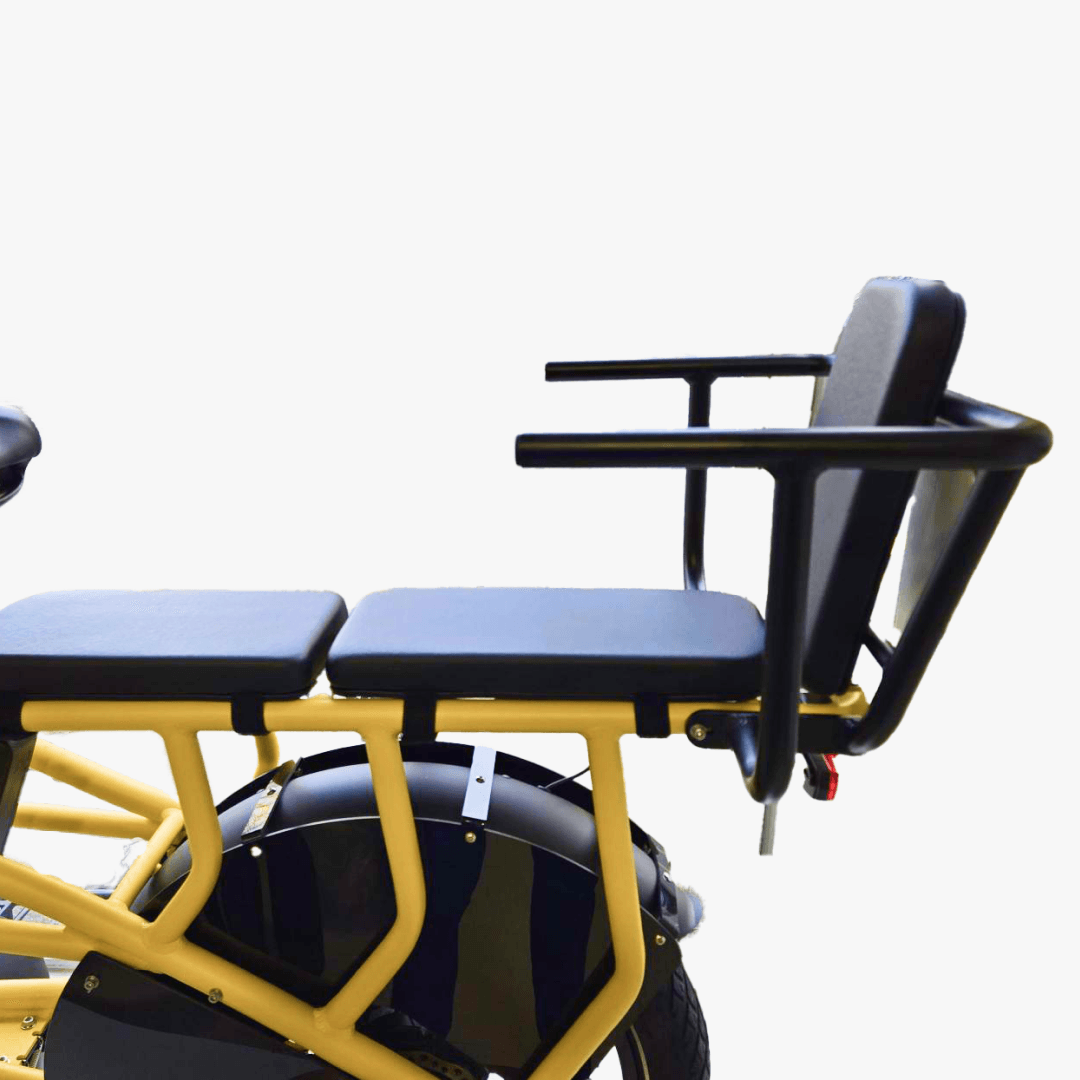
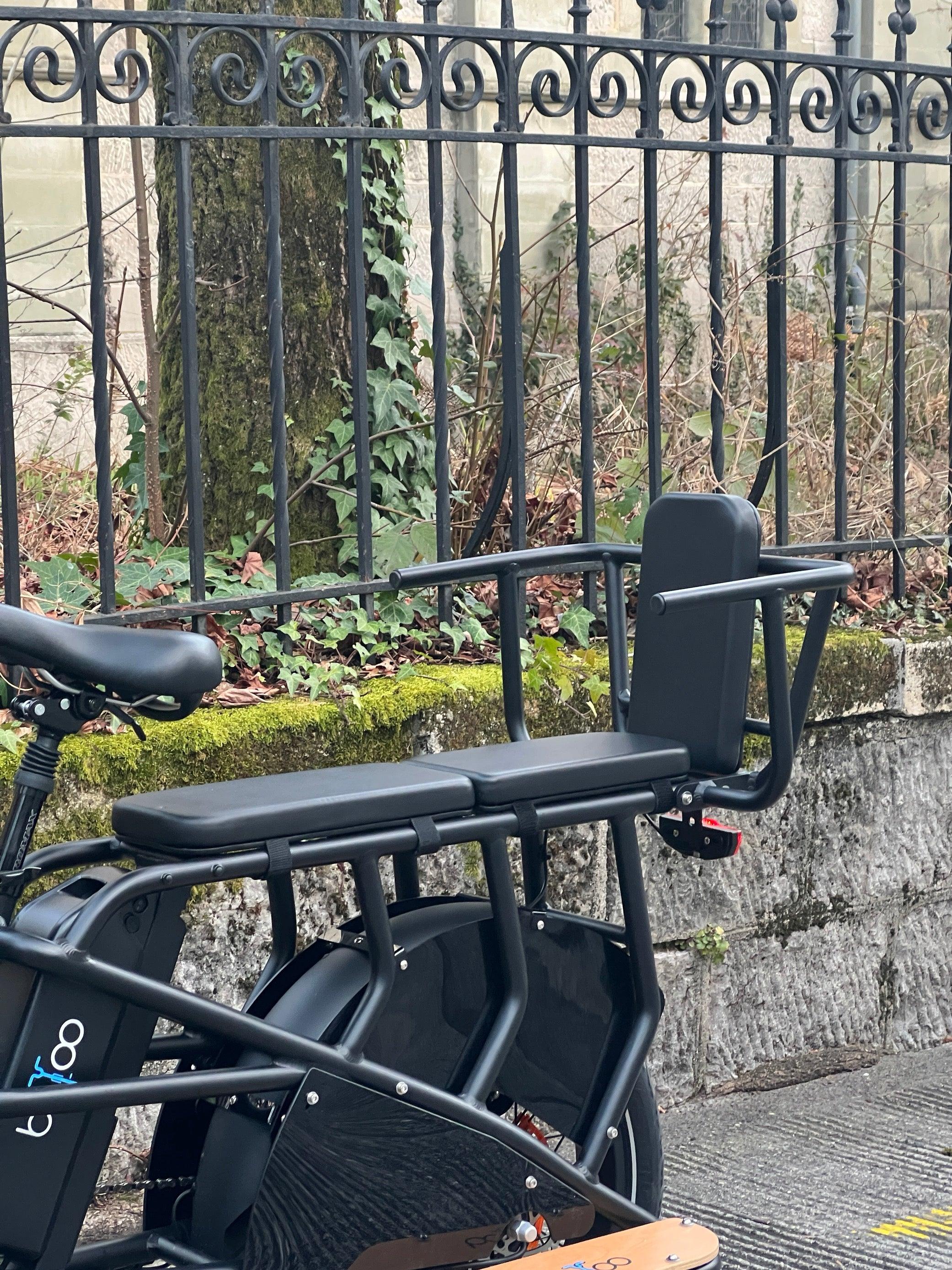
For this type of use, the choice of format is important. A longtail might be sufficient for a family that wants to stay compact. A front-loader (biporteur) can be more comfortable if you want to see the children in front of you. A compact cargo bike can also be very interesting if you need to manage storage in the city.
To compare formats according to your real life, the BatooBike guide longtail, front-loader, trike: which to choose helps avoid buying something too big, too small, or poorly suited.
What savings can be expected?
This is often the point that triggers the reflection. A second car is expensive, even when it's driven infrequently. You have to consider purchase or leasing, insurance, maintenance, tires, fuel or electricity, taxes, parking, and depreciation.
An electric cargo bike also costs money. You have to buy it, insure it properly, maintain it, buy a good lock, and sometimes add rain or child accessories. But the order of magnitude remains very different.
Here's a simplified comparison:
| Item | Second car | Electric cargo bike |
|---|---|---|
| Purchase / leasing | High | Medium to high, but much lower |
| Insurance | High | Generally lower |
| Energy | Fuel or car electricity | Very low recharge cost |
| Maintenance | Tires, garage, services, repairs | Brakes, tires, drivetrain, battery |
| Parking | Often expensive in the city | Often simpler, but needs securing |
| City center flexibility | Variable | Very good |
| Overall annual cost | Often very high | Generally much lower |
If the cargo bike genuinely allows you to eliminate a second car, the savings can be very significant. If you keep the car but only reduce a few trips, savings still exist, but they will be more gradual.
To better understand the purchase price of a family cargo bike, the BatooBike guide on the price of an electric cargo bike in Switzerland helps compare budget levels according to formats.
Concrete decision example
Imagine a family with two children. The second car is mainly used to drop children off at school, do some shopping, go to the train station, and manage nearby activities. Trips are often less than 5 km. Parking in front of the school is a hassle. Parking in the city is expensive. In this case, the cargo bike can very well replace a large part of the usage.
Conversely, imagine a family living far from services, with trips of 20 to 30 km, very variable schedules, and few cycling infrastructures. Here, the cargo bike can still be useful, but it will be more difficult to completely eliminate the second car.
The decision must therefore start with a simple audit:
| Question | Why it's important |
|---|---|
| How many trips are less than 5 km? | These are the best candidates |
| How many trips are less than 10 km? | Interesting potential with assistance |
| Do you often transport children? | The cargo bike can become central |
| Is car parking a hassle? | The bike becomes more attractive |
| Can you park the cargo bike easily? | Decisive criterion |
| Can you ride in the rain? | Influences actual use |
| Do you have an alternative for long journeys? | Allows for a more serene elimination of the 2nd car |
Weather: a real limit or just organization?
Weather is often the number one objection. Rain, cold, wind, children, coats, school bags: on paper, it can seem complicated. In real life, weather mainly becomes a matter of equipment and routine.
With good rain protection, suitable clothing, effective mudguards, and simple organization, many trips remain possible. Children can even be better protected in some well-equipped cargo bikes than on a classic bike or a poorly covered trailer.
The real weather challenges are rather:
- heavy rain
- strong wind
- prolonged cold
- snow or ice
- lack of visibility
- poorly cleared roads
We shouldn't pretend that a cargo bike replaces a car 365 days a year in all conditions. But it can replace enough trips to make the second car less essential.
To better anticipate this point, the BatooBike guide on rain protection for cargo bikes is very useful, especially with children. The guide on electric bikes in the rain also complements good safety and maintenance practices.
Daily organization: the real success factor
Replacing a second car doesn't just depend on the bike. It depends on family organization.
You need to decide:
- who uses the bike
- where it is parked
- where the helmets are
- how to protect children from the rain
- how to transport groceries
- where to charge the battery
- which route to take in the morning
- what to do on days with bad weather
- what alternative to keep for exceptional cases
The families who succeed best are not necessarily those with the fanciest bike. They are the ones who create a simple routine. Helmets are always in the same place. Rain protection is ready. The lock is easy to use. The battery is charged. The route is known.
For charging, the BatooBike guide on charging your electric bike at the office or in an apartment can help organize the routine, especially if you live in an apartment building.
Storage: often the deciding factor
A cargo bike takes up more space than a regular bike. Before thinking about savings, you need to know where it will be stored. A cargo bike that is perfectly suited on paper can become a hassle if you have to pull it out of a narrow cellar or leave it in an insecure place.
To check before purchase:
- door width
- access to the bike room
- slope or ramp
- any elevator
- space in the garage
- anchoring possibility
- available outlet or removable battery
- security against theft
- ease of getting it out in the morning
If the bike is difficult to get out, you will use it less. And if you use it less, it will replace the car less.
The BatooBike guide on where to park a cargo bike in the city is particularly important before purchase. Security against theft also matters: a good lock, a fixed anchor point, and a simple routine are essential. The guide on which lock to choose for an electric bike or a high-end cargo bike complements this topic well.
Which type of family benefits the most?
The families who benefit the most are those with many short, repetitive journeys and an underutilized second car.
Very favorable profiles:
- family with 1 to 3 children
- school or daycare at a reasonable distance
- local shopping
- complicated car parking
- housing with a garage, yard, or accessible storage
- parent who works nearby
- daily commutes mostly urban or suburban
- desire to reduce fixed costs
More complicated profiles:
- house very far from services
- fast roads not well suited for cycling
- frequent daily intercity commutes
- complete lack of secure parking
- frequent need to transport large volumes
- family that does not want to ride in the rain
The cargo bike should not be a moral constraint. It should improve daily life. If every trip becomes a battle, the replacement won't last.
Which cargo bike to choose to replace a second car?
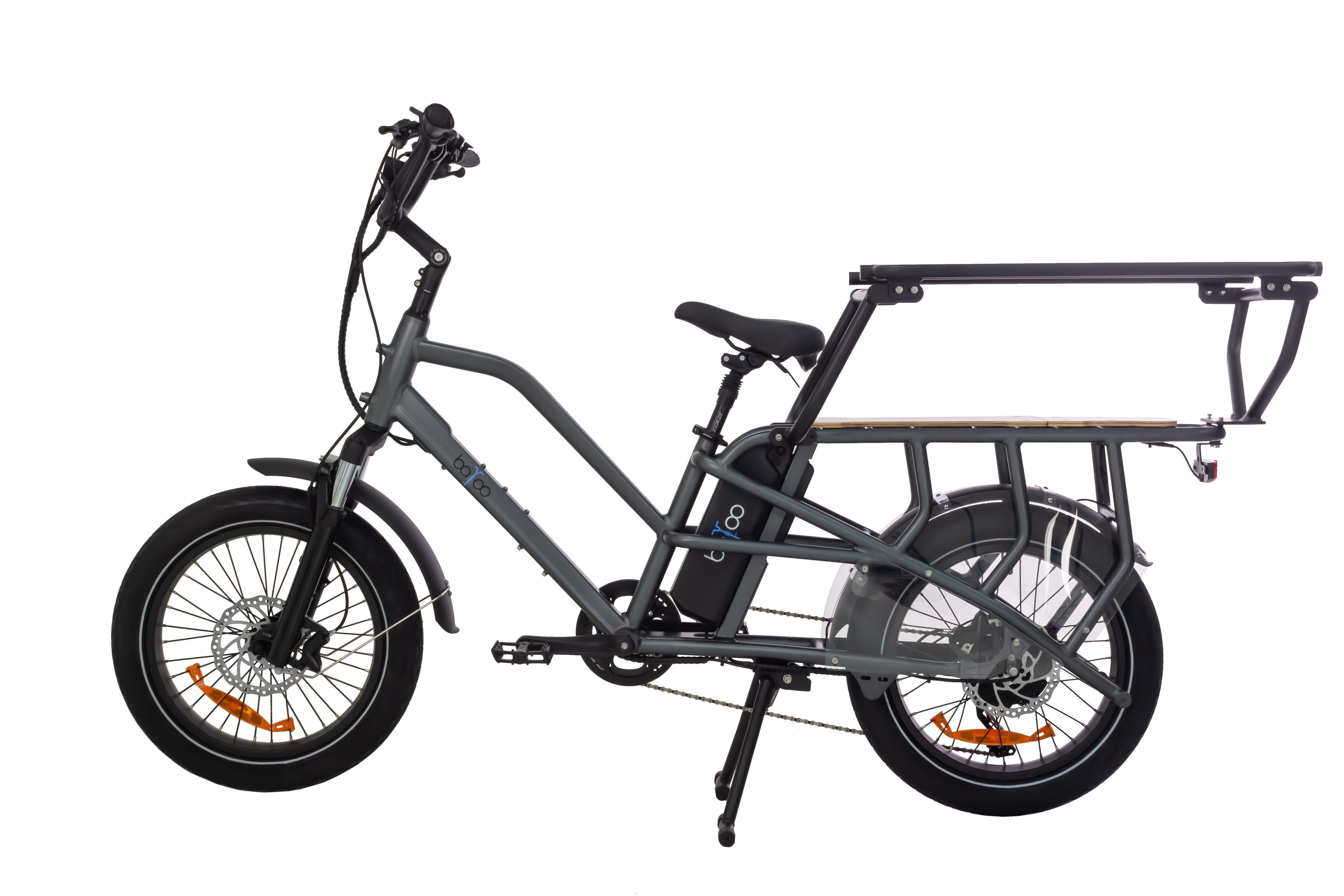
The right format depends on the family. A longtail is often more compact and easier to park. A front-loader (biporteur) offers more volume and allows you to see the children in front of you. A trike provides stability when stopped and carries more, but requires more space.
To replace a second car, you often need to find a balance between capacity and simplicity. A bike that is too small will limit its use. A bike that is too large can discourage daily trips.
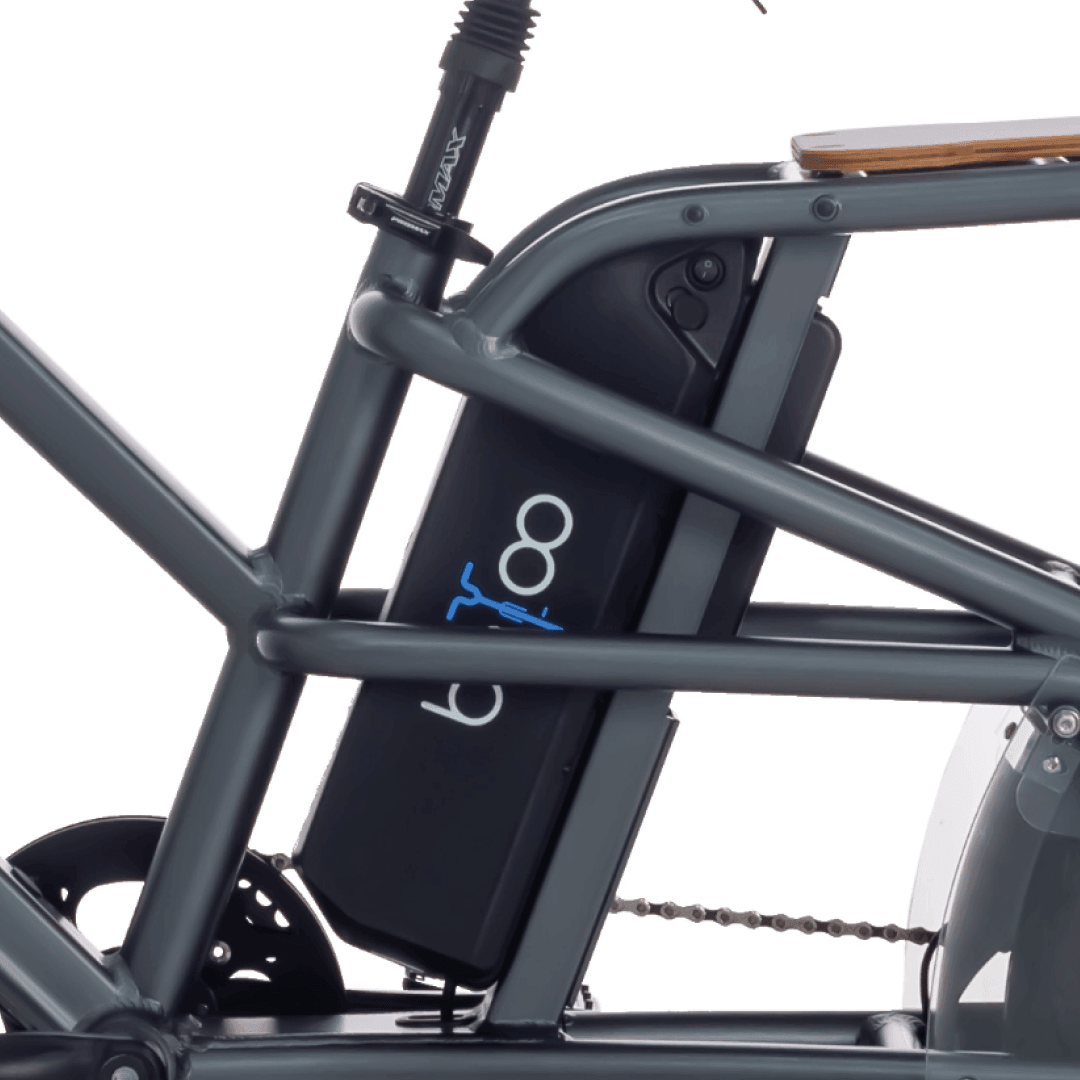
A model like the Colibri V2.0 can be interesting for families who want a compact solution, with a removable battery, an announced range of up to 120 km, integrated GPS, and anti-theft/geofencing functions. Its format can meet many daily needs without resorting to an overly bulky cargo bike.
The most important thing is to test it out. A cargo bike must be tested in your real-life situation: children, bags, access to housing, usual route, potential hills, and parking. You can book a free electric cargo bike test ride at Batoo or visit the book a BatooBike test ride page.
Are there any grants or subsidies available?
Depending on your municipality or canton, assistance may be available for the purchase of a cargo bike or an electric bicycle. Conditions vary greatly depending on the location, type of buyer, bike price, and sometimes the chosen store.
It is therefore always necessary to check official information before purchasing. In Geneva, schemes may mainly concern self-employed individuals, SMEs, or professional use. In Lausanne, the équiwatt program provides aid for certain electric, cargo, or longtail bikes, subject to conditions.
To start, you can consult the BatooBike guide on cargo bike subsidies in Switzerland, then directly check your municipality's official website.
Limits to be aware of
Replacing a second car with a cargo bike is possible, but you need to be aware of the limitations.
The main limitations:
- very difficult weather on certain days
- storage can sometimes be complicated
- risk of theft to anticipate
- need for regular maintenance
- limited payload
- longer journeys are less suitable
- possible fatigue if the wrong bike is chosen
- necessity to change certain habits
- need for an alternative for exceptional cases
A cargo bike works best when it replaces 60, 70, or 80% of a second car's uses, not necessarily 100%. Some families completely eliminate their second car. Others keep it for a few months before deciding. Still others significantly reduce its use without selling it immediately.
There is no single right answer. The goal is to reduce dependence on the car without creating a fragile organization.
Decision-making aid table
| Your situation | Probable decision |
|---|---|
| Second car mainly used for school/daycare | Very good cargo potential |
| Frequent local shopping and short trips | Very good potential |
| Difficult parking in the city | Cargo bike very interesting |
| 1 to 2 children + trips under 5 km | Excellent case |
| 2 to 3 children + need for volume | Suitable cargo bike to test |
| Long daily commutes outside the city | Replacement more difficult |
| No secure parking | To be resolved before purchase |
| Strong desire to reduce fixed costs | Cargo bike to seriously consider |
| Very constraining weather + no alternative | Caution |
| Possibility of keeping a main car | Replacing the second car is more realistic |
Checklist before selling the second car
Before selling or returning the second car, test your routine for a few weeks.
Checklist:
- do school/daycare trips by cargo bike
- test a week with groceries
- test in the rain
- test with tired children
- test daily storage
- calculate truly impossible trips without a car
- check charging and range
- secure parking
- choose the right accessories
- plan an alternative for exceptional cases
After this test, the decision becomes much clearer. You will know if the cargo bike truly replaces the second car or only a portion of its journeys.
Conclusion
Yes, a cargo bike can truly replace a second car, but especially when the second car is used for short, local, and repetitive journeys. School, daycare, shopping, train station, activities, city center: these are the uses where a cargo bike can become simpler, more economical, and sometimes even faster.
Replacement works less well if journeys are long, if bike parking is impossible, or if the family refuses to ride as soon as the weather deteriorates. But in many households, it is not necessary to replace 100% of uses for the second car to lose its appeal.
The right approach is to test it concretely. List your journeys, try a suitable model, check storage, estimate savings, and observe your real routine for a few weeks. If the cargo bike covers the majority of your needs, then replacing the second car becomes a very realistic decision.
Final FAQ
Can a cargo bike really replace a car?
Yes, especially a second car used for short, local, and repetitive journeys. A cargo bike can replace many trips to school, daycare, grocery stores, or the city center. It is less likely to easily replace long journeys, large volumes, or out-of-town travel.
For which journeys does it work best?
It works best for journeys of approximately 2 to 8 km: school, daycare, shops, train station, children's activities, small appointments, or city travel. The more repetitive and difficult the journey is by car, the more interesting a cargo bike becomes.
What savings can be expected?
Savings can be significant if the cargo bike allows you to eliminate a true second car: insurance, fuel, maintenance, parking, tires, taxes, and depreciation. If the car is simply used less, savings are more gradual but still possible.
What are the limitations to be aware of?
The main limitations are weather, storage, security against theft, payload, long journeys, and the need to change certain habits. A cargo bike must be easy to take out, park, load, and secure to be used frequently.
What type of family benefits the most?
Families with 1 to 3 children, short commutes, a nearby school or daycare, local shopping, and a little-used second car are those who benefit the most. The potential is even greater if car parking is complicated or expensive.