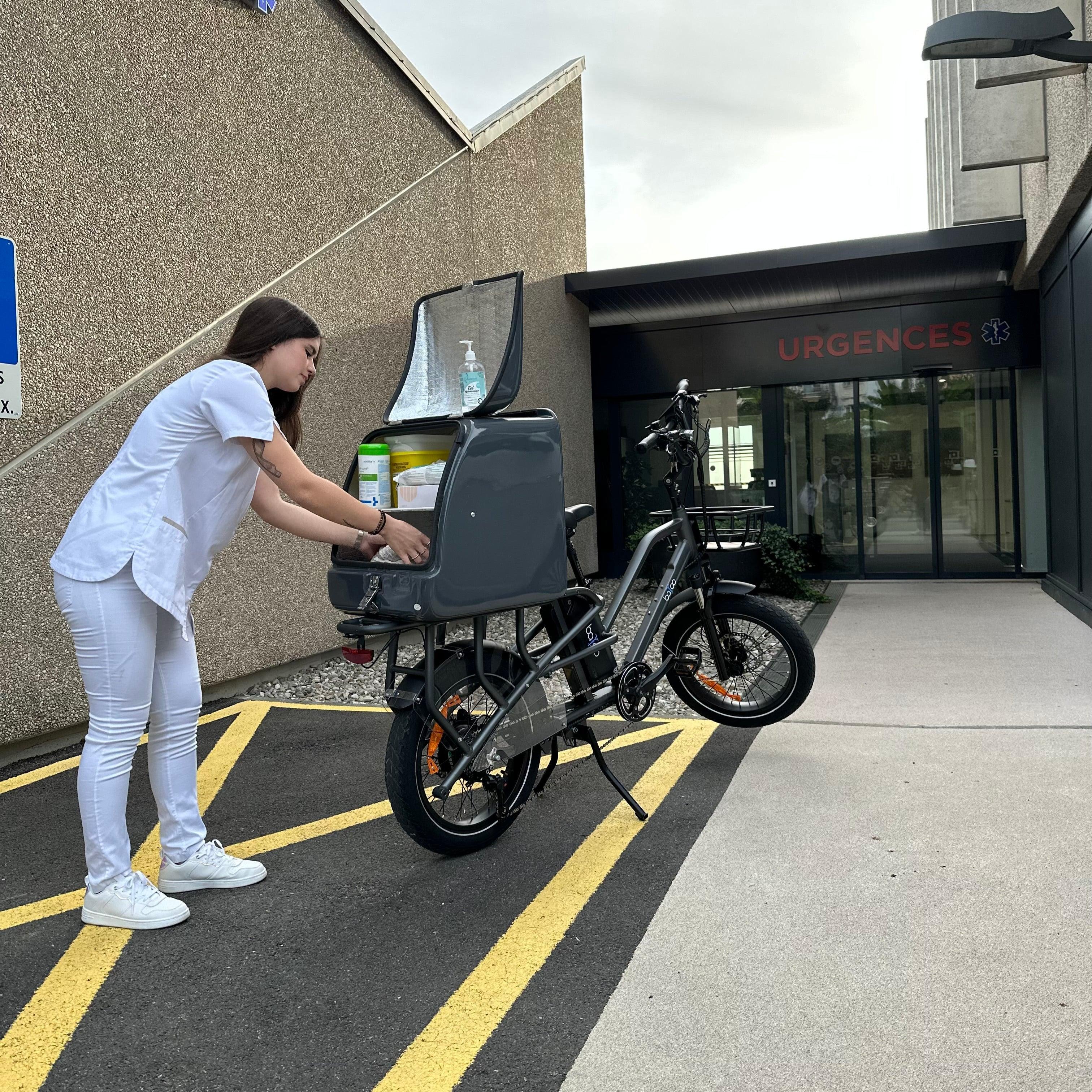
In Geneva, a cargo bike can replace a car for many journeys: taking children to school, doing groceries, transporting equipment, or making local deliveries.
The canton is particularly well-suited for short trips. According to information published by the State of Geneva, approximately one-third of motorized trips made in the territory cover less than three kilometers, a distance that can be covered by bike in less than fifteen minutes.
However, the choice of an electric cargo bike must consider your actual usage, the number of passengers, the load transported, parking, and any available aid.
In Geneva, cantonal subsidies for the purchase and trial of cargo bikes are currently intended for self-employed individuals, SMEs, and certain eligible organizations. Individuals cannot benefit from this cantonal program.
Why use a cargo bike in Geneva?
A cargo bike can meet the needs of both families and professionals.
For a family, it can be used for:
- taking one or more children to daycare or school;
- doing the weekly grocery shopping;
- transporting school bags, clothes, and sports equipment;
- commuting to a train station or workplace;
- reducing the use of a second car.
For a professional activity, a cargo bike can be used for:
- local deliveries;
- transporting tools or small goods;
- technical team movements;
- interventions in urban areas;
- mail or order distribution;
- creating a fleet of company bikes.
The cargo bike is particularly interesting when trips are regular, relatively short, and difficult to make by car due to traffic or parking.
Which cargo bike format to choose in Geneva?
The choice mainly depends on the number of passengers, the load, available space, and your driving experience.
| Format | Main use | Advantages in the city | Points to check |
|---|---|---|---|
| Longtail | One or two children, bags, and daily commutes | Narrow, maneuverable, and similar to a classic bike | Luggage rack load, legroom, and stability |
| Front-loader (Biporteur) | Families, shopping, and equipment transport | Front box, low load, and visible passengers | Length, turning radius, and storage |
| Tricycle (Triporteur) | Bulky loads and multiple passengers | Stable when stopped and large capacity | Width, turns, and access to premises |
The longtail for narrow spaces
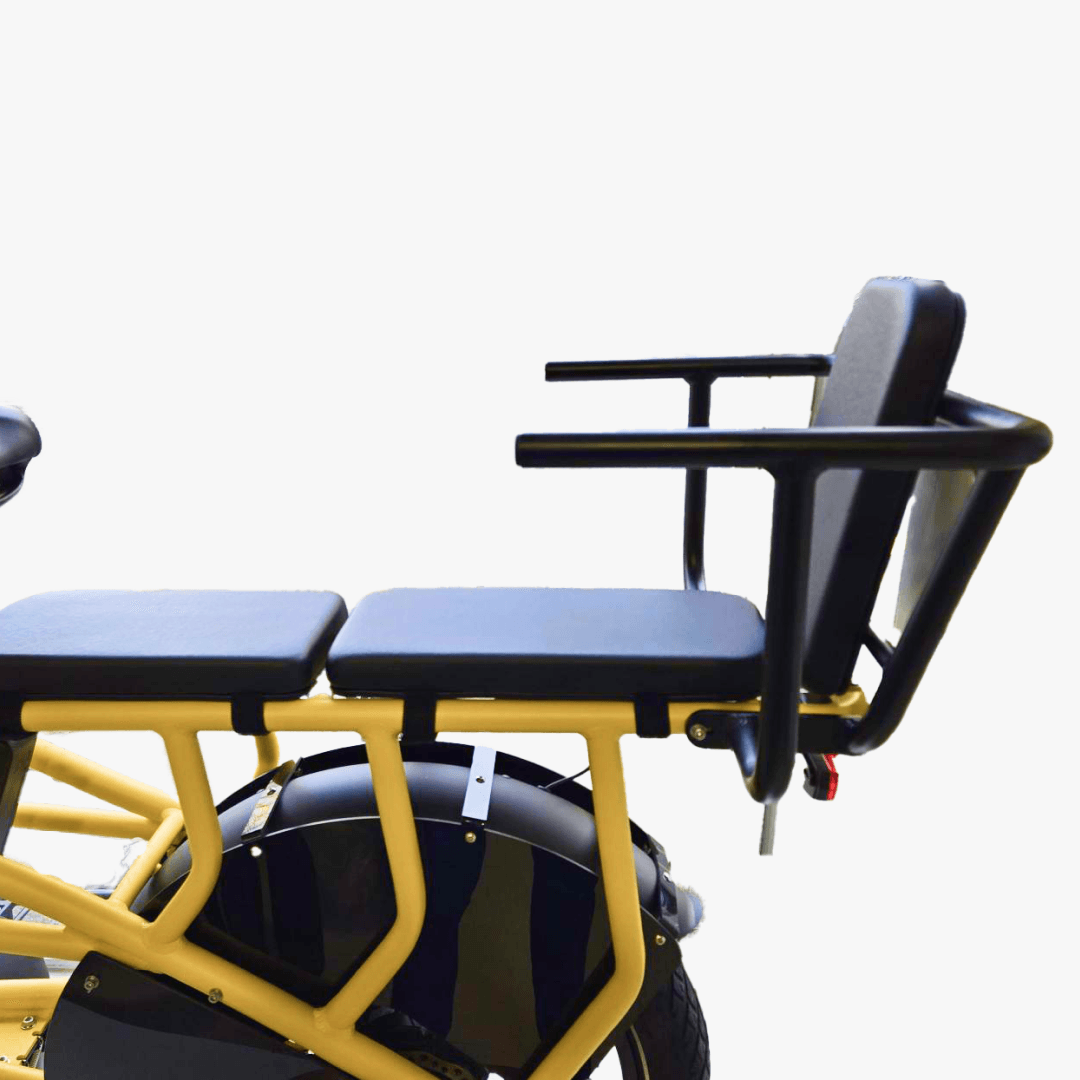
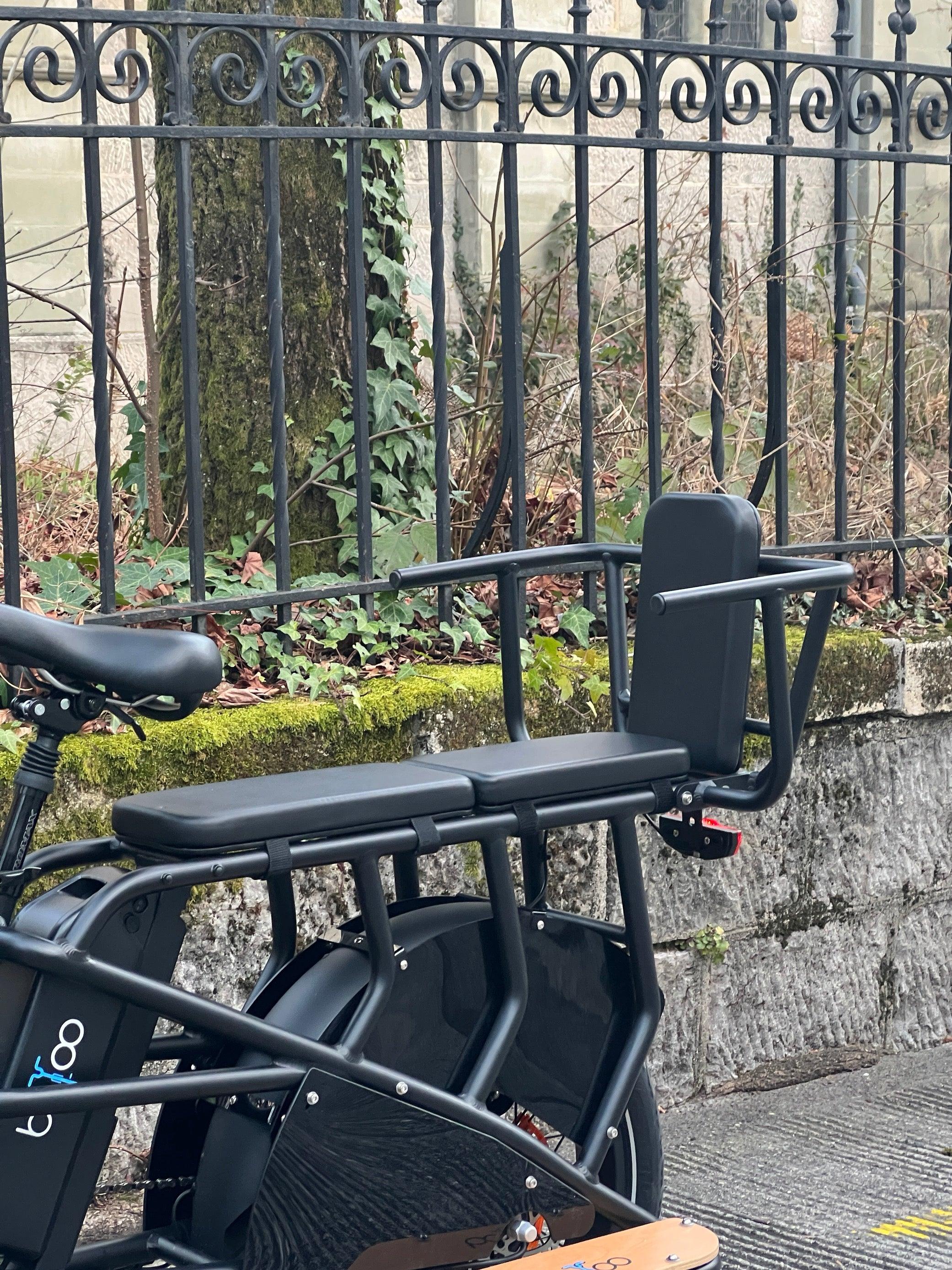
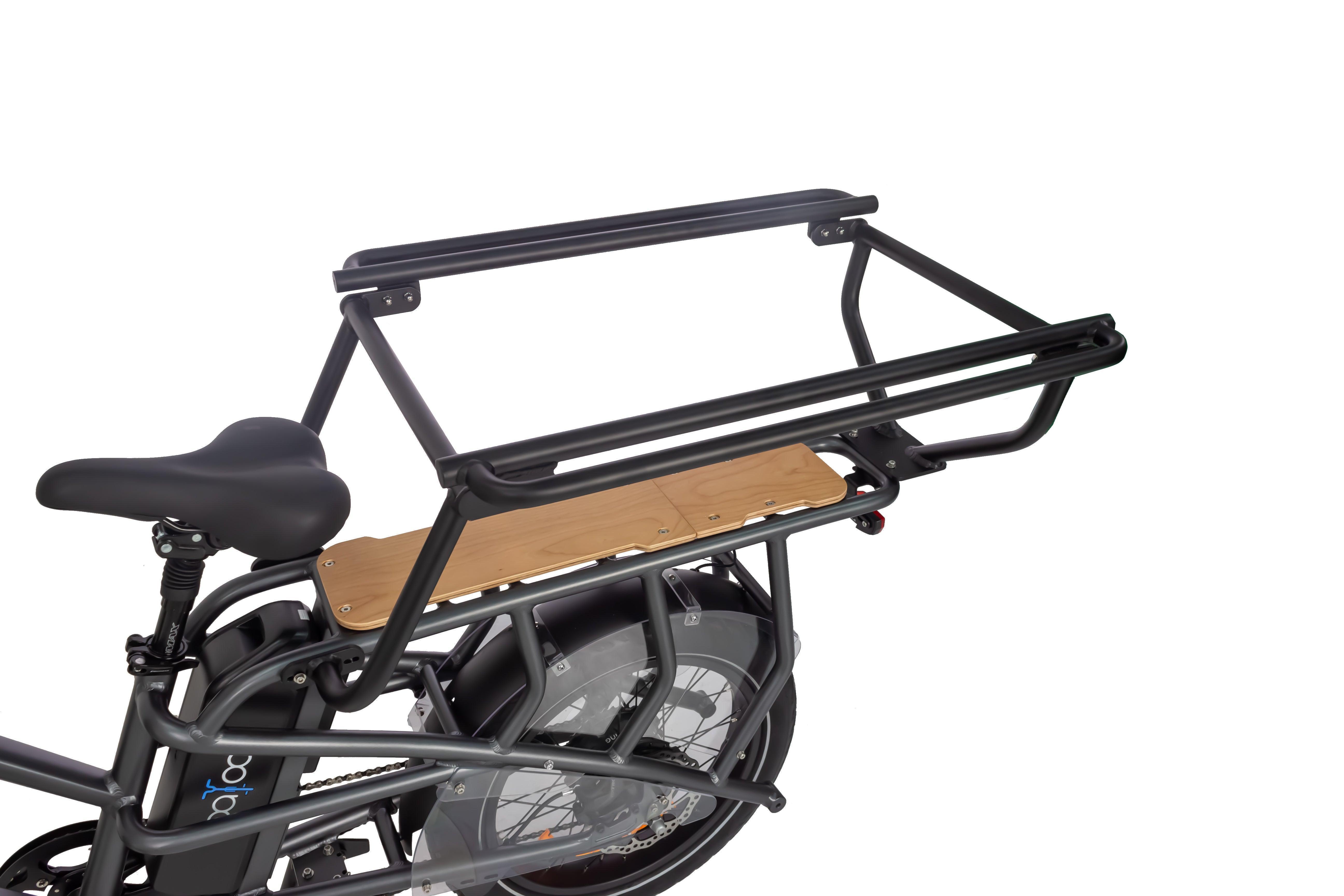
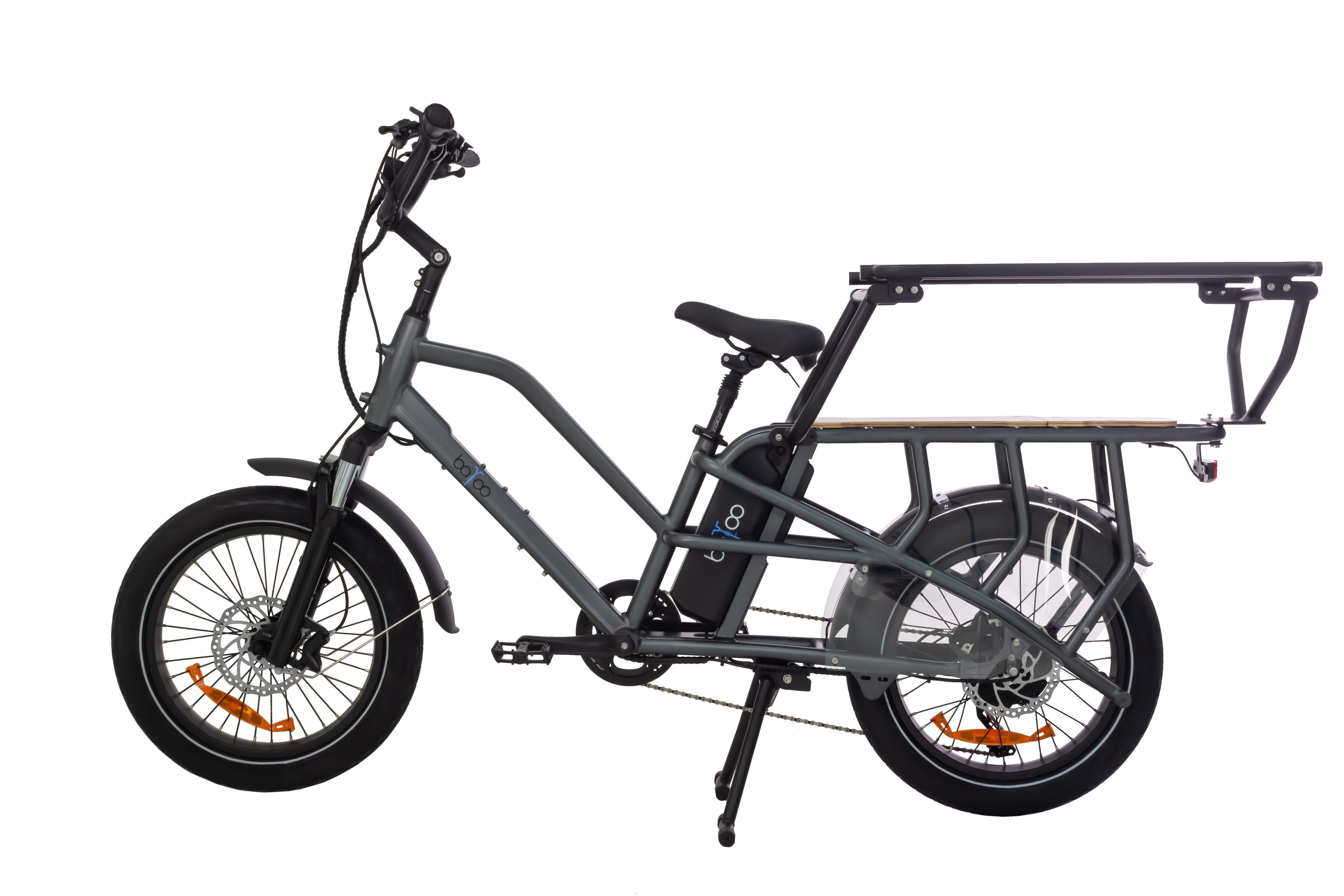
The longtail generally maintains a width similar to that of a classic bicycle. Its extended rear rack allows it to transport children or goods.
It can be interesting when you need to:
- pass through narrow access points;
- store the bike in a shared space;
- make frequent urban trips;
- transport one or two children;
- maintain a riding experience similar to a traditional bicycle.
Before purchasing, check the maximum load capacity of the luggage rack, the number of authorized seats, and the remaining space for school bags or groceries.
The front-loader for families and regular loads
The front-loader has a box placed in front of the rider. This configuration allows children or cargo to remain in the field of vision.
Its relatively low center of gravity can facilitate the transport of a load, but its length requires some adaptation time.
During the test, check:
- starts with a load;
- tight turns;
- U-turns;
- maneuvering on foot;
- using the kickstand;
- braking with passengers;
- access to your premises or garage.
The tricycle for volume and stability when stopped
The tricycle has three wheels and an often wider box. Its stability when stopped can facilitate the boarding of children or the loading of goods.
However, its riding style differs more from that of a classic bicycle. You need to slow down on turns and test the bike's behavior on slightly inclined roads.
Its width can also complicate certain passages. Measure doors, corridors, access to courtyards, and parking spaces before ordering.
Which cargo bike to choose for transporting children?
For family use, the advertised number of seats is not the only criterion.
Also check:
- the number of seats expressly authorized by the manufacturer;
- the presence of an individual harness for each child;
- the maximum payload;
- shoulder and leg room;
- compatibility with a possible baby seat;
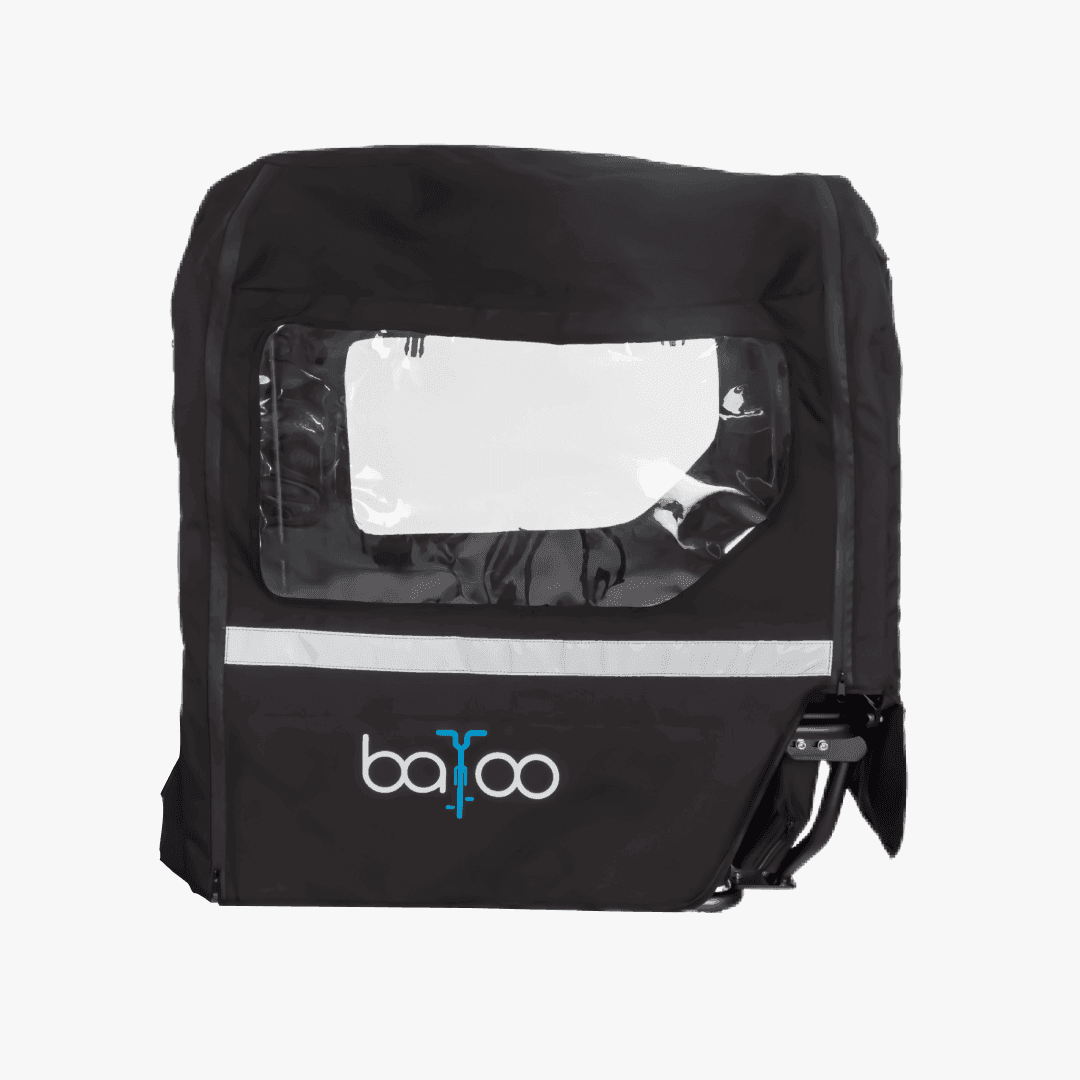
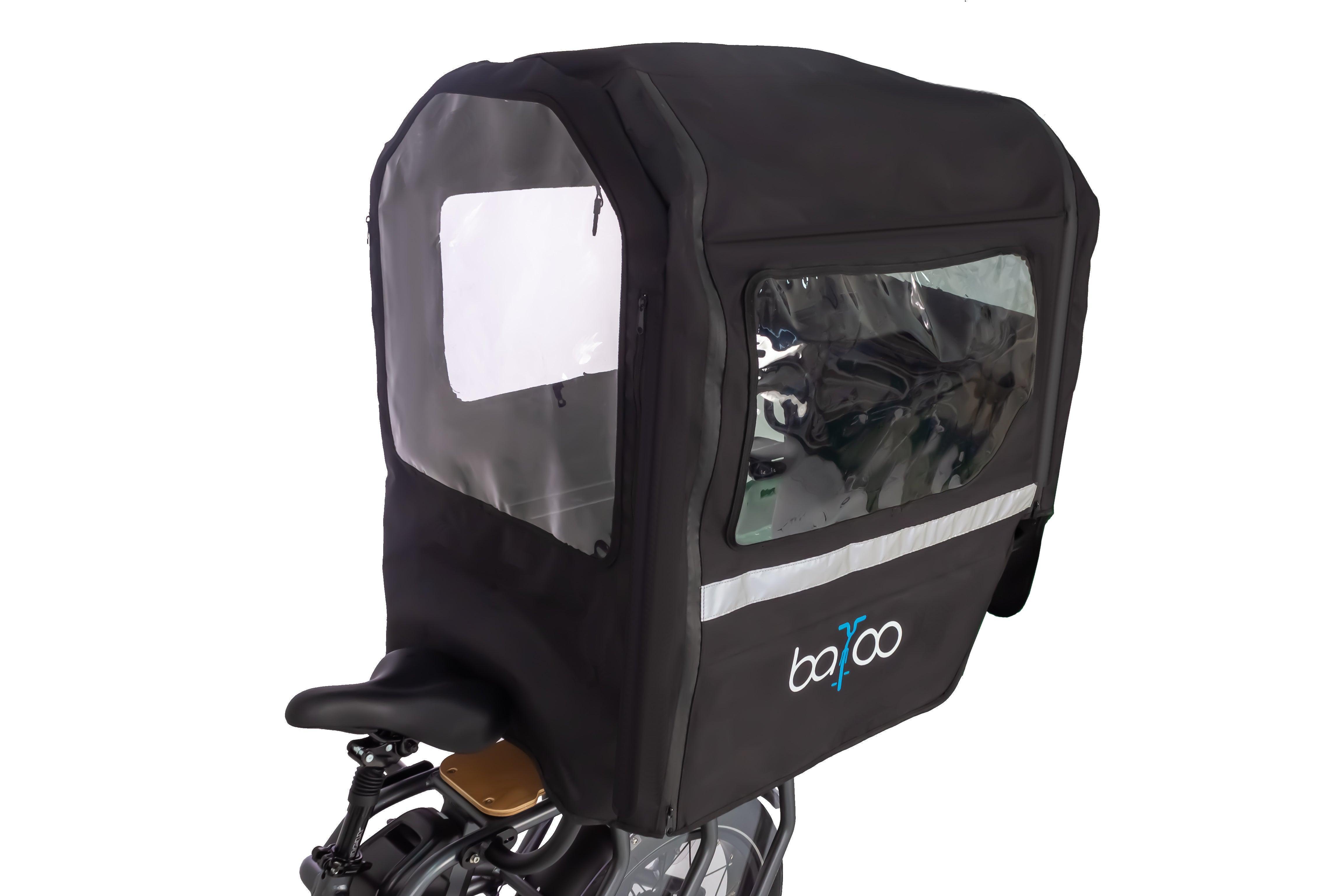
- rain protection;
- cabin ventilation;
- space available for school bags and groceries.
It is preferable to perform the test with the children and their equipment. A box that is wide enough when empty can become narrow when children wear their winter clothes or when rain protection is installed.
For a large family, also consult our guides on cargo bikes for three children and four-seater electric cargo bikes.
Which cargo bike to choose for a professional activity?
A craftsman, business, or local service provider must first identify the actual load to be transported.
Specifically, note:
- the average weight of goods;
- the maximum volume to transport;
- the daily distance;
- the number of stops;
- recharging possibilities;
- parking conditions;
- the need for protection against rain and theft.
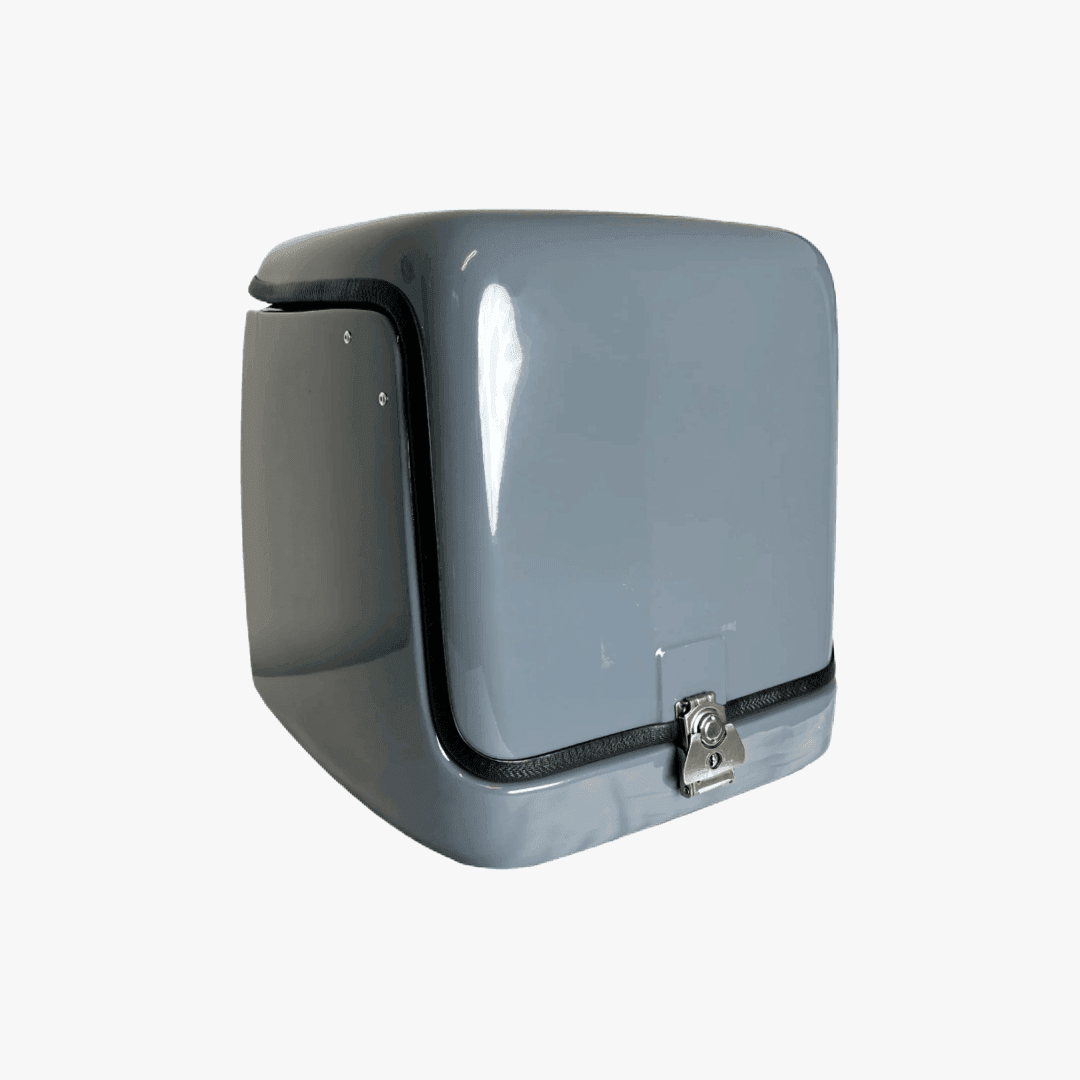
An open box may be suitable for bulky items. A closed or lockable box may be preferable for tools, parcels, or valuable goods.
For a fleet, also prioritize:
- easy-to-maintain components;
- an accessible service network;
- removable batteries;
- available wear parts;
- identical configuration for multiple users;
- training in driving and loading.
Discover Batoo solutions for businesses to explore a configuration adapted to your activity.
How to ride a cargo bike in Geneva?
A slow electric cargo bike can use cycle paths and lanes like other electric bikes. However, its size requires more anticipation.
In dense urban areas:
- slow down before turns;
- maintain an additional safe distance;
- avoid overtaking when lateral space is insufficient;
- anticipate door openings;
- do not block pedestrian crossings;
- adjust your speed when the bike is loaded;
- use cycle facilities when available.
The length of a front-loader modifies the turning radius. In a tight turn, the front wheel follows a different trajectory than the rider.
A tricycle must be ridden with particular care on turns and inclined surfaces. Its stability when stopped does not mean it can take curves at the same speed as a classic bicycle.
What equipment is necessary for safe riding?
In Geneva, a bicycle used on public roads must have tires in good condition, effective front and rear brakes, regulatory lighting, and reflective elements.
For a cargo bike used daily, check:
- both braking systems;
- tire condition and pressure;
- white front and red rear lighting;
- reflectors;
- harnesses and belts;
- box fasteners;
- the kickstand;
- loading elements;
- the bell;
- reflective accessories.
A helmet is still recommended for slow electric bikes. It is mandatory for fast electric bikes exceeding 25 km/h.
Clothes, straps, and transported objects must never be able to reach the wheels, chain, or other moving parts.
What battery and range should I plan for in Geneva?
The actual range of a cargo bike depends on weight, assistance level, temperature, wind, tires, and the number of starts.
To estimate your need, add up all daily trips:
- trip to school or daycare;
- commute to work;
- deliveries or interventions;
- shopping;
- return journey;
- possible detours.
Add a margin for:
- a heavier load than expected;
- cold weather;
- wind;
- frequent stops;
- a detour;
- gradual battery aging.
A second battery can be useful for professional activity, a long family day, or when recharging is impossible between two journeys. However, it is not necessary for all users.
How to park a cargo bike in Geneva?
Parking should be considered before purchase. A cargo bike may not fit in a space designed for classic bicycles.
Measure:
- the width of the doors;
- the length of the space;
- the width of the corridors;
- the turns to be made;
- the slope of any ramp;
- the size of the elevator;
- the space needed to deploy the kickstand.
The canton has an inventory of public parking spaces. Since July 2026, the data distinguishes between spaces for bicycles, cargo bikes, and motorcycles.
When the bicycle is parked outdoors:
- attach the frame to a fixed point;
- use a U-lock or a robust chain;
- supplement it with a second lock;
- remove the battery during prolonged parking;
- do not leave valuables in the box;
- choose a visible and frequented location;
- check your insurance conditions.
How to protect a cargo bike against theft?
An electric cargo bike represents a significant investment. Protection should combine several measures rather than depend on a single lock.
A comprehensive strategy may include:
- a quality main lock;
- a second lock using different technology;
- a fixed anchor point;
- a frame lock;
- battery removal;
- a tracker or GPS;
- a geofencing system;
- theft insurance;
- a closed parking space overnight.
The bike must be secured by its frame. Attaching only the front wheel does not adequately protect the entire bike.
Are individuals entitled to a cargo bike subsidy in Geneva?
No, not under the cantonal program presented on the official website of the State of Geneva in 2026.
Cantonal subsidies for purchase, test-rental, training, and fleet creation are currently reserved for:
- self-employed individuals;
- SMEs with fewer than 250 employees;
- certain associations not subsidized by public entities;
- certain cooperatives;
- certain eligible foundations.
Individuals cannot benefit from them.
However, an individual can check with their municipality of residence if another local program exists. Communal conditions must be consulted directly with the relevant administration.
What subsidy exists for the purchase of a professional cargo bike?
In 2026, the State of Geneva announced aid up to 10% of the purchase price of the cargo bike, with a maximum of CHF 500.–.
The main conditions published are as follows:
- the beneficiary must belong to an eligible category;
- the organization must have been domiciled in the canton for at least three months prior to purchase;
- the cargo bike must be new;
- its use must be reserved for employees in the context of their professional activity;
- purchase by installment or leasing is not permitted;
- the invoice must be issued in the name of the beneficiary;
- the application must relate to the year appearing on the invoice;
- the application must be received before December 1st of the current year.
Accessories such as helmets, covers, lights, baskets, panniers, and child seats are not included in this aid.
The program provides up to fifteen subsidies, with a three-year waiting period before new applications can be submitted in the same category.
Aid is granted within the limits of the available budget.
Consult the official conditions for purchasing a cargo bike.
What aid exists for creating a bike fleet?
Self-employed individuals and SMEs wishing to create a fleet can apply for separate aid.
The 2026 cantonal program announces coverage of up to 50% of the total cost of the bikes, with a maximum of CHF 5,000.–.
Main conditions include:
- the purchase of at least three bikes;
- new bikes;
- professional use by employees;
- domicile in the canton for at least three months;
- a single invoice grouping all bikes;
- an invoice issued in the company's name;
- no hire purchase or leasing;
- submission of the application before December 1st.
This aid can cover traditional bikes, electric bikes, and cargo bikes. Accessories are not covered.
Only one subsidy can be granted in this category before a three-year period.
Consult the official conditions for creating a bike fleet.
Can I get help to test a cargo bike?
The canton also offers a subsidy for renting and testing a cargo bike or an electric-assist bicycle for at least one month.
This aid corresponds to 50% of the rental price, with a maximum of CHF 250.–.
It is reserved for eligible professional beneficiaries and notably requires:
- domicile in the canton for at least three months;
- continuous rental for at least one month;
- use by employees in a professional context;
- the end of the rental period before the application;
- an invoice in the beneficiary's name;
- a deposit before December 1st.
Before renting a bike, check that the provider, duration, and invoice comply with all official conditions.
Consult the official conditions for testing a cargo bike.
Where to try a Batoo cargo bike in Geneva?
Batoo offers several trial options in the canton of Geneva. The booking page currently displays, among others:
- ByKarl left bank, Place du Métral 4, 1226 Thônex;
- ByKarl right bank, Avenue Ernest-Pictet 24, 1203 Geneva;
- Car Bike, Route de Saint-Julien 142, 1228 Plan-les-Ouates.
Partners and their availabilities may change. Check the booking page before visiting.
Book a free cargo bike trial in Geneva
How to prepare for a cargo bike trial in Geneva?
A good trial should replicate your actual use. A few minutes in an empty parking lot are not enough to evaluate a cargo bike.
For family use, if possible, come with:
- the children who will be transported;
- their helmets;
- their school bags;
- the youngest child's seat;
- a weight similar to your usual groceries.
For professional use, bring:
- the dimensions of your goods;
- an estimate of the average weight;
- the list of your routes;
- the dimensions of the storage space;
- the locking or protection needs for the box.
During the trial, check:
- starting with the load;
- maneuverability at low speed;
- tight turns;
- U-turns;
- braking;
- stability when stationary;
- putting it on the stand;
- loading and unloading;
- access to the premises or garage.
Can I rent a cargo bike before buying it?
Renting allows you to test the bike for a longer period than an in-store trial.
It can be particularly useful for checking:
- the organization of school commutes;
- autonomy over a full day;
- charging at home or at work;
- overnight parking;
- the bike's behavior with a regular load;
- employees' adaptation to professional use.
Discover the rental solutions offered by Batoo. For a cantonal subsidy application related to a professional test, separately verify that the duration, provider, and documents comply with the conditions of the State of Geneva.
Is the Colibri V2.0 suitable for Geneva?
The product sheet for the Colibri V2.0 electric cargo bike, 2026 model, features notably:
- a 500 W, 85 Nm Bafang motor;
- assistance limited to 25 km/h;
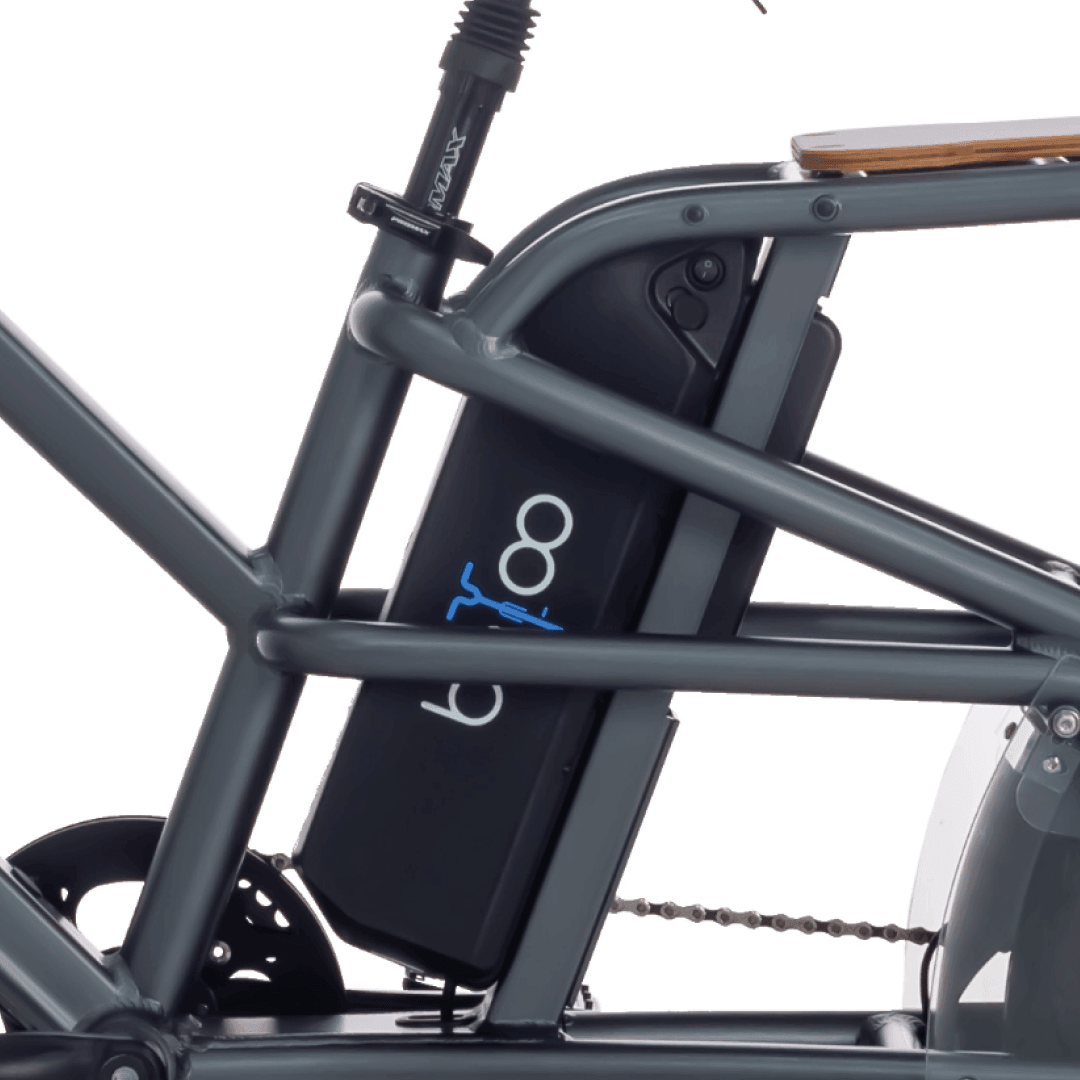
- a removable 720 Wh battery;
- a dual battery configuration of 1,440 Wh;
- four-piston hydraulic brakes;
- a ten-speed transmission;
- 20 × 3 inch tires;
- a suspended front fork;
- an announced payload of up to 160 kg;
- an announced range of up to 120 km;
- integrated turn signals;
- GPS and geofencing functions;
- a two-year warranty.
The maximum announced range is not a guarantee for all journeys. The actual result depends on the load, assistance level, wind, temperature, tires, and number of starts.
The bike should be tested with a load close to your actual use. Also ask for written confirmation of the number of seats, compatible accessories, and the method of calculating the payload.
What budget should I plan for a cargo bike in Geneva?
The price of the bike only represents a portion of the total budget.
Depending on your use, add:
- seats and harnesses;
- rain protection;
- panniers;
- professional box or cover;
- anti-theft devices;
- tracker or connected service;
- helmets;
- insurance;
- annual maintenance;
- tires and brake pads;
- a potential second battery.
For a business, also calculate:
- time saved on journeys;
- avoided parking costs;
- maintenance costs;
- user training;
- downtime during repairs;
- envisaged amortization period.
Request a quote for the complete configuration before calculating any potential subsidy.
Cargo bike purchase checklist in Geneva
- ☐ The format corresponds to the passengers or goods transported.
- ☐ The number of seats is authorized by the manufacturer.
- ☐ The payload covers passengers, accessories, and luggage.
- ☐ The motor starts easily with the load.
- ☐ The brakes remain progressive and controllable.
- ☐ The range covers the most demanding day.
- ☐ The battery can be easily recharged.
- ☐ The bike fits into the premises or garage.
- ☐ A fixed point allows it to be secured.
- ☐ The box or panniers meet the intended use.
- ☐ Children or goods are properly secured.
- ☐ The bike has been tested with a representative load.
- ☐ After-sales service is accessible in the region.
- ☐ Subsidy conditions have been checked on the official website.
- ☐ The application can be submitted before December 1st.
- ☐ The purchase or rental will be invoiced in the name of the eligible beneficiary.
Conclusion
A cargo bike in Geneva can meet the needs of both a family and a self-employed person or an SME.
The longtail is interesting for its compactness, the two-wheeler for its volume and dynamic riding, and the three-wheeler for its stability when stationary. The best choice depends on the number of passengers, the load, parking, and daily commutes.
Individuals currently do not benefit from the cantonal aid presented by the State of Geneva. However, self-employed individuals, SMEs, and certain eligible organizations can apply for aid to purchase a cargo bike, create a fleet, or test a bike for at least one month.
Before ordering, check the official conditions, calculate the cost of the complete configuration, and perform a trial with your actual load.
Frequently asked questions about cargo bikes in Geneva
Are individuals eligible for a cargo bike subsidy in Geneva?
No. In 2026, the cantonal program presented by the State of Geneva reserves its subsidies for self-employed individuals, SMEs with fewer than 250 employees, and certain eligible associations, cooperatives, and foundations. Natural persons cannot benefit from it.
What aid is available for self-employed individuals and SMEs?
The purchase of a cargo bike can be subsidized up to 10% of the price, with a maximum of CHF 500.–. The creation of a fleet of at least three bikes can be supported up to 50% of the total cost, with a maximum of CHF 5,000.–. Official conditions must be checked before purchase.
Where can I try a cargo bike in Geneva?
Batoo currently has several trial partners in the canton, including in Geneva, Thônex, and Plan-les-Ouates. Available locations and time slots are presented on the booking page.
Which cargo bike format is suitable for narrow streets?
A longtail is generally the narrowest format and closest to a classic bike. A two-wheeled cargo bike can also be suitable, but its length and turning radius must be tested. The choice also depends on the load and the number of passengers.
How to secure a cargo bike overnight?
Use at least one robust anti-theft device attached to the frame and a fixed point, ideally supplemented by a second anti-theft device. Remove the battery, use a tracker if available, and prefer a closed space or a visible, well-lit location.