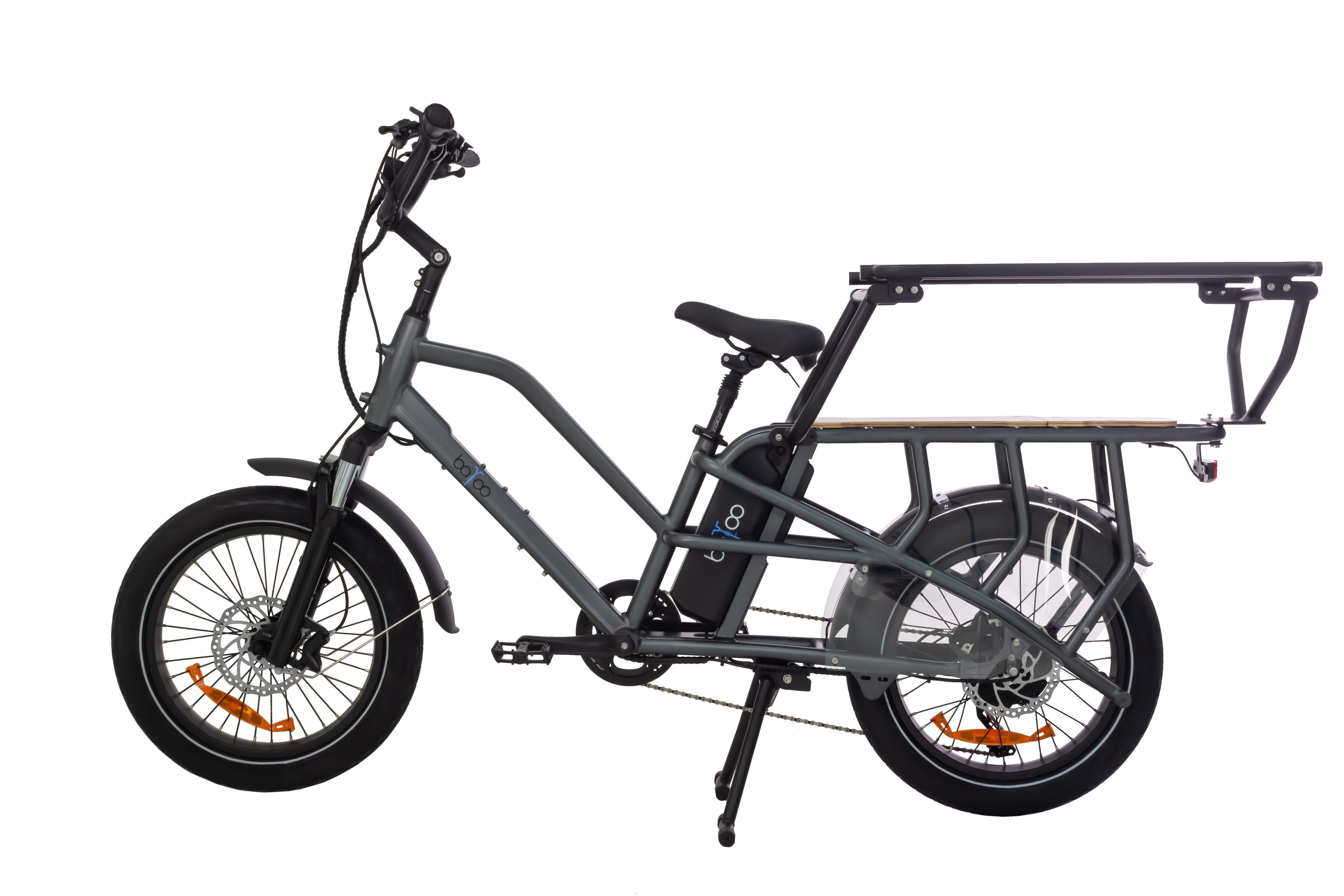
Riding a speed pedelec in the rain is not impossible. Many commuters do it regularly in Switzerland, especially when the bike replaces part of their car or public transport journeys. But rain changes everything: grip decreases, braking distances increase, visibility drops, and small errors become more significant.
With a speed pedelec, the issue is even more sensitive than with a 25 km/h electric bike. Assistance can go up to 45 km/h, the bike is often heavier, and braking is more demanding. So it's not just about "riding slower." You need to adapt your entire riding style: anticipation, trajectory, equipment, braking, and maintenance after the ride.
The right goal is simple: continue to enjoy the efficiency of the speed pedelec, but with more margin. In the rain, you're not trying to exploit all available speed. You're trying to arrive efficiently, cleanly, and safely. To better understand the BatooBike universe and electric mobility solutions adapted to daily life, you can also consult BatooBike.
What rain really changes
Rain reduces grip between the tire and the road. It also makes certain elements much more slippery: white lines, metal plates, rails, dead leaves, cobblestones, sewer grates, or greasy areas in the city. On a speed pedelec, these details matter a lot because the average speed is often higher.
Rain also changes your perception. Glasses can get covered in drops, cars see you less clearly, mirrors are less legible, and traffic noise can mask certain sounds. You therefore need to compensate with more anticipation.
The main effects of rain:
- longer braking distance
- weaker grip
- reduced visibility
- more cumbersome clothing
- sometimes less reactive hands
- tires more stressed
- drivetrain more exposed
- battery and connectors to monitor
To complement this topic, the BatooBike guide on electric bikes in the rain already provides good basic reflexes on safety, braking, and maintenance.
Is it risky to ride a speed pedelec in the rain?
Yes, there is more risk than on a dry road. But that doesn't mean you should automatically give up. The risk primarily depends on your speed, your tires, your braking, your visibility, and your anticipation skills.
A well-maintained speed pedelec, with good tires, good brakes, and effective lighting, can remain very useful in the rain. However, a speed pedelec with worn tires, weak brakes, or overly aggressive riding quickly becomes uncomfortable and dangerous.
The most important thing is to accept that rain imposes a change of pace. Even if your bike can go fast, the road does not always provide the same conditions to do so.
How to adapt your speed?
In the rain, speed must become variable. You can ride smoothly on a clear straight line, but you must slow down earlier before intersections, turns, pedestrian crossings, roundabouts, and areas with road markings.
The simple rule: the shinier, dirtier, or more unpredictable the road, the more you need to reduce speed.
Here is a practical benchmark:
| Situation | Recommended action |
|---|---|
| Wet but clean road | Ride smoothly, keep more distance |
| Heavy rain | Significantly reduce speed |
| White markings | Avoid braking or turning on them |
| Dead leaves | Slow down and keep the bike upright |
| Rails or metal plates | Cross at an angle and with caution |
| Wet descent | Brake earlier, avoid sudden braking |
| Tight turn | Enter slower, turn wider |
| Dense traffic | Keep more space and make yourself visible |
On a speed pedelec, you should also avoid focusing on maximum speed. In the rain, riding "fast" doesn't mean riding at 45 km/h everywhere. It means maintaining a good average without taking unnecessary risks.
Speed pedelec braking in the rain
Braking is the most important point. On wet roads, you need to brake earlier and more progressively. Abrupt braking can lock a wheel or unbalance the bike, especially if you are in a turn, on markings, or on a slippery surface.
Good reflexes:
- brake before the turn, not in the middle
- use both brakes progressively
- avoid sudden braking on white lines
- keep more distance from cars
- anticipate lights and priorities
- gently test braking at the start of the journey
- don't wait until the last minute to slow down
If the brakes make a metallic noise, if the lever becomes soft, or if the power decreases, you need to check them quickly. On a speed pedelec, brakes are never a detail. The BatooBike guide on speed pedelec maintenance complements this point very well, especially if you ride daily.
Tires: your real safety in the rain

In the rain, tires make a huge difference. Even with a good motor and good brakes, a worn or under-inflated tire can make the bike unstable. For a regularly used speed pedelec, you need tires in very good condition, adapted to the speed, the weight of the bike, and wet conditions.
To check regularly:
- tread depth
- cuts or cracks
- correct pressure
- uneven wear
- objects stuck in the rubber
- behavior on wet roads
A tire that is too smooth can be pleasant on a dry road, but much less reassuring in the rain. An over-inflated tire can also reduce comfort and grip. You must stick to the manufacturer's recommendations, but do not neglect the feeling of grip.
If you ride all year round, the BatooBike guide on speed pedelecs in winter also helps understand the role of tires, cold, rain, and safety margin.
Visibility: see and be seen
Rain reduces visibility for everyone. You see less well, but others also see you less well. On a speed pedelec, this is a real issue because you arrive faster than a classic bicycle.
Your equipment must therefore make you visible early, not at the last minute. In Switzerland, speed pedelecs must comply with lighting and equipment requirements. But in practice, you often have to go beyond the legal minimum if you ride regularly in the rain.
Useful elements:
- powerful and well-oriented front light
- visible rear light
- clean reflective elements
- light or reflective jacket
- visible helmet
- reflective gloves or details
- clean mirror
- suitable glasses or visor
The BatooBike guide on mandatory equipment and protections for a speed pedelec details the legal elements and truly useful daily equipment.
What equipment is useful in the rain?
The right equipment isn't just about staying dry. It also helps you ride better. If you're cold, have wet hands, or soaked feet, your concentration drops. And if your clothes hinder movement, your riding becomes less precise.
Truly useful equipment:
| Equipment | Why it's useful |
|---|---|
| Breathable waterproof jacket | Protects without making you sweat too much |
| Waterproof overtrousers | Keeps legs dry |
| Waterproof gloves | Maintain braking precision |
| Shoe covers | Prevent soaked feet |
| Clear glasses or visor | Protect eyes from drops |
| Effective mudguards | Reduce splashes |
| Waterproof pannier | Protects laptop and belongings |
| Reflective elements | Improve visibility |
The TCS recommends in particular a waterproof jacket or rain cape, bag protection, overtrousers, suitable shoes, shoe covers or gaiters, as well as waterproof gloves or handlebar mitts against the cold. This logic is even more relevant for a speed pedelec used daily.
Defensive riding: the right attitude
Riding in the rain requires a more defensive approach. This doesn't mean riding with fear. It means keeping more options open.
In concrete terms:
- look further ahead
- anticipate car doors opening
- avoid blind spots
- slow down before complex areas
- clearly signal changes of direction
- avoid tight overtakes
- don't tailgate vehicles
- stay flexible on the handlebars
- maintain a clean trajectory
On wet roads, sudden movements must be avoided. No late braking, no abrupt change of trajectory, no brutal acceleration out of a turn. The speed pedelec must be ridden smoothly.
Beware of descents and turns
Wet descents require great caution. Even if the bike is stable, speed increases quickly and braking distance lengthens. It is therefore necessary to slow down before the slope or from the start, rather than having to brake hard at the last moment.
In turns, the goal is to keep the bike as stable as possible. You need to enter slower, avoid overly aggressive angles, and not brake abruptly while the bike is leaned over.
Areas to watch out for:
- roundabouts
- tight turns
- urban descents
- parking lot entrances
- bike paths with leaves
- roads with rails
- wet cobblestones
- pedestrian crossings
If your daily commute involves a lot of descents or fast roads, rain should really change your pace.
Battery and rain: should you worry?
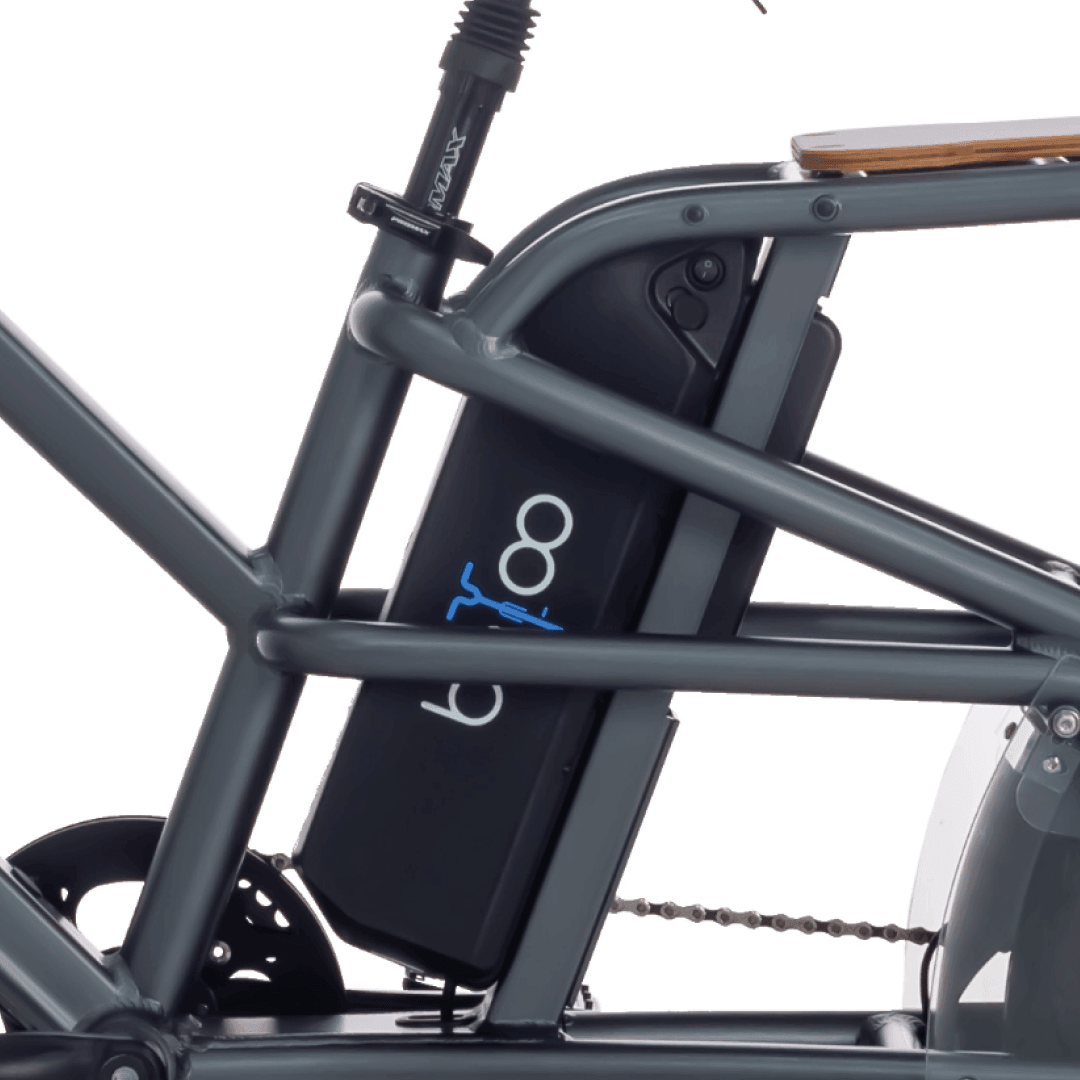
An electric bike is designed to be ridden in normal conditions, including rain. But that doesn't mean you can treat it any way you want. Electrical components must be respected: battery securely locked, clean connections, no high-pressure jet cleaning, no prolonged storage in humidity.
After a very wet ride, it is useful to quickly dry sensitive areas and check that everything is working normally. If the battery has been shocked, if it heats up abnormally, or if the screen displays an error, you should seek professional advice.
For good charging and storage habits, the BatooBike guide on charging your electric bike at the office or in an apartment can help avoid bad practices.
What to check after the ride?
After a ride in the rain, a few minutes are enough to preserve the bike.
To check:
- brakes: noise, power, lever feel
- tires: cuts, trapped objects, pressure
- drivetrain: dirt, noise, lubrication
- battery: locking, visible moisture, normal behavior
- lighting: front and rear operation
- mudguards: attachment, splashes
- panniers: moisture or infiltration
- frame: dirt, signs of impact
After heavy rain, wipe the bike with a cloth, especially around the drivetrain, screen, battery, and visible connections. Avoid high-pressure jets, which can push water into sensitive areas.
Mistakes to avoid
The most common mistakes in the rain are often the same:
- riding as if on a dry road
- braking too late
- taking turns too fast
- ignoring white lines and metal plates
- riding with worn tires
- wearing dark clothing
- forgetting suitable gloves
- leaving the drivetrain dirty after several wet rides
- using a high-pressure jet to clean the bike
- not checking the brakes after a rainy period
Rain does not forgive improvisation. The more regularly you ride, the more routine matters.
Speed pedelec or 25 km/h e-bike in the rain?
If you are still hesitating between a speed pedelec and a 25 km/h electric bike, rain is one of the criteria to consider. A speed pedelec is very efficient for long and flowing journeys, but it requires more equipment, more anticipation, and more rigorous maintenance.
For a very urban, short commute with many lights and turns, a 25 km/h e-bike can sometimes be simpler to live with in the rain. For a longer suburban commute, with good infrastructure and fluid sections, the speed pedelec retains genuine interest.
The BatooBike guide speed pedelec or 25 km/h electric bike can help you compare according to your actual use. And if your primary need remains urban, family-oriented or daily, a model like the Colibri V2.0, with its compact format, integrated battery, built-in GPS and anti-theft/geofencing functions, can also be a simpler alternative depending on your journey.
Rain checklist before setting off
| Element | To check |
|---|---|
| Tires | Pressure, wear, grip |
| Brakes | Power, noise, feel |
| Lighting | Visible front/rear lights |
| Clothing | Waterproof and visible |
| Gloves | Waterproof and warm enough |
| Battery | Securely locked |
| Pannier | Waterproof or protected |
| Route | Avoid slippery areas if possible |
| Travel time | Allow a few minutes margin |
Conclusion
Riding a speed pedelec in the rain is possible, but it requires more caution than riding in dry weather. The bike can remain fast and efficient, but speed must adapt to the road. In the rain, the best performance is not to ride at maximum. It's to maintain a fluid, predictable, and controlled ride.
The most important points are simple: tires in good condition, reliable brakes, good visibility, appropriate clothing, smooth trajectories, and maintenance after wet rides. With these reflexes, the speed pedelec remains an excellent tool for daily mobility, even when the weather becomes less pleasant.
If you often ride in the rain, think of your bike as a daily vehicle. Equip yourself properly, anticipate more, and regularly maintain key elements. It is this regularity that allows you to ride fast when possible, and carefully when necessary.
Final FAQ
Is it risky to ride a speed bike in the rain?
Yes, the risk increases because grip decreases, visibility lowers, and braking distances become longer. However, with good tires, good brakes, visible equipment, and appropriate speed, it is possible to ride regularly and safely in the rain.
How to adjust your speed?
You need to slow down earlier before turns, intersections, pedestrian crossings, tracks, metal plates, and road markings. In the rain, the speed bike's maximum speed should not be the goal. You should maintain a fluid speed, but always compatible with grip.
What equipment is useful?
The most useful equipment includes a breathable waterproof jacket, waterproof gloves, over-trousers, shoe covers, clear glasses or a visor, effective mudguards, a waterproof pannier, and reflective elements.
How to brake correctly?
You should brake earlier, progressively, with both brakes, and avoid sudden braking on markings, metal plates, or when turning. If braking changes or becomes noisy, a quick check is necessary.
What to check after the ride?
After a ride in the rain, check the brakes, tires, drivetrain, battery, lighting, and visible connections. Wipe down the bike, clean the drivetrain if necessary, and avoid high-pressure washing.