Cargo bikes can significantly simplify travel for young families: going to daycare, running errands, or attending appointments without taking the car. But when it comes to transporting a baby, the available space in the bike is not the only criterion to consider.
You must also check the child's age and development, seat compatibility, the quality of restraint, vibration protection, and manufacturer's instructions.
The most cautious recommendation in Switzerland is to wait until a baby is one year old before transporting them by bike. Before this age, their ability to properly support their head may not be sufficiently developed. Once this milestone is reached, it is still essential to use equipment adapted to their weight, height, and the cargo bike model.
From what age can you transport a baby in a cargo bike?
There isn't a single age applicable to all seats and all cargo bikes. Each manufacturer sets its own age, weight, and height limits. The child's development must also be taken into consideration.
The Bureau for the Prevention of Accidents (BPA) recommends avoiding, if possible, transporting babies under one year old by bike. Before this age, some children do not yet have the necessary muscle tone to properly support their head and body during bike movements.
To transport a young child, ensure that they:
- can hold their head up without it falling forward or to the side;
- maintain a stable sitting position;
- meet the age, height, and weight indicated by the seat manufacturer;
- can be properly secured by the harness;
- have enough space around their head and shoulders;
- are not bothered by their helmet, clothes, or rain cover.
The age indicated on a seat's product sheet is therefore a first reference point, but not an automatic authorization. If you have any doubts about your child's development or their ability to hold their head up, it's best to wait and seek advice from a health professional.
Seat age and safety recommendation: what's the difference?
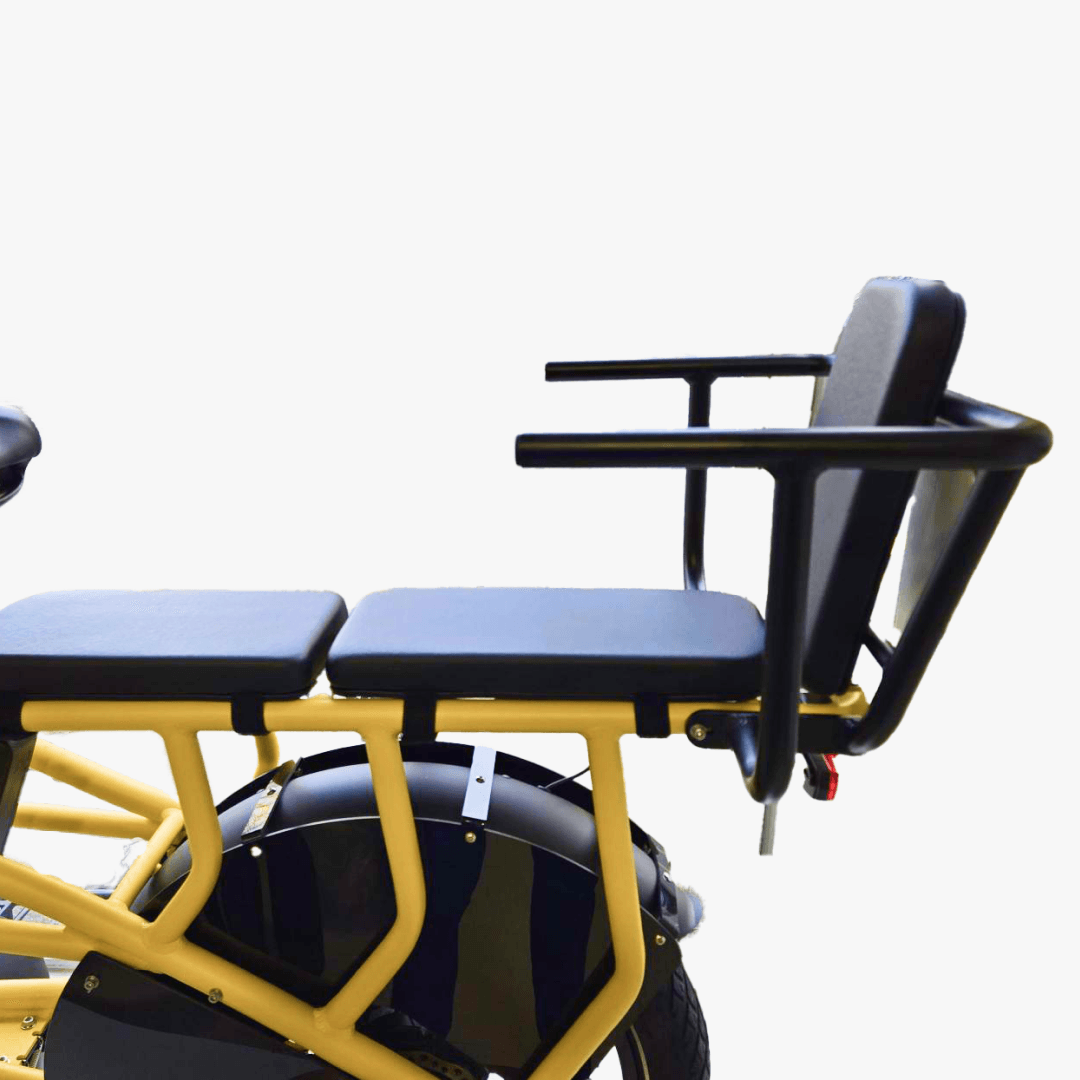
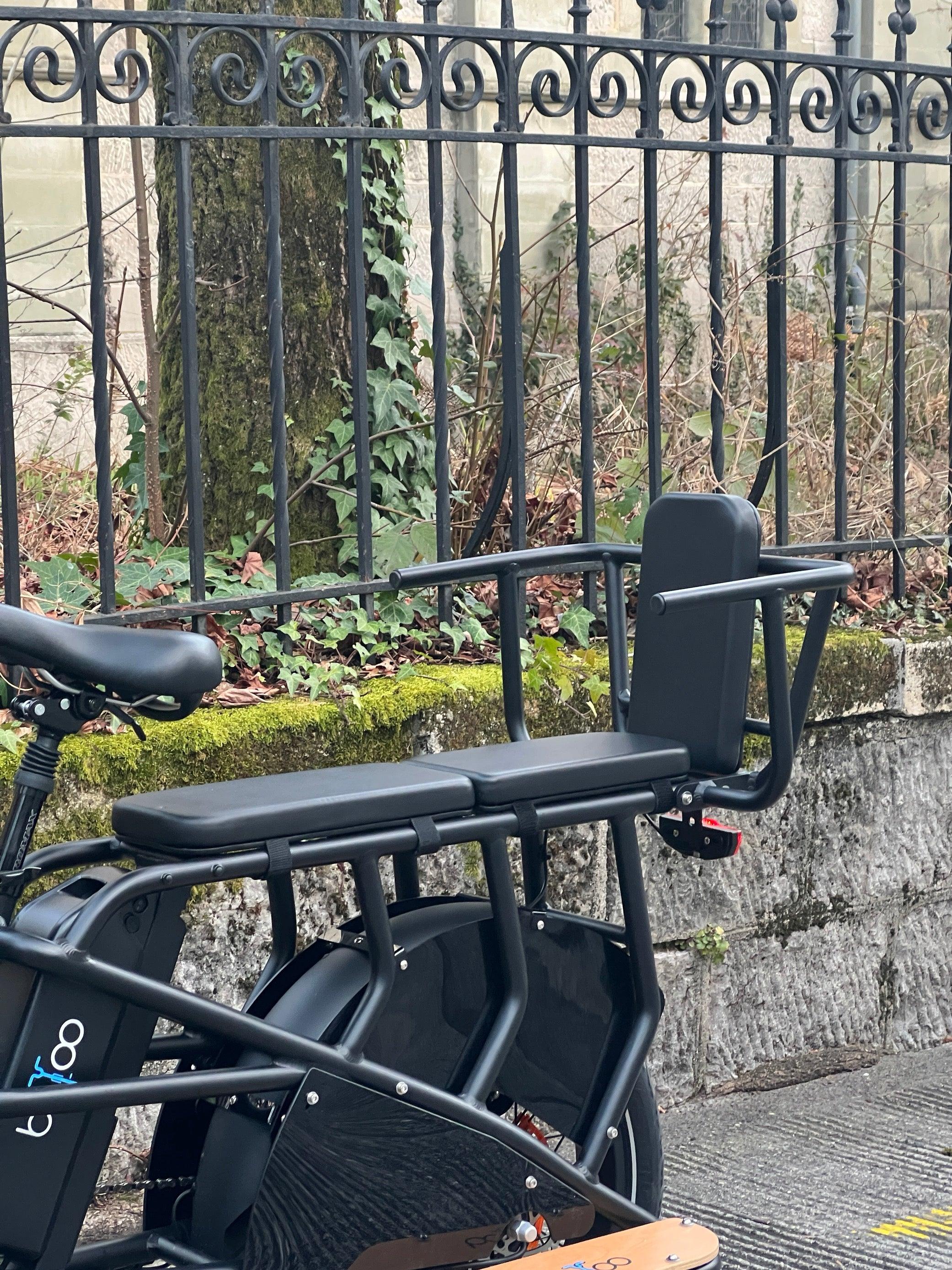
Some child seats are marketed as suitable from nine months. The baby seat offered by Batoo, for example, is indicated for children aged 9 months to 6 years, up to 22 kg or 110 cm.
This indication corresponds to the limits provided for the product. It does not replace the more cautious recommendation from the BPA, which advises waiting until a baby is one year old before transporting them by bike.
Important: The seat offered by Batoo is a rear seat designed to be attached to a compatible luggage rack. Its presence in the catalog does not automatically mean that it can be installed in the box or on the bench seat of all cargo bikes. Compatibility with your bike and configuration must be confirmed before purchase.
What do Swiss regulations stipulate for children in cargo bikes?
In Switzerland, a standard or slow electric cargo bike can transport up to four children if it has four protected seats equipped with appropriate restraint systems.
This legal maximum does not mean that all cargo bikes can accommodate four children. The most restrictive limit must always be respected among:
- the number of seats provided by the manufacturer;
- the capacity of the seat or bench;
- the maximum payload of the bike;
- the maximum authorized weight for each accessory;
- the space required around each child;
- the instructions of the bike and seat manufacturer.
For children transported in a cargo bike, the BPA recommends a five-point harness attached to the frame. The installation must also prevent the child from reaching the road, wheels, or other moving parts of the bike with their hands or feet.
To learn more about these rules, consult our guide on child safety in cargo bikes.
Seat, car seat, hammock, or bench: which solution to choose?
Not all transport solutions are suitable for a baby. The right equipment depends on their age, weight, ability to sit up, and the cargo bike's configuration.
| Solution | Possible Use | Points to Check |
|---|---|---|
| Bench with belt | Older child capable of sitting independently | A classic bench is not suitable for an infant |
| Child seat with backrest | According to the age and weight indicated by the manufacturer | Head support, harness, fastening, and compatibility |
| Baby support or hammock | Only if designed for the specific bike | |
| Car seat (infant carrier) | Only with an expressly compatible adapter | Never improvise fastening in the cargo box |
| Rain cover | In addition to a suitable seat and harness | Ventilation, temperature, and freedom of movement |
The bench seat
A bench seat is suitable for children who can sit up stably. Even when it has a seat belt, it generally does not provide the necessary support for an infant.
Adding a cushion or blanket does not transform a bench seat into a baby seat. Padding not provided by the manufacturer can alter the child's position and prevent the harness from functioning correctly.
The child seat
The seat must have a suitable backrest, a reliable restraint system, and a fastening compatible with the bike. Choose a seat that complies with standard EN 14344 and is equipped with a five-point harness that the child cannot open by themselves.
Feet must remain protected and sufficiently far from the wheels, spokes, chain, and other moving parts.
The infant carrier or car seat
A car seat should never simply be placed or strapped into the cargo box of a cargo bike.
Its use is only possible when an adaptation system has been specially designed and approved for the specific bike model, car seat, and installation position.
An improvised fastening may seem stable when the bike is stationary, but can shift during braking, turning, or passing over an uneven surface.
The hammock or infant support
Some manufacturers offer specific supports for very young children. Use them only with the vehicles and configurations mentioned in their documentation.
Equipment designed for a trailer is not automatically compatible with a cargo bike, even if its dimensions seem suitable.
Checks to perform before installation
1. Check bike compatibility
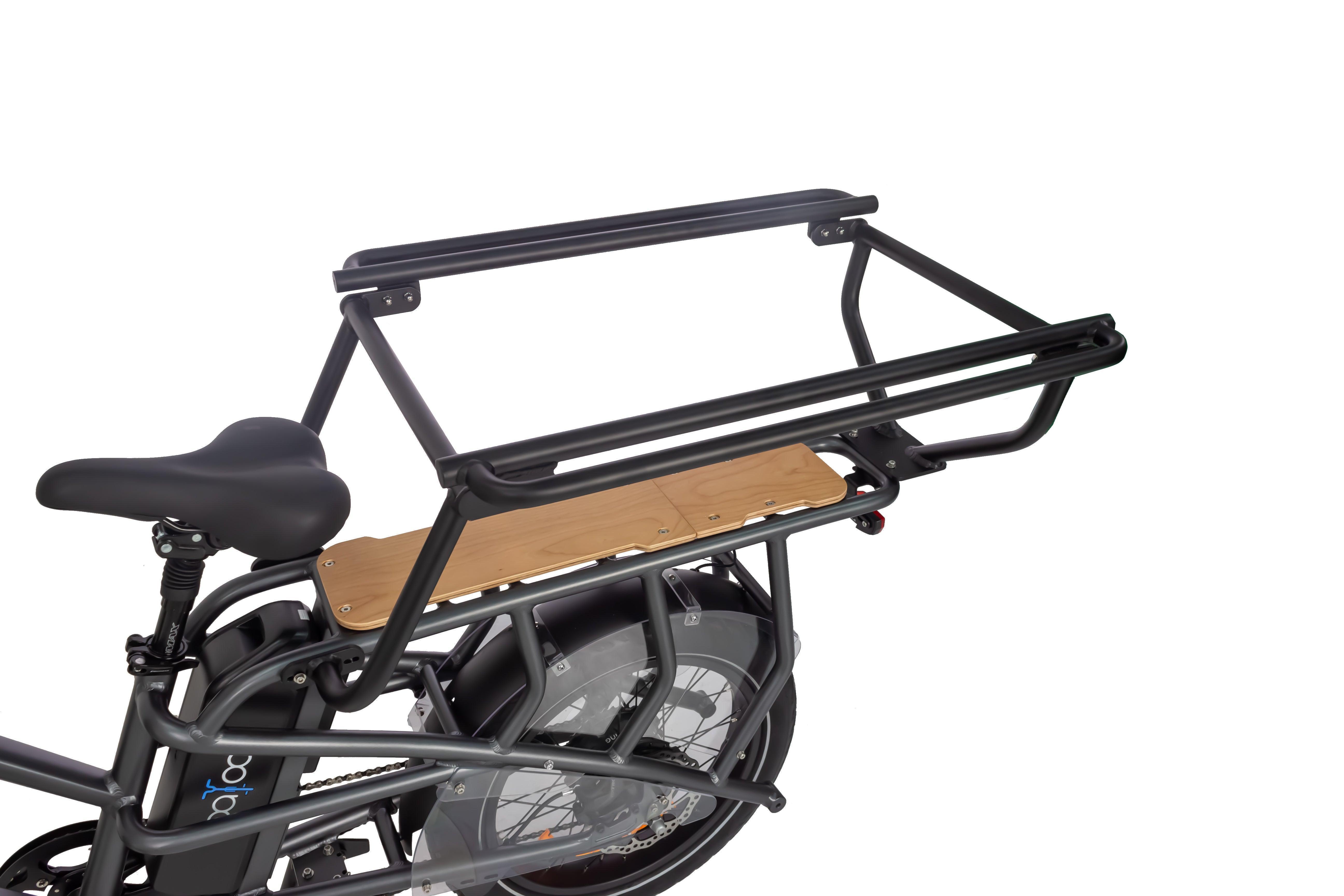
The seat, its support, and its fastenings must be compatible with the bike's frame, luggage rack, or cargo area. A solution adapted for a classic electric bike is not necessarily suitable for a two-wheeled or three-wheeled cargo bike.
Ask the manufacturer or a specialized dealer for confirmation before purchasing or modifying a fastening.
2. Check the harness
The harness must secure the child's shoulders, pelvis, and body without being too loose. All buckles must be properly closed before departure, even for a short trip.
The straps should not cross the neck. The child should not be able to slip under the harness or suddenly straighten up during braking.
3. Stabilize the bike when stopped
A sturdy kickstand is essential for installing the child. The bike must remain stationary while you adjust the seat, helmet, clothes, and harness.
Never leave a baby alone in the cargo bike, even when the kickstand is deployed.
4. Protect hands and feet
The child must not be able to reach:
- the wheels and spokes;
- the chain or drivetrain;
- the brakes;
- the road surface;
- objects transported next to them.
Bags, groceries, and anti-theft devices must be secured so they cannot shift towards the seat during the journey.
5. Calculate the payload
The payload does not only correspond to the weight of the children. Depending on the manufacturer's definition, it may also be necessary to include the weight of seats, accessories, groceries, and other equipment.
Always consult the bike's manual to find out the exact calculation method and the maximum authorized load.
How to reduce vibrations for a young child?
A baby or young child is more sensitive to jolts than an older passenger. It is preferable to avoid shocks rather than trying to compensate for them with cushions added after installation.
To reduce vibrations:
- choose a route with a smooth road surface;
- adapt your speed to the road conditions;
- check tire pressure;
- use a seat that offers good lateral support;
- cross curbs and speed bumps very slowly;
- avoid potholes, uneven cobblestones, and rough paths;
- have the bike regularly maintained.
Do not add cushions, folded blankets, or homemade supports behind the child without the manufacturer's approval. These elements can alter body positioning or the harness's functioning.
How to organize the first trips with a baby?
Before transporting a child, the adult must be comfortable with the cargo bike empty, then with a load. The weight and dimensions of the bike change starting, braking, turning, and low-speed maneuvers.
For the first outings:
- Choose a short, familiar route.
- Avoid very busy roads.
- Start on a flat, even surface.
- Ride at a moderate speed.
- Avoid rain, extreme heat, and intense cold.
- Stop after a few minutes to check the child's position.
- Recheck the harness and fastenings.
- Gradually increase the duration of trips.
The first attempt should not be made on the morning of a daycare return with time constraints. A calm outing allows you to check the configuration without stress or haste.
How to protect the baby from rain, cold, and heat?
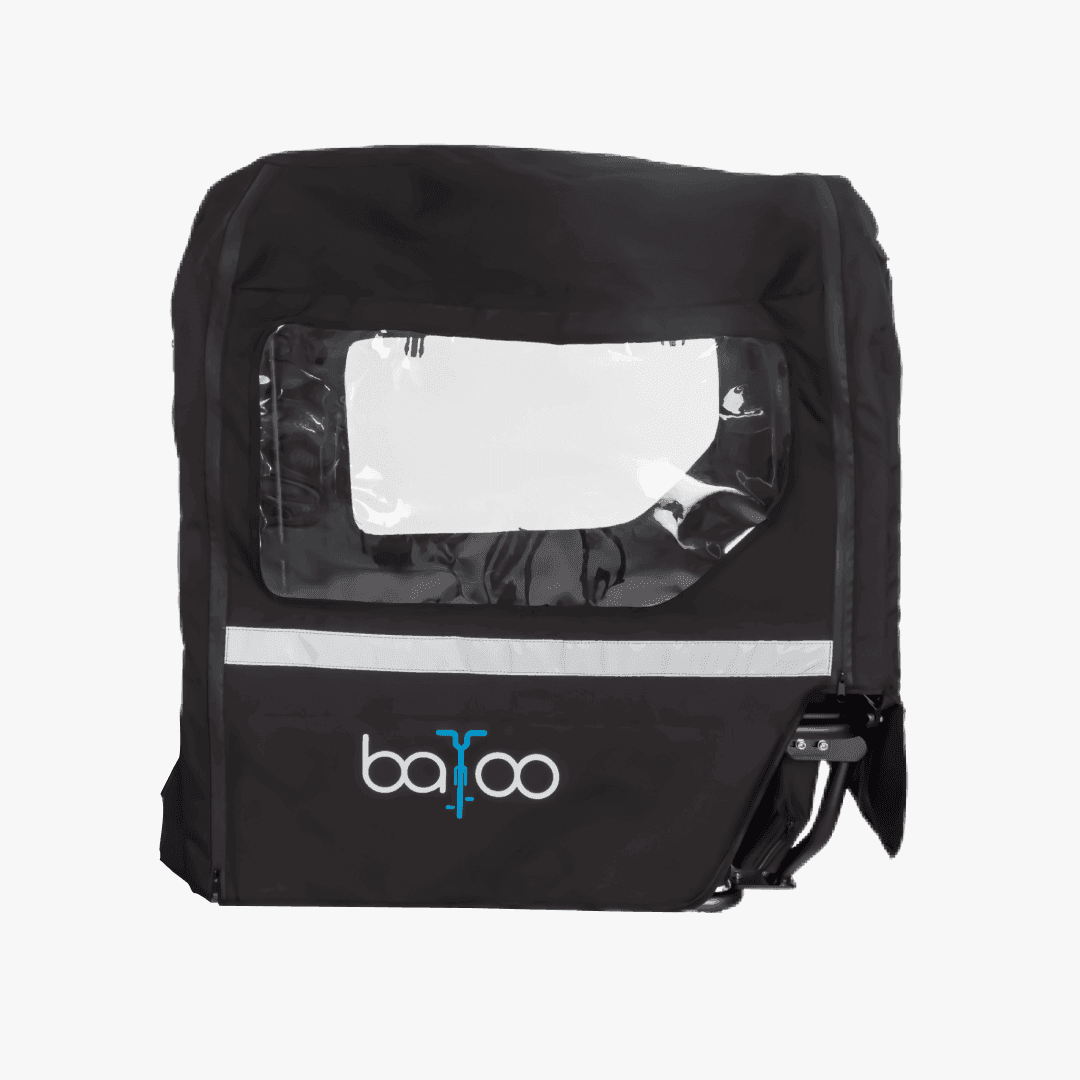
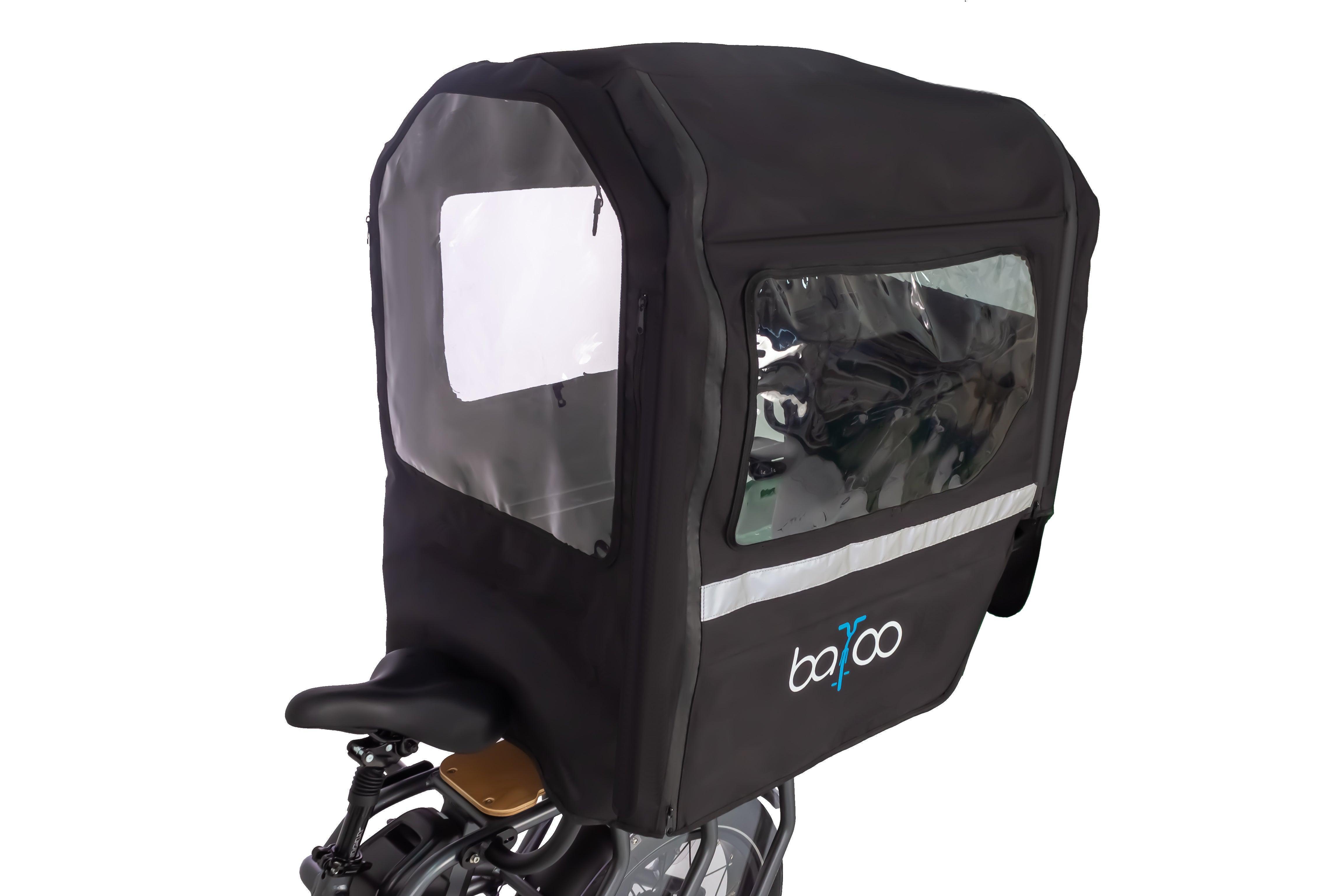
A rain cover improves comfort, but it must always remain sufficiently ventilated. A fully enclosed cabin can become hot when the bike is stationary or exposed to the sun.
Before departure, check:
- air circulation;
- the temperature inside the cabin;
- the child's visibility;
- the fastening of the rain cover;
- the absence of fabric near the wheels;
- the harness adjustment despite clothing.
In cold weather, use several thin layers rather than very bulky clothing that would prevent the harness from being tightened properly. In strong heat, reduce the duration of the trip and avoid the hottest hours.
In what situations is it better to wait?
It is preferable to postpone transport when:
- the baby is less than one year old;
- they cannot yet properly hold their head up;
- they slump or slide in the seat;
- no compatible system is available;
- the installation requires improvised fastening;
- the harness cannot be properly adjusted;
- the child is sick or particularly tired;
- weather conditions are difficult;
- the route includes dangerous sections;
- the adult has not yet mastered the loaded bike.
Waiting a few weeks or months can be the best decision. The goal is not to start as early as possible, but to have a reliable configuration for all future trips.
Checklist before transporting a baby in a cargo bike
- ☐ The child meets the age, height, and weight indicated for the seat.
- ☐ They can properly support their head and body.
- ☐ The seat is compatible with the cargo bike.
- ☐ The adapter is provided by the manufacturer.
- ☐ All fastenings are correctly tightened.
- ☐ The five-point harness is closed and properly adjusted.
- ☐ Hands and feet remain protected.
- ☐ The maximum payload is respected.
- ☐ Bags and groceries are secured.
- ☐ The rain cover remains ventilated.
- ☐ Tires and brakes are in good condition.
- ☐ The chosen route is calm and suitable.
- ☐ The adult has already tested the bike with a load.
Test the family configuration before purchase
A test ride allows you to check much more than rider comfort. Come, when possible, with the accessories you plan to use and ask to test:
- the bike's stability during installation;
- the space available around the seat;
- the adjustment and functioning of the harness;
- the remaining space for another child or groceries;
- starting with a load;
- braking and tight turns;
- access to your garage, cellar, or bike storage.
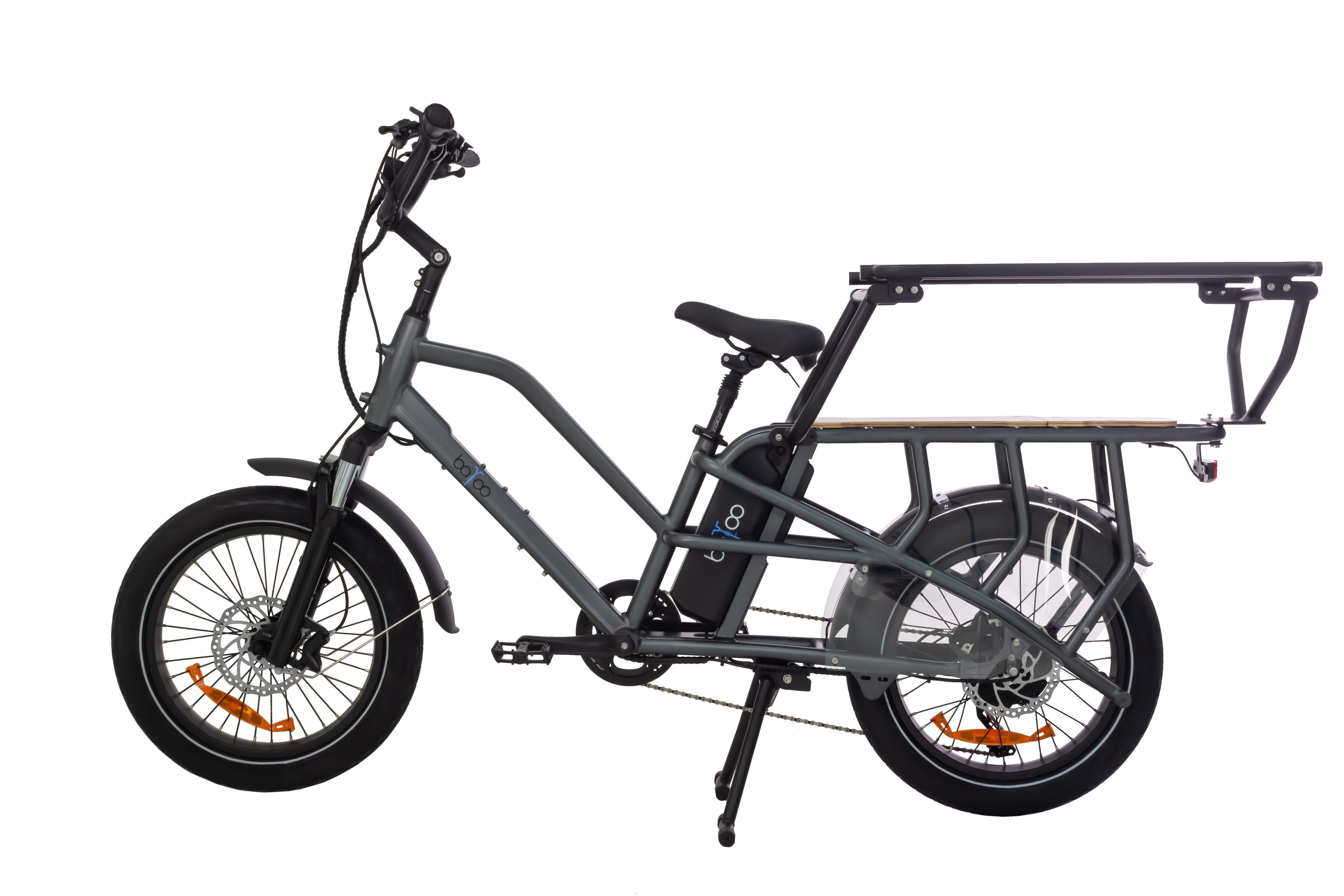
The Colibri V2.0 electric cargo bike can be tested at various Batoo partners in Switzerland. The goal is not only to test the motor or riding position, but to validate your future family configuration.
You can also consult our guide on cargo bikes for school and daycare commutes to assess your family's long-term needs.
Book a free test ride of your cargo bike
Conclusion
Transporting a baby in a cargo bike requires more precautions than transporting an older child who is already independent.
The most cautious recommendation in Switzerland is to wait until the age of one, then exclusively use a seat or system compatible with the bike, the child's weight, and their development. The harness, fastening, bike stability, and route choice are as important as the equipment itself.
Before purchasing, have your entire configuration checked: seat, adapter, available space, payload, and bike behavior. A test ride performed under your actual conditions will help you make a safer and more suitable decision for your daily life.
Frequently asked questions about transporting a baby in a cargo bike
Can you transport a baby under one year old in a cargo bike?
The Bureau for the Prevention of Accidents recommends avoiding transporting babies under one year old by bike. Before this age, their ability to properly support their head may not be sufficiently developed. The safest solution is therefore to wait until the age of one.
Is a car seat compatible with all cargo bikes?
No. A car seat should only be used if an adapter and configuration have been expressly validated for the specific bike and car seat. Improvised fastening in the cargo box is not recommended.
Should a baby wear a helmet in a cargo bike?
Helmets are recommended for children transported by bike. It must be adapted to the child's size, properly adjusted, and must not push their head forward when resting against the backrest. For a baby under one year old, a helmet does not turn an unsuitable setup into a safe solution.
How to reduce vibrations in a cargo bike?
Choose an even road surface, adjust your speed, check tire pressure, and only use the restraint systems recommended by the manufacturer. Avoid improvised supports or padding that could alter the harness's function.
How to calculate the remaining payload?
Consult the bike manual, then add up the items to be included as defined by the manufacturer: passengers, seats, accessories, bags, and cargo. Do not rely solely on the number of available seats.