Speed bikes are attracting more and more commuters in Switzerland, and it's no accident. Between the promise of a faster commute, the desire to avoid traffic jams, and the search for more consistent daily travel, they meet a real need, especially for people who find conventional bikes too slow and cars too restrictive. The TCS test of S-Pedelecs also reminds us that these models are well-suited for commutes of up to approximately 20 km per trip, with assistance up to 45 km/h.
But not all commutes are alike. A speed bike is not necessarily the best choice for a 4 km journey in a city center with traffic lights every 200 meters, nor for a highly fragmented, pedestrian-heavy, or poorly adapted route. However, as soon as the journey becomes a little longer, smoother, and more regular, the speed bike clearly takes on a new dimension. If you want to understand the legal framework before considering this type of use, it is helpful to read this guide on speed bike regulations in Switzerland.
Why Speed Bikes Attract Commuters
The first argument is time. A fast electric bike rides faster than a 25 km/h e-bike, but more importantly, it allows you to maintain a higher speed on smooth sections. According to data published by Swiss authorities, speed bikes show a significantly higher average speed than conventional bikes or standard electric bikes, which really makes a difference on regular commutes.
The second argument is consistency. According to FSO statistics on commuting, commuters in Switzerland travel an average of about 14 km per trip to work. This is precisely a distance range where the speed bike becomes very credible, especially if the route allows for smooth riding without too many interruptions.
The third argument is the balance between efficiency and effort. For many commuters, a speed bike allows them to incorporate physical activity into their day without arriving exhausted at the office. It also gives a real sense of autonomy, as you are less dependent on traffic jams, connections, or traffic uncertainties.
Ideal Distances for a Speed Bike
In practice, a speed bike is not "too" or "not fast enough" in an absolute sense. It all depends mainly on the distance, the number of stops, and the type of road taken.
| Type of commute | Is a speed bike relevant? | Why |
|---|---|---|
| Very short urban commute, with many stops | Not always | In urban stop-and-go traffic, a 25 km/h e-bike can be almost as fast |
| 10 to 20 km commute, rather fluid | Yes, very often | This is the most consistent core use for a commuter |
| 20 to 30 km commute, peri-urban or mixed | Yes, if the route is suitable | The speed gain becomes very significant over time |
| Long but very interrupted or poorly adapted commute | Not necessarily | The potential of the speed bike is lost if you cannot maintain a regular pace |
What is clear is that the speed bike becomes particularly interesting when the journey is long enough to justify faster assistance, but not so long as to become cumbersome or restrictive on a daily basis. For many commuters, the sweet spot is between 10 and 25 km one way.
Time Saved vs. Car and Public Transport
Compared to a car, a speed bike mainly saves time when the journey is quite direct, there is traffic, or parking complicates arrival. In peri-urban areas or on routes leaving urban centers, it can become very competitive because it offers a more stable travel time from day to day.
Compared to public transport, the advantage is often less about pure speed than about time management. A speed bike becomes particularly interesting when a journey involves one or two transfers, rigid schedules, or a dependence on delays. You leave when you want, follow your own pace, and avoid some of the daily friction associated with travel.
That said, we must remain realistic. On very urban, very short, or very fragmented journeys, the gain compared to a classic e-bike can be much less spectacular. In certain situations, a well-chosen 25 km/h electric bike is perfectly sufficient.
Daily Comfort and Consistency

The real advantage of a speed bike for commuting is not just about going fast occasionally. It's about being able to repeat a good journey almost every day, with true consistency. When the route is coherent, it quickly becomes a very reliable mobility tool.
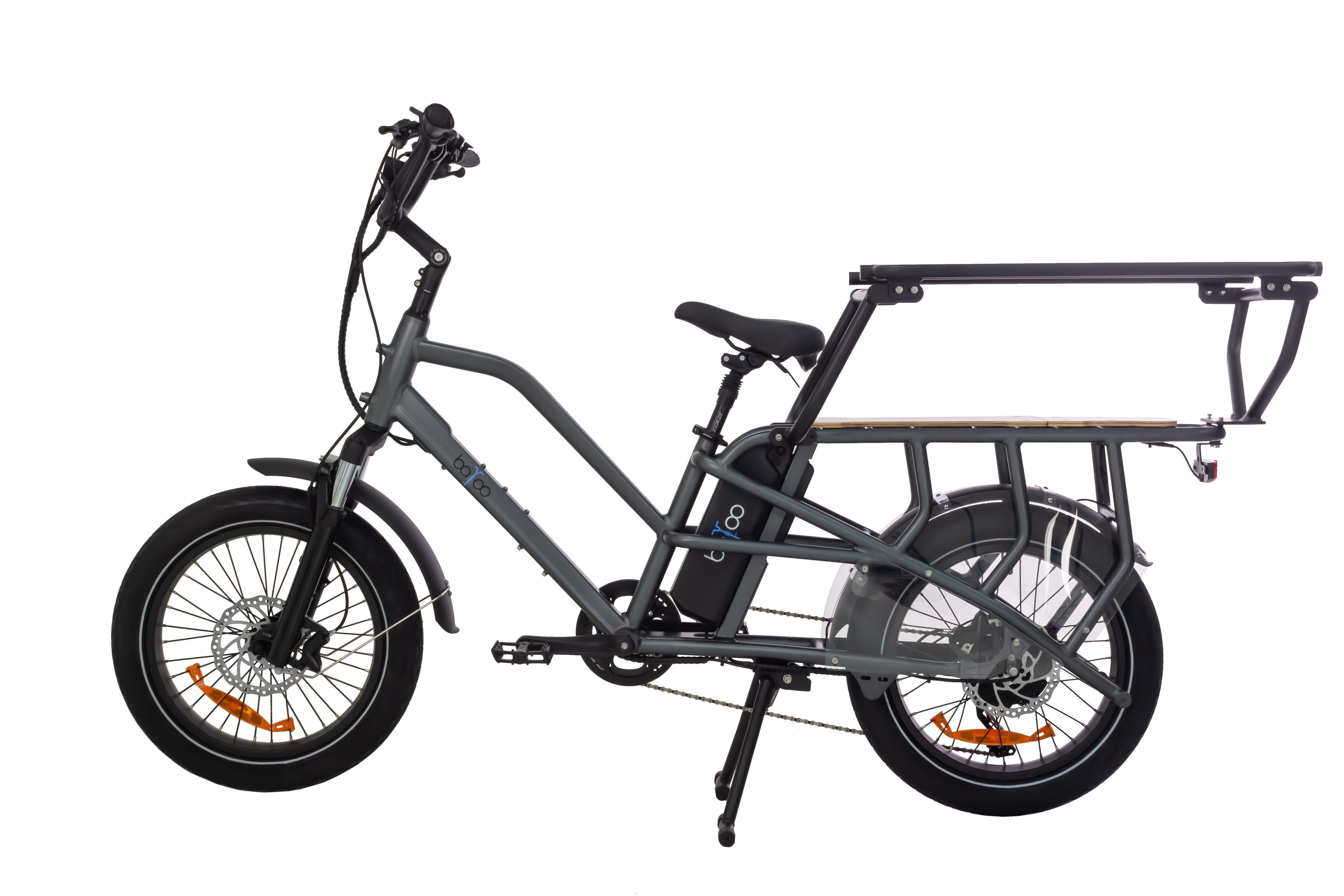
Comfort also depends on the type of journey and the bike sought. If your daily need is more utilitarian, involving carrying children, bags, or equipment, a model like the Colibri from Batoo Bike can also be an interesting alternative for urban commutes, even if the use is not exactly that of a speed bike. Everything therefore depends on the travel profile, not just the maximum speed.
Practically speaking, a speed bike also requires a more demanding approach to safety, insurance, and equipment. In Switzerland, you cannot think of it like a simple 25 km/h e-bike. To ride confidently every day, it is better to anticipate these steps from the outset, especially with this guide on speed bike registration and insurance.
Limitations to Be Aware Of
The first limitation is regulation. In Switzerland, a fast electric bike up to 45 km/h requires certain specific obligations. The official ASTRA rules for fast electric bikes specify requirements for helmets, yellow license plates, speedometers, and lighting. For a commuter, this is perfectly manageable, but it is not the level of simplicity of a classic e-bike.
The second limitation is infrastructure. The speed bike performs best on clear, smooth routes with few interruptions. As soon as you enter a very dense environment, with congested cycle paths, many pedestrians, traffic lights, or slow zones, its advantage mechanically diminishes.
The third limitation is the type of use. The speed bike is not necessarily the most relevant if you make very short journeys, often combine several modes of transport in the same day, or have to stop constantly. In these cases, a simpler e-bike can sometimes be more logical.
For Which Profile Is It the Right Choice?
A speed bike is often an excellent choice for this commuter profile:
-
you have a regular commute of approximately 10 to 25 km one way
-
your route is rather fluid, peri-urban or mixed
-
you want to save time without being dependent on fixed schedules
-
you are willing to accept the Swiss obligations related to 45 km/h
-
you are looking for a real alternative to the car for daily work
Conversely, a speed bike is often less relevant if you mainly do:
-
very short urban commutes
-
routes with many stops and slow zones
-
journeys where a 25 km/h e-bike is already largely sufficient
-
travel often requiring a lot of luggage or very multimodal use
Conclusion
The speed bike for commuting to work in Switzerland is not a gadget for speed enthusiasts. It is a real mobility solution for commuters who have a sufficiently long, fluid, and frequent journey for the assistance up to 45 km/h to make a concrete difference. This is particularly true on peri-urban and mixed routes, where classic bikes or 25 km/h e-bikes begin to show their limitations in terms of travel time.
However, it is not automatically the best choice for all journeys. If your route is very urban, very fragmented, or very short, a good 25 km/h e-bike can remain simpler and almost as efficient. The right approach is therefore to start from your actual journey: distance, interruptions, terrain, parking, comfort with traffic, and acceptance of Swiss rules. Only then can we say whether a speed bike is, or is not, the best choice for commuting.
Final FAQ
What distance is a speed bike ideal for?
The most logical core use is often around 10 to 20 km per trip, with a strong interest that can remain up to 20 to 30 km if the route is smooth and consistent.
Is a speed bike really faster than a classic e-bike?
Yes, on fairly fluid routes, because it assists up to 45 km/h and allows for a higher average speed. However, on a very fragmented urban journey with many stops, the difference can be much smaller.
Can it replace a car for commuting?
Yes, in many cases. For a commuter with a regular journey and a suitable distance, a speed bike can become a real alternative to a car, especially when traffic or parking are issues.
Which commuter profile should choose a speed bike?
The right profile is primarily someone who has a regular, somewhat long commute, with a relatively direct route, and who wants a faster solution than a classic e-bike without being dependent on traffic jams or public transport.
What types of journeys are not suitable for a speed bike?
Very short journeys in city centers, very interrupted, very slow, or heavily mixed with pedestrians are often less suitable. In this type of environment, a 25 km/h e-bike can sometimes offer a better compromise.
I can also do the same for Article 2 directly with integrated internal and external links.