Does your bike feel heavier to ride, do the tires sag more with children, or do small bumps become uncomfortable? Before adjusting the electric assist, start by checking the tire pressure.
The tire pressure of a cargo bike influences load support, comfort, and rolling resistance. However, there isn't a single value valid for all models, even when they use tires of the same size.
The correct setting is within the allowed range for your setup, taking into account the load on each wheel. A tire advertised as 20 × 3.0 should therefore not be inflated to a pressure chosen solely based on its dimensions.
Where to find the recommended pressure for your cargo bike?
Start by reading the markings on the sidewall of each tire. You may find a pressure range or a maximum pressure, expressed in bar, PSI, or both units.
Then consult the bike's manual and rim information. The chosen pressure must respect all applicable limits for the setup. If the rim imposes a maximum pressure lower than that of the tire, the higher value marked on the tire does not authorize you to exceed it.
A maximum pressure is not a pressure to be applied automatically. It indicates a limit, not the ideal setting for all riders and all loads.
Schwalbe's recommendations on tire pressure emphasize that the weight supported by the tire is a decisive criterion. If the indications are missing, illegible, or contradictory, have the setting confirmed before riding with a load.
What pressure for a 20 × 3.0 cargo tire?
The designation 20 × 3.0 describes a nominal size, not an inflation instruction. Two tires of this dimension can have different constructions, pressure limits, and load capacities.
To obtain a suitable recommendation, note the brand, full reference, ETRTO dimension, and pressure indications marked on the sidewall. Also specify the bike model and your usual load.
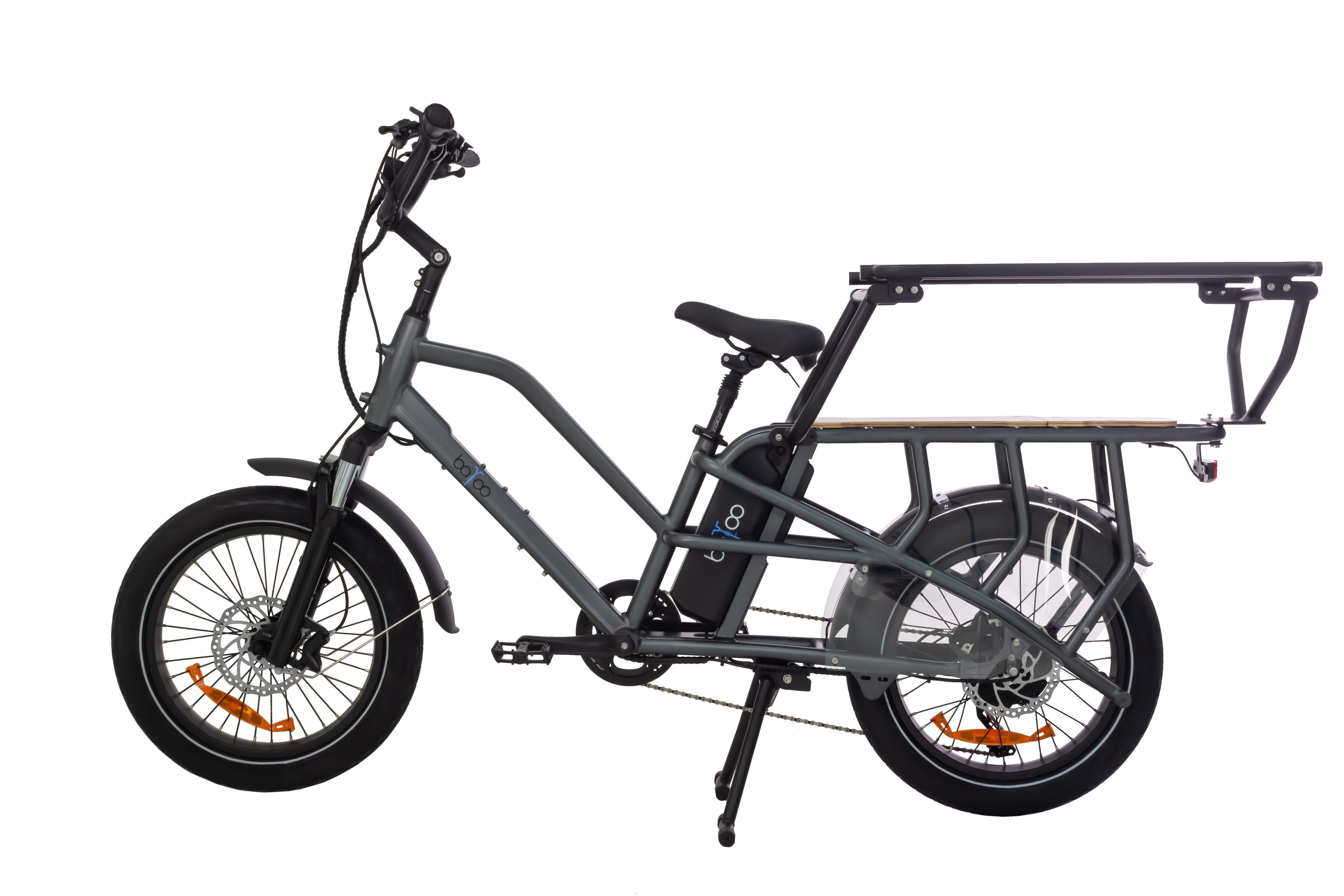
The Colibri V2.0 product sheet mentions CST 20 × 3.0 tires. For the adjustment of your bike, use the indications on the actually mounted tire and have the front and rear values confirmed by Batoo. A tire replaced since purchase may require a different setting.
Why consider children and groceries?
A tire supporting more weight deforms more at the same pressure. This is why adding passengers or goods may require adjusting the inflation.
Don't just think in terms of the number of children: their weight, seats, school bags, and groceries are all part of the load. Their placement also matters.
There is no universal rule like "add a certain amount of air per child." Instead, ask for two reference settings for your bike: one for light use and one for your usual family load.
Inflating more never allows you to exceed the maximum load of the tire, wheel, or bike. When the load exceeds an authorized limit, the solution is to reduce it, not to increase the pressure.
Should the front and rear tires have the same pressure?

Not necessarily. The two wheels do not always bear the same weight and may be equipped with different tires.
On a longtail carrying children behind the rider, the rear may require higher pressure. This logic should not be automatically applied to a front-loader cargo bike: the front box changes the load distribution.
| Configuration | Point to examine | Good practice |
|---|---|---|
| Longtail with children at the back | Heavy load on the rear wheel. | Use the loaded setting for this wheel, without exceeding limits. |
| Front-loader cargo bike with front box | Weight distribution different from a classic bike. | Have front and rear pressures confirmed separately. |
| Riding alone, then returning with children and groceries | Load variation during the day. | Request a pressure range compatible with these uses. |
| Tire replaced with another model | Potentially different limits and behavior. | Revalidate the setting rather than automatically reusing the old one. |
How to measure and inflate tires correctly?
Use a pump suitable for your valves, with a readable gauge. Pressing the tire with your thumb can sometimes identify significant deflation, but it doesn't replace a measurement.
Check before the ride, with the bike stabilized and no child installed on board. To compare readings from one week to another, use the same device if possible, under similar temperature conditions.
- Check the tire: look for cuts, deformation, or embedded objects before inflating.
- Identify the target value: use the recommendation corresponding to the planned setup and load.
- Check the gauge unit: do not confuse bar and PSI.
- Connect the pump: use the appropriate nozzle and prepare the valve according to its type, without forcing it.
- Inflate gradually: monitor the gauge and stop at the planned value.
- Complete the check: remove the nozzle, close the valve if necessary, replace its cap, and check the other wheel.
If the reading seems inconsistent or if air continuously escapes, first check the pump connection. Do not continue to inflate without knowing what pressure is actually in the tire.
Underinflation and overinflation: what signs to watch for?
An insufficiently inflated tire
Excessive deformation under load, unusual steering, or shocks felt near the rim should alert you. With an inner tube, an impact can pinch it between the tire and the rim.
These sensations are not enough to make a diagnosis. Stop, measure the pressure, and inspect the tire. After a significant impact, a simple re-inflation does not guarantee that the wheel is intact.
A tire overinflated for its use
A setting that is too firm can transmit more vibrations on an uneven road. Exceeding the limits of the setup presents a risk: it should never be done to carry more or try to gain autonomy.
If the bike remains uncomfortable with the recommended values, also have the tires, seats, and suspension checked. Inflation is not the only possible cause.
Does pressure influence range?
Yes, because it changes the tire's deformation and its rolling resistance. Underinflation unsuitable for the load can make the bike less efficient.
But "more inflated" does not always mean "better performance." Schwalbe distinguishes between very smooth surfaces and uneven terrain, where a tire capable of conforming to the ground may roll better.
The goal remains a setting adapted to the bike, the load, and the road surface, without promising a universal percentage of additional kilometers. For other factors, consult our guide on cargo bike range when loaded.
Should pressure be lowered in rain or winter?
Lower pressure can, in certain conditions, improve shock absorption and ground contact. This does not justify systematically deflating a cargo bike carrying children.
Maintain a setting compatible with the load and the limits of the setup. On wet roads, first adjust your speed, anticipate braking, and avoid sudden changes of direction.
Cold can also cause measured pressure to drop. Recheck it during a significant temperature change rather than assuming the previous week's setting is still correct.
On snow or ice, modifying inflation is not enough to make the ride safe. Suitable tires and choosing to postpone the trip may be necessary.
How often should pressure be checked?
For a daily used cargo bike, incorporate a gauge measurement into your weekly routine. Also inspect the tires before leaving and measure more often if the manufacturer requests it, if the load changes significantly, or if you notice air loss.
After a period of not riding, check both wheels before the first trip: an inner tube can gradually lose pressure even when the bike remains stationary.
Our electric cargo bike maintenance checklist allows you to combine this check with that of the brakes, lighting, and fasteners.
Why does one tire lose pressure faster than the other?
A repeated difference warrants a check. It may be related to a slow leak, a valve, or the assembly. The fact that the rear wheel bears more weight does not, by itself, explain a rapid loss of air.
Note the pressures and compare them after a similar period, with the same gauge. If a tire deflates significantly in a few hours or between two rides, have the cause investigated rather than endlessly re-inflating.
Stop use in case of bulge, visible casing, damaged valve, rapid pressure loss, or damaged rim. Additional inflation does not repair these defects.
A practical benchmark for family trips
During your next workshop visit, ask for the recommended settings for your two most frequent situations: riding alone and riding with children and luggage.
Keep a note with the tire references, front and rear pressures, and the corresponding load. This will give you a benchmark adapted to your bike, rather than a number found for another model.
For a question about the Colibri, send Batoo support a readable photo of the markings, the bike model, and an estimate of your load.
Pre-ride Checklist
- ☐ The values used correspond to the planned setup and load.
- ☐ Both tires have been checked separately.
- ☐ Tire and rim limits are respected.
- ☐ No tire shows significant cuts, bulges, or deformation.
- ☐ No rapid pressure loss has been observed.
- ☐ The total load remains within authorized limits.
The correct inflation is neither the maximum by default nor the minimum for comfort. It is the setting that correctly supports your load while respecting the limits of the bike and its components.
Have your cargo bike tire settings confirmed by Batoo
Frequently Asked Questions about Cargo Bike Tire Pressure
What pressure for a 20 × 3.0 cargo tire?
The dimension alone does not allow for a specific value. Check the tire reference, rim limits, and bike recommendations based on the load. Have front and rear settings confirmed for your setup.
Should you inflate more with two children?
An additional load may require higher pressure on the wheel concerned. The adjustment depends on the weight, its distribution, and the setup. There is no universal extra amount to apply per child.
Does lower pressure improve grip?
It can improve contact with certain surfaces, but insufficient pressure can also excessively deform the tire and cause damage. Stay within the range adapted to your load and do not systematically deflate in the rain.
How often should pressure be checked?
For daily use, plan a weekly gauge measurement and an inspection before each ride. Check more often in case of air loss, significant load change, or when the manufacturer requests it.
Why does the rear tire lose pressure faster?
The cause should be investigated rather than automatically attributed to the weight carried. A slow leak, a valve, or the assembly may be at fault. A rapid or repeated loss requires a check before riding loaded again.
The best way to choose a cargo bike is to ride it.
Test the Batoo Colibri for free and experience its comfort, stability and electric assistance in real-world conditions.
Book my free test ride