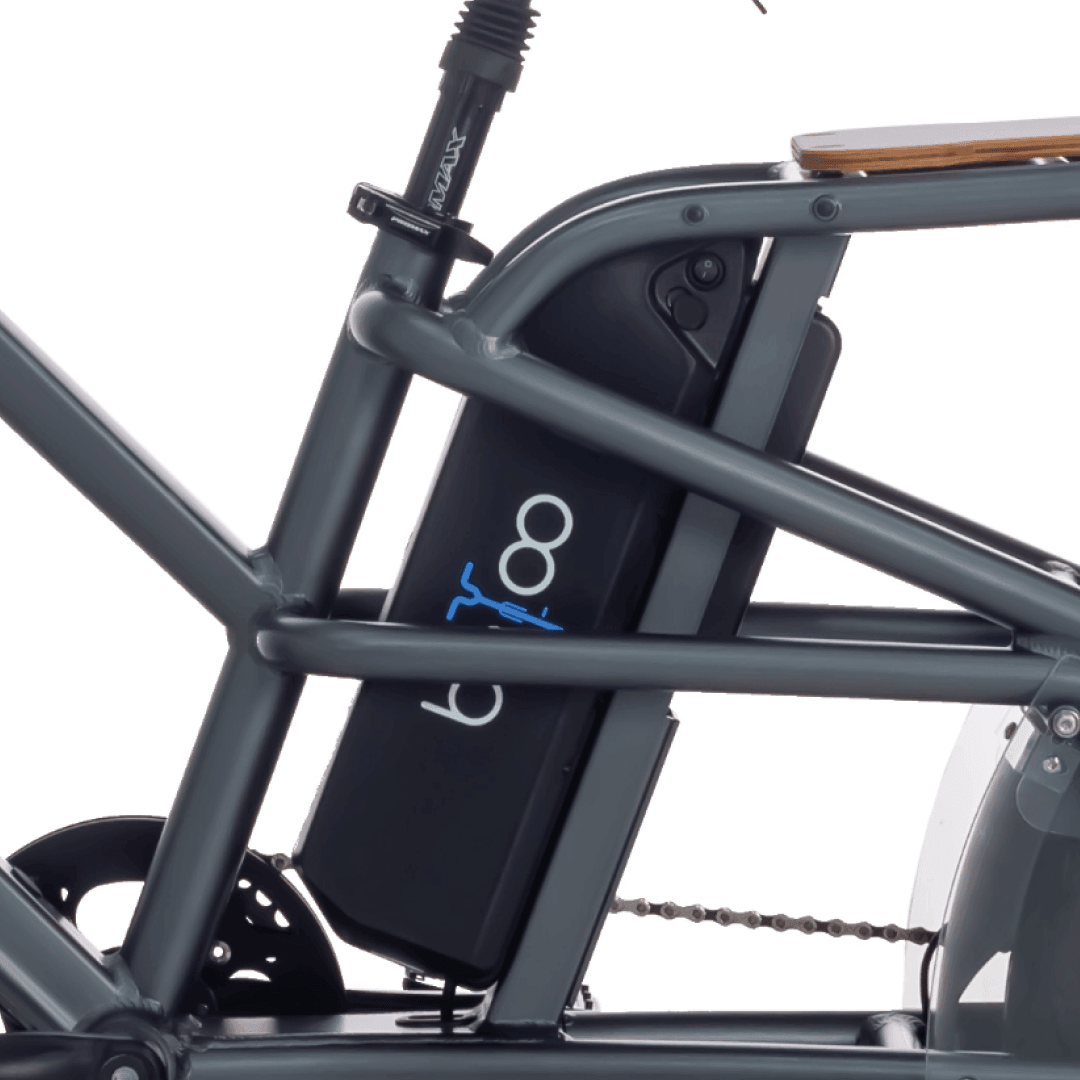
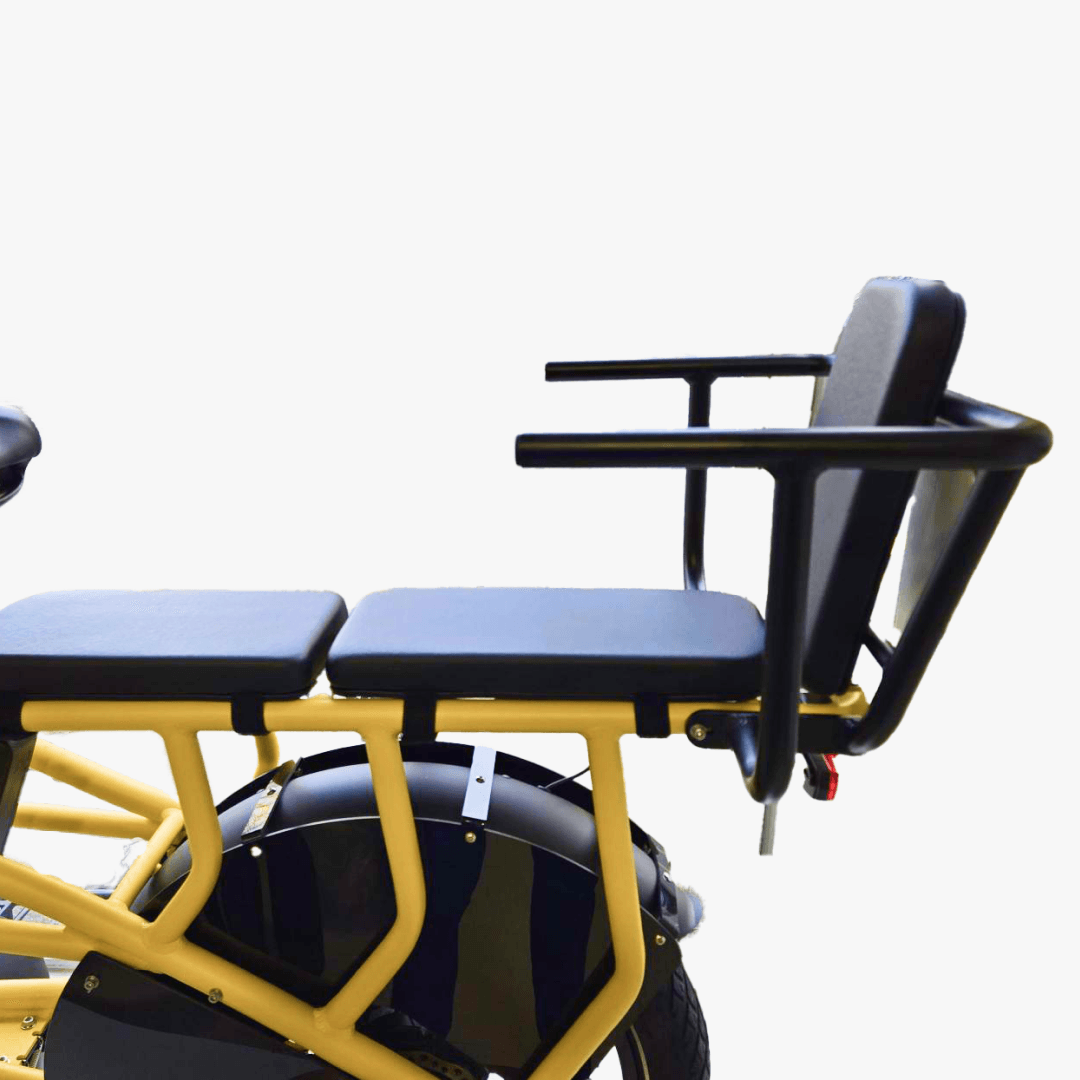
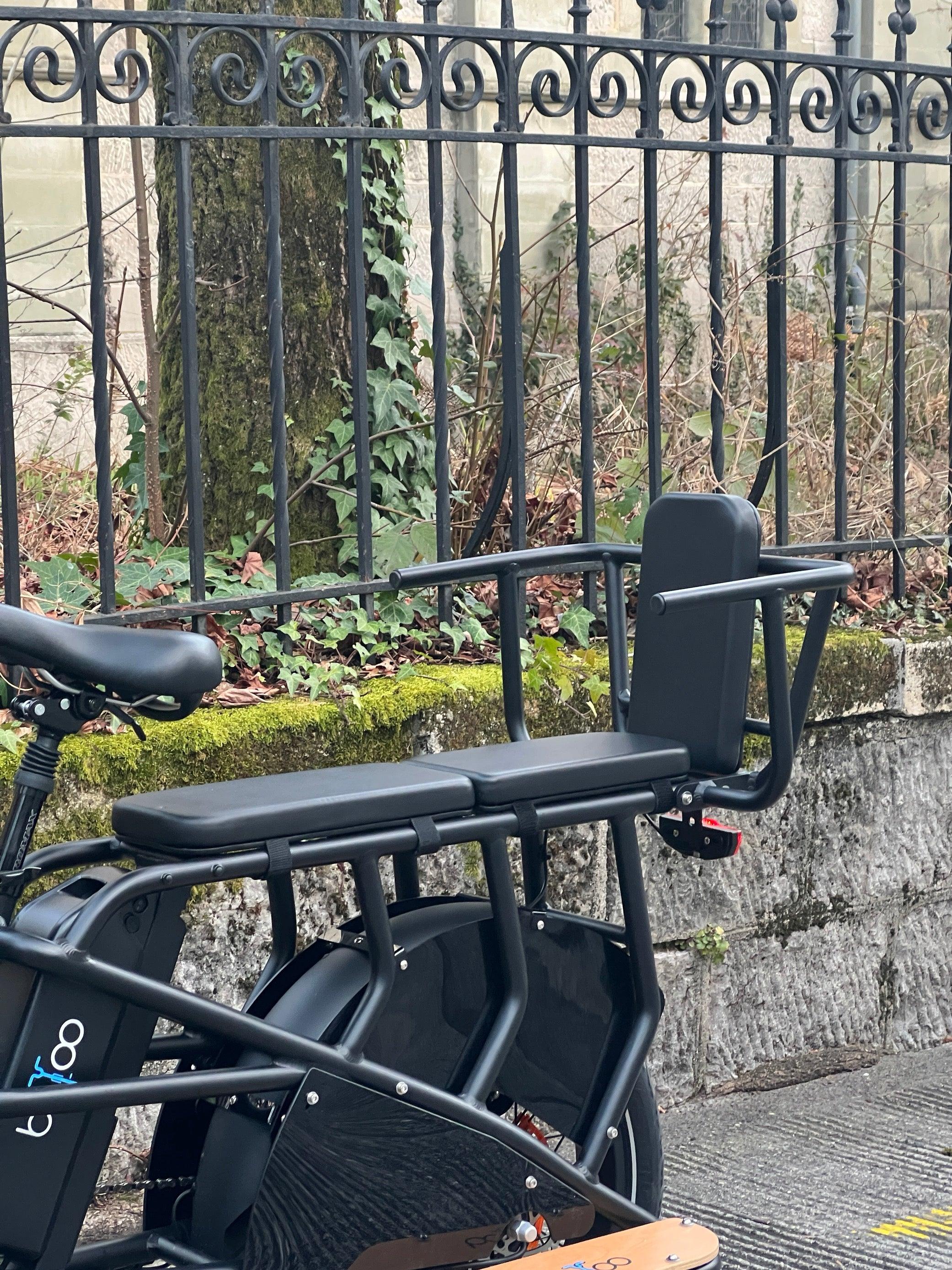
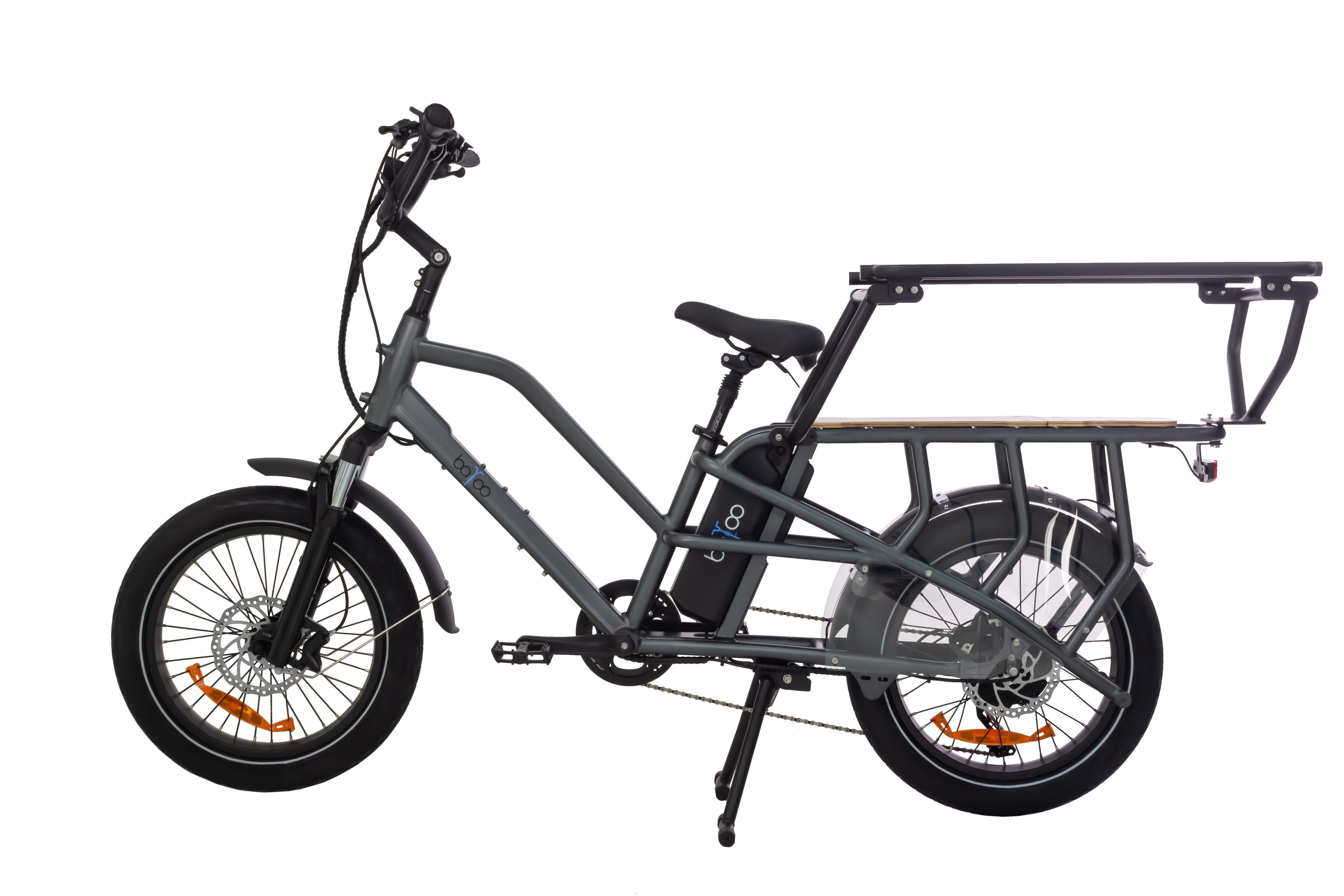
A **speed bike** (or **speed pedelec**) is designed for fast and regular commutes — typically for commuting — with assistance that can go up to **45 km/h** depending on the model and homologation. And in real life, what makes the difference every day isn't just "45 km/h on the spec sheet": it's **real-world range**, **the quality of the assistance** (acceleration, hill climbing ability), and the **reliability** of the battery/motor over time.
In this guide, we'll help you choose the **right battery** (capacity, single vs. dual) and the **right motor** (mid-drive vs. rear hub), with simple benchmarks and comparative tables.
1) Capacity and Range: 500–800 Wh… and beyond

Understanding "Wh" (the basics to avoid mistakes)
Battery capacity is expressed in **Wh (Watt-hours)**. The more Wh, the more "reserve" you have to ride longer… **under identical conditions**.
But range varies enormously depending on:
-
your **weight** + load (bag, lock, etc.)
-
**elevation** (hills)
-
**wind** and **temperature** (cold reduces range)
-
**tire pressure**
-
**assistance level** (the higher it is, the more power it consumes)
-
your riding style (accelerations / stabilized speed)
Simple benchmarks: what capacity for what use?
Here is a practical guide (to be adapted according to terrain + weather + assistance level).
| Usage (profile) | Typical distance |
Terrain | Recommended capacity |
|---|---|---|---|
| Short city trips | 10–25 km/day | flat to hilly | 500–625 Wh |
| Regular commuting | 25–50 km/day | mixed | 625–800 Wh |
| Long trips / varied terrain | 50–80 km/day | hilly to mountainous | 800–1000 Wh |
| “Zero range anxiety” | 70–120 km/day | mixed / cold | 1000 Wh + (or dual battery) |
To remember: if you want to maintain a comfortable range in winter, on hills, or with a high level of assistance, aim **higher** than your "on paper" needs.
2) Dual Battery: for whom, and why?
A **dual battery** is not a gimmick: it's the simplest solution if you want to:
-
take **long trips** without recharging at the office
-
ride **fast and often** (high assistance) without stress
-
maintain range even when it's **cold**
-
carry weight (bag, laptop, equipment, etc.)
When it's truly useful
You are a good candidate for a dual battery if:
-
you ride **50 km/day or more** (especially with varied terrain)
-
you ride **all year round** (including winter)
-
you want to avoid daily recharging (or you don't have an accessible outlet)
Tip: some prefer a single "large" battery rather than a dual one. The important thing is your reality: distance, terrain, frequency, weather.
3) Motor: Mid-drive vs. Rear Hub (torque, traction, feel)

The choice of motor impacts:
-
**feel** (natural vs. "pushed")
-
**hill-climbing ability**
-
**efficiency** (consumption)
-
**maintenance** and long-term cost
Simple comparison: mid-drive vs. rear hub motor
| Criterion | Mid-drive motor | Rear hub motor (hub) |
|---|---|---|
| Pedaling feel | Very natural (often “progressive”) | More “propelled” (push effect) |
| Hills / varied terrain | Excellent (especially with torque sensor) | Good to very good depending on torque, but can consume more on hills |
| Efficiency / range | Often better efficiency on varied terrain | Very good on flat terrain, variable on hills |
| Bike balance | Low center of gravity, super stable | Stable, but more "rearward" mass |
| Maintenance | Drivetrain more stressed (chain/cassette) | Drivetrain less stressed by the motor |
| Usage style | Hilly terrain, sporty use, versatility | City/fast commuting, “pushed” sensations, simplicity |
**For speed pedelecs**, both are common. The right choice mainly depends on your terrain:
-
**lots of hills / frequent starts** → mid-drive motor advantage
-
**fast, rather smooth rides** → very pleasant rear hub motor
4) Torque (Nm) & "45 km/h": what you really need to understand
The key point
**45 km/h** primarily depends on the **category/homologation** and the system configuration (assistance limit).
**Torque (Nm)**, on the other hand, mainly influences:
-
**acceleration** (starting at a light, resuming speed)
-
the ability to **maintain a high speed** on an uphill section
-
comfort when you're loaded or facing a headwind
Practical benchmarks (without getting lost)
-
If you mostly ride in **the city/on flat terrain**, primarily look for **smooth** assistance and a suitable battery: "moderate" torque might be enough.
-
If you have **hills** or want brisk acceleration, prioritize a system known for its **solid torque** and intelligent assistance management.
**Question to ask yourself:** "Do I want to *climb fast* or *climb easily*?"
If you want to climb fast AND stay comfortable, you'll need a more "powerful" system… and a battery to match.
5) Optimizing Range (without changing batteries)
Before paying more for a larger capacity, you can often gain **10–30%** more range with simple habits:
Range checklist (simple and effective)
-
**Tires**: correct pressure = less resistance
-
**Assistance**: use an intermediate mode, and save maximum assistance for hills
-
**Cadence**: pedaling a bit more avoids "forcing" the motor
-
**Weight**: avoid unnecessary items in your bag
-
**Temperature**: keep the battery away from the cold (if removable)
-
**Drivetrain**: clean and lubricated chain = better efficiency
-
**Accelerations**: "smooth" starts = fewer consumption spikes
6) Charging, Lifecycle, and Best Practices (battery + motor)
Battery: best practices for extending lifespan
-
Avoid leaving the battery at **100% or 0%** for long periods
-
If storing for several weeks: store it **partially charged** (and in a dry place)
-
Allow the battery to **return to room temperature** (especially in winter) before recharging
For detailed maintenance recommendations (storage, charging, winter), you can follow Bosch's official advice here: battery care and maintenance
Motor: "intelligent" maintenance
-
Gentle cleaning (no high-pressure jet on electrical areas)
-
Periodic check of brakes/drivetrain (a speed bike rides fast: wear follows)
-
Regular servicing if used intensively
Concrete Examples (at BatooBike): large capacity for rolling