Recharging your electric bike is simple in theory: plug in the battery, wait, then ride off again. In real life, it's a bit more nuanced. It all depends on your home, your workplace, the type of battery, access to an outlet, available time, and safety rules to follow.
The good news is that an electric bike doesn't require a complex setup like an electric car. In most cases, a standard household outlet is sufficient, provided you use the original charger or a compatible one, charge in a dry place, and don't improvise with dubious extension cords or overloaded outlets.
The real question isn't just "can I charge?", but rather "how do I do it properly, without damaging the battery, inconveniencing others, or taking unnecessary risks?". To lay the groundwork, the BatooBike guide on how to charge your electric bike is a good starting point.
Charging at home: the simplest case
At home, charging is usually the most convenient solution. You come home, remove the battery if it's detachable, plug it into a suitable place, and then you're ready to go the next day with plenty of range.
The ideal is to charge in a dry, temperate, well-ventilated, and clear area. It's best to avoid cluttered corners, fragile surfaces, very hot, very cold areas, or those near flammable materials.
Good habits at home:
- use the charger designed for the battery
- place the battery on a stable surface
- avoid charging near curtains, cardboard, or textiles
- do not cover the charger during charging
- unplug once charging is complete
- avoid cheap or overloaded power strips
- monitor an old, damaged, or long-unused battery more closely
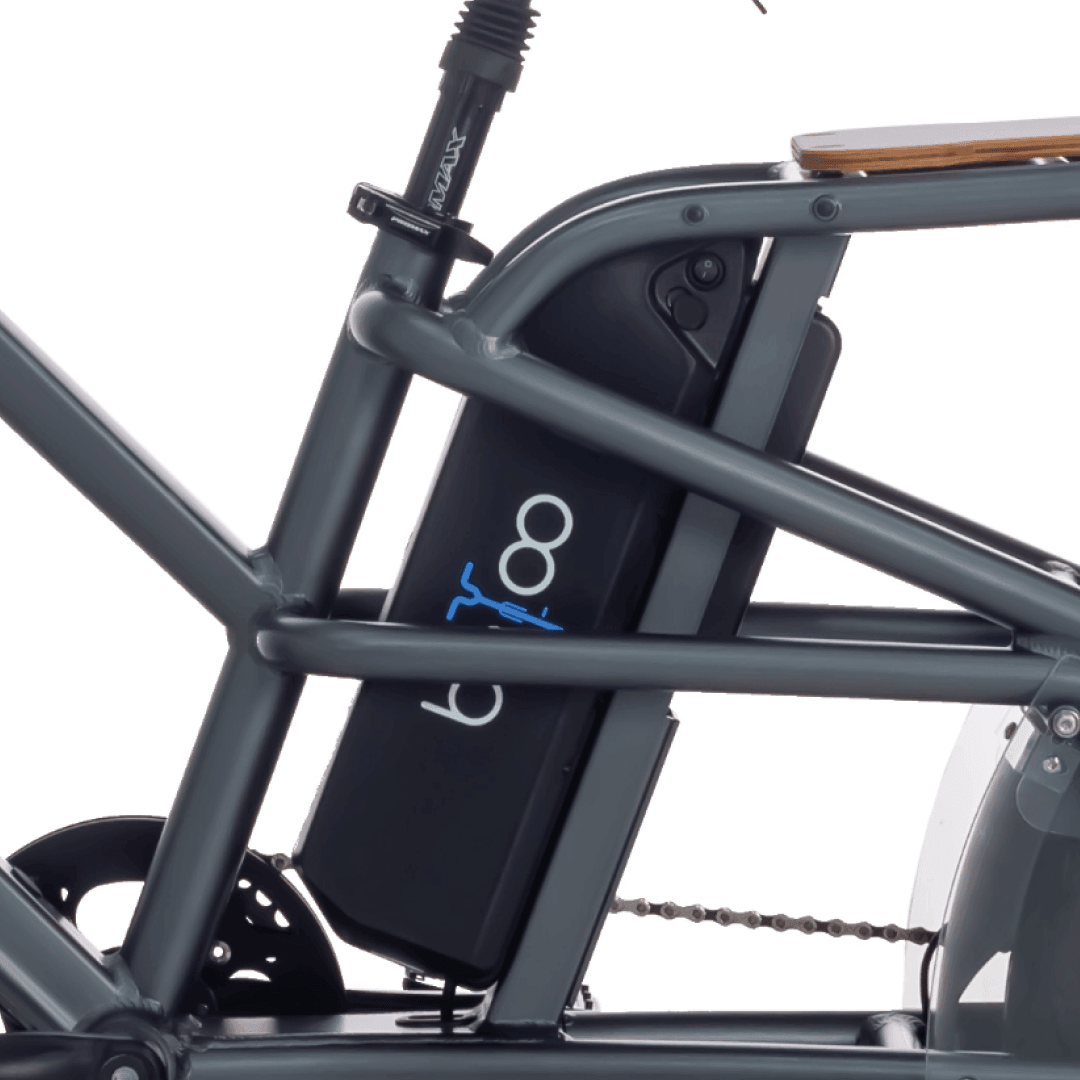
In an apartment, a removable battery becomes a real advantage. You don't need to bring the whole bike upstairs. You can leave the bike in the storage room or garage, then only charge the battery at home.
Charging in an apartment: what to plan for
Yes, you can generally charge an electric bike battery in an apartment. It's even one of the most common uses with removable batteries. But it must be done methodically.
The first thing to check is simple: does the battery remove easily? If so, charging becomes much more convenient. You can bring the battery upstairs, plug it into a suitable room, and avoid leaving the whole bike in a hallway, lobby, or common area.
In an apartment, avoid charging:
- in a passageway
- in a stairwell
- in front of a door
- near a heat source
- on a bed or sofa
- in a very humid place
- on an already loaded power strip
The right place is a clear, dry room, with an accessible outlet and a stable surface. The battery must remain in a calm environment, without being exposed to direct sunlight, humidity, or shocks.
If your battery is not removable, the situation depends on access to the bike. Bringing a complete electric bike into an apartment can be difficult, especially if it's heavy, long, or equipped for daily use. In this case, you need to think about a solution in the bike room, garage, or parking space, if the building allows it.
Charging at the office: practical, but not automatic

Charging your electric bike at the office can be very practical, especially if you have a long commute or ride a speed bike. But it's not an automatic right. You need to consider internal rules, safety, available space, and your employer's tolerance.
The simplest thing to do is to clearly ask where charging is allowed. Some offices allow charging in a bike room, a technical area, or a designated space. Others prefer to avoid batteries in open-plan offices, meeting rooms, or hallways.
Before charging at work, check:
| Point to check | Why it's important |
|---|---|
| Employer's authorization | Avoids internal problems |
| Designated location | Reduces risks and inconvenience |
| Outlet in good condition | Prevents bad connections |
| Removable battery | Easier to manage at the office |
| Portable charger | Useful if you charge often |
| Charging time | Allows you to plan your day |
| Safety rules | Essential in a shared space |
For daily use, you can also keep a second charger at the office, provided it is compatible and approved for your battery. This avoids carrying the charger every day. However, you should avoid dubious generic chargers, especially for a valuable battery.
How long does it take to charge a battery?
Charging time mainly depends on three elements: battery capacity, charger type, and the remaining charge level. A small battery charges faster than a large battery, and a fast charger reduces the time needed.
In practice, for an electric bike or a speed bike, it often takes several hours for a full charge. A partial charge may be enough if your daily commute is reasonable. For many users, the goal is not necessarily to reach 100% every night, but to have enough range for the next day.
Here's a simple guide:
| Situation | Estimated charging time |
|---|---|
| Small top-up charge | 1 to 2 hours depending on battery and charger |
| Useful partial charge | Approximately 2 to 3 hours |
| Standard full charge | Often 3 to 6 hours |
| Large battery or dual battery | May require more time |
| Compatible fast charger | Reduces time, depending on the system |
The most important thing is to consult the manual for your battery and charger. Times vary greatly depending on brands and capacities.
Should I charge after every ride?
Not necessarily. It all depends on your daily distance, your remaining range, and your need for a margin. If you take a short trip and there's plenty of battery left for the next day, it's not obligatory to recharge after every outing.
However, for commuting, it's better to avoid going too low too often. A battery used until almost 0% every day will generally age less well than a battery used with a more comfortable margin.
A good routine can be:
- recharge when there's little margin left for the next day
- avoid leaving the battery completely empty
- don't aim for 100% every time
- keep more margin in winter or bad weather
- adapt charging to your actual journey
To better understand this topic, the BatooBike guide on electric bike range helps to see why terrain, wind, transported weight, temperature, and assistance level change the actual range.
Can I leave the charger plugged in all night?
Many users do, but it's not the cleanest habit to recommend. Modern systems generally cut off charging once the battery is full, but it's still preferable to unplug the charger and battery when charging is complete.
The good logic is simple: start charging when you can maintain some control, avoid long unsupervised charges if possible, and unplug afterward. This is not a matter of panic, but of good habit.
Things to avoid:
- leaving the charger plugged in permanently
- charging a damaged or swollen battery
- charging with an incompatible charger
- charging near flammable materials
- covering the charger or battery
- charging in a humid place
If you need to charge in the evening, choose a clear, stable, and suitable location. And if the battery has been shocked, gotten wet, heats up abnormally, or exhibits unusual behavior, it's best to seek professional advice before continuing to use it.
Removable battery: a real everyday advantage
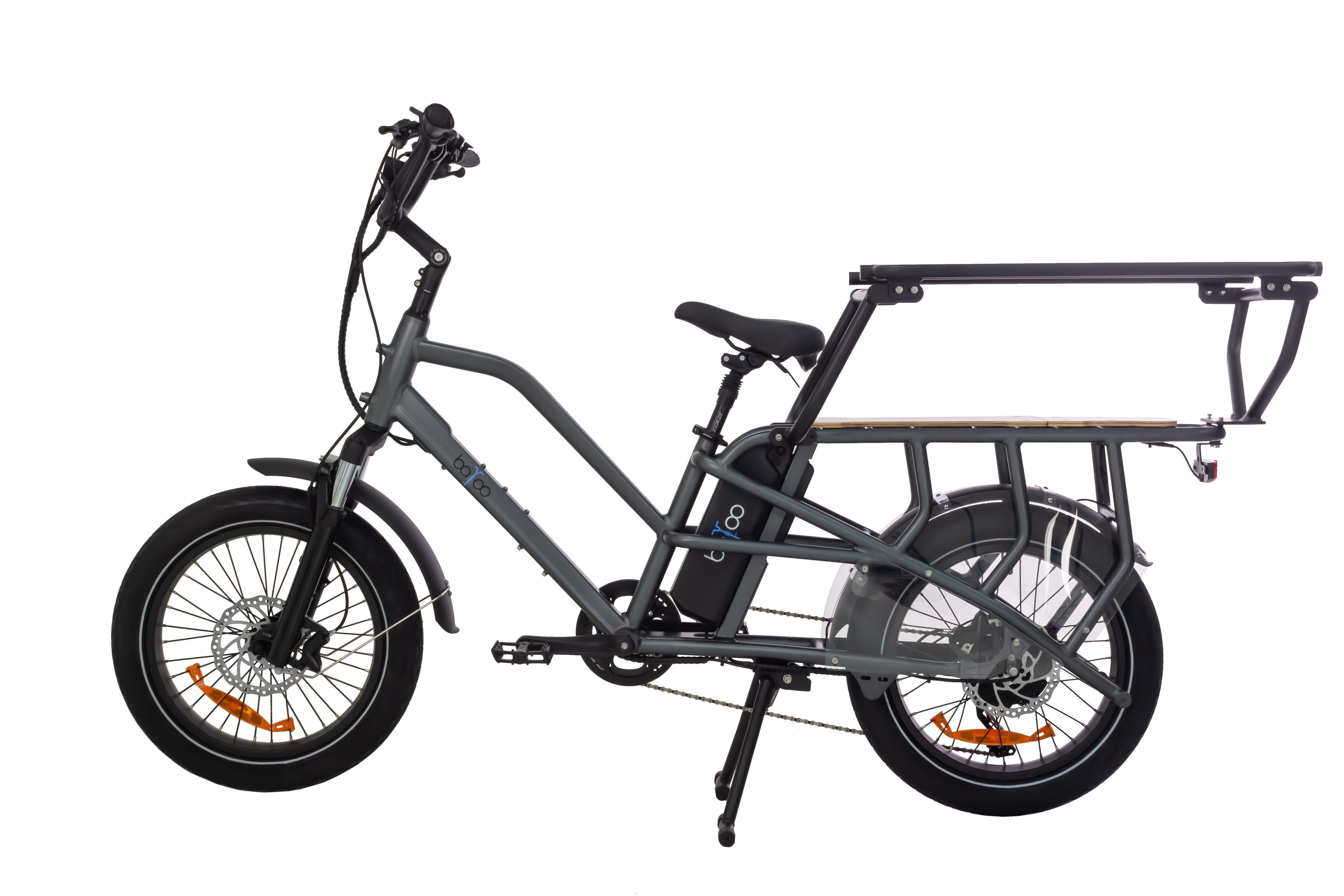
The removable battery changes a lot of things. It allows you to charge in an apartment, at the office, or in a more suitable place without moving the whole bike. This is particularly useful for people who live in apartment buildings, use a cargo bike, or park their bike in a shared space.
Its advantages are clear:
- easier charging in an apartment
- less need to bring the whole bike inside
- simpler storage in winter
- better battery management at work
- possibility of protecting the battery against cold or theft
But you also need to adopt some habits. The battery must be properly locked before riding, transported carefully, protected from shocks, and stored in a suitable place. A removable battery is practical, but it remains an expensive and sensitive component.
To learn more about lifespan and best practices, the BatooBike guide on lithium batteries for electric bikes complements this topic well.
What to do if you can't bring your bike home?

This is a common situation, especially with a cargo bike, speed bike, or a rather heavy e-bike. In this case, the first solution is to remove the battery if it is removable. You leave the bike correctly parked, then recharge the battery in the apartment.
If the battery is not removable, you need to find a charging solution near the parking spot. This could be a private garage, an outlet in a bike room, an authorized area in the building, or charging at the office. But in an apartment building, you should avoid improvising an extension cord in common areas or plugging in the bike without authorization.
Possible solutions:
| Problem | Preferred solution |
|---|---|
| Bike too heavy to bring inside | Removable battery |
| No outlet in bike room | Charge at the office or ask management for a solution |
| No authorization in the building | Charge only the battery in the apartment |
| Long daily commute | Keep a compatible charger at work |
| Very bulky cargo bike | Plan the charging location before purchase |
| Non-removable battery | Check access to an authorized outlet before choosing the model |
This point is important before purchasing. A very appealing electric bike can become inconvenient if you don't have a simple solution for charging it. For daily use, charging must be considered from the outset when choosing a bike, just like range or comfort.
Charging at the office or at home: what routine to adopt?
The best routine is one that avoids stress. You need to know where you charge, how long it takes, what margin you maintain, and what to do on days when you ride more than expected.
Here are three simple routines based on your usage:
| Usage | Recommended routine |
|---|---|
| Short urban commutes | Charge every 2 to 4 days depending on range |
| Average commute | Charge at home or office depending on margin |
| Long daily commute | Charge regularly and maintain a high margin |
| Speed bike or hilly commute | Plan for more frequent charging or a larger battery |
| Family use with cargo bike | Charge before busy days |
It is not always necessary to charge to 100%. For many uses, a comfortable margin is sufficient. However, if you are going for a long ride, a cold day, or a route with many hills, it is better to plan further ahead.
Mistakes to avoid
Charging is simple, but some mistakes are common:
- always waiting until the battery is almost empty
- using an incompatible charger
- leaving the charger plugged in permanently
- charging in a humid or cluttered area
- placing the battery near flammable materials
- forgetting to check that the battery is properly engaged before riding off
- improvising an extension cord in a building or at the office
- buying a bike without considering how it will be recharged
The biggest mistake is probably thinking about charging after purchase. For an electric bike used daily, charging should be planned from the start. This avoids a lot of frustration.
Conclusion
Charging your electric bike at the office or in an apartment is generally simple, provided you have a consistent routine. A standard outlet can be sufficient, especially with a removable battery, but a few basic rules must be followed: compatible charger, dry place, stable surface, ventilation, no flammable materials nearby, and unplugging after charging.
For an apartment, a removable battery is often the most practical solution. For the office, you first need to check internal rules and choose an authorized location. And if you cannot take your bike into your home, the solution must be considered before purchase: removable battery, equipped storage room, charging at work, or a different arrangement.
Ultimately, good charging isn't just about the outlet. It's about habit. The simpler your routine, the easier your electric bike becomes to use every day.
Final FAQ
Can you charge your electric bike in an apartment?
Yes, especially if the battery is removable. It should be charged in a dry, clear, stable, and well-ventilated area, using the charger designed for the battery. It is best to avoid damp areas, flammable surfaces, and overloaded power strips.
How long does it take to charge a battery?
The time depends on the battery capacity, the charger, and the remaining level. A full charge often takes several hours, generally around 3 to 6 hours depending on the system. A partial charge may be sufficient for a daily commute.
Should I charge after every ride?
No, not always. If the remaining range is more than sufficient for the next day, it's not necessary. However, you should avoid letting it drop to almost 0% too often, especially if you use the bike daily.
Can I leave the charger plugged in overnight?
It's best to avoid making it a habit. Even though modern systems manage the end of charging, it's preferable to unplug the charger and battery once charging is complete, and to charge in a suitable location.
What if you can't take your bike into your home?
If the battery is removable, remove it and charge it in the apartment. If it's not, you need to find an authorized outlet in the bike room, garage, or at the office. Avoid improvising an extension cord in common areas without permission.