When searching for a 50 km/h electric bike in Switzerland , you quickly come across powerful speed bikes, off-road models, or tutorials on how to "unlock" your e-bike. But there's a gap between marketing and legal reality. Under Swiss law, the official e-bike categories only cover speeds of 25 and 45 km/h, not 50.
An electric two-wheeler that travels at 50 km/h is no longer considered a simple electric bicycle. In most cases, it falls into the category of electric mopeds or motorcycles, requiring specific licenses, registration, and insurance. Understanding this distinction is essential before venturing out on a 50 km/h speed pedelec.
What the law in Switzerland says about the speed of electric bicycles
The official categories: 25 km/h and 45 km/h
Swiss legislation distinguishes three main categories of electric bicycles: "slow" e-bikes with assistance up to 25 km/h, "fast" e-bikes or speed pedelecs up to 45 km/h, and "heavy" electric bicycles (cargo bikes, etc.). All are legally classified as mopeds, with different regulations depending on the speed and motor power.
E-bikes with a top speed of 25 km/h remain the simplest solution for everyday use: no license plate, no sticker required for an adult, and regulations very similar to those for a regular bicycle. Conversely, a 45 km/h e-bike must be registered, display a yellow license plate, a third-party liability sticker, and be ridden with at least a category M license, with a helmet mandatory.
Above 45 km/h: we are no longer dealing with an “electric bike”
Swiss regulations and information sheets are clear: "fast" e-bikes are limited to 45 km/h of assistance and 1000 W of motor power. Anything faster or more powerful is considered a motorcycle.
In practical terms, a vehicle marketed as a 50 km/h speedbike is more accurately described as an electric motorcycle than an e-bike. It must therefore comply with motorcycle regulations (category L), requiring a suitable motorcycle license, full registration, and motorcycle insurance, not simply the 45 km/h e-bike regulations.
Are there electric bikes with a top speed of 50 km/h in Switzerland?

Electric bikes or electric motorcycles?
On some websites, you'll find vehicles described as "50 km/h electric bikes" or even 80 km/h. In reality, these are often disguised electric motorcycles or mopeds, sometimes without functional pedals, or off-road models not approved for road use. They belong to the same category as 50cc scooters or small motorcycles, not to the category of classic e-bikes.
If you want to ride on public roads in Switzerland with an electric handlebar and motor, the categories actually recognized by law remain the 25 km/h e-bike and the 45 km/h speed pedelec. An e-bike with a 50 km/h speed that is approved as a bicycle does not exist under standard legal conditions: beyond that, it's classified as a motorcycle.
The “50 km/h speedbikes” found online
Sometimes manufacturers or shops advertise a top speed of "50 km/h" to boost sales, but in the fine print, the technical specifications often state that the assistance is limited to 45 km/h and that a higher speed is only possible by pedaling hard or going downhill. In this case, it's not a legal 50 km/h e-bike , but a speed pedelec limited to 45 km/h as required by law. ( Mobygo Sàrl )
It's therefore important to distinguish between the theoretical top speed and the legally mandated assisted speed. What the police and insurance companies check isn't your 50 km/h downhill sprint, but the engine and assistance configuration.
Modified bicycle 50 km/h: the case of the unrestricted e-bike
A modified e-bike becomes a non-compliant vehicle
Many searches for "modified 50 km/h bike" lead to kits or tips for unlocking the speed limit of an e-bike to 25 or 45 km/h. Technically, this is often possible, but legally, it's a very bad idea. In Switzerland, as elsewhere, an unlocked e-bike that exceeds its intended speed or power is no longer compliant with its type approval. It becomes an unauthorized vehicle on public roads.
In practice, your e-bike is no longer considered a light or fast moped by the TCS or OFROU, but rather an unclassified vehicle. You're essentially riding a "fake" 50 km/h e-bike, without valid type approval, and without your insurance company or the police really knowing what they're dealing with.
Impact on insurance and liability
The biggest risk with an e-bike modified for 50 km/h is an accident. Most insurers specify that a modified vehicle falls outside the scope of the original contract: coverage may be refused, and liability insurance may not apply normally. Some insurers explain that in the event of modification, insurance may be canceled or the insurer may refuse to pay out, even if the premium has been paid.
If someone is injured, you could be held personally liable for the damages, potentially resulting in very high costs. Add to that the loss of the manufacturer's warranty on the bike, and accelerated wear and tear on the battery, motor, and brakes. For a few extra km/h, it's clearly not worth the risk.
What's the right choice if you want to drive fast but legally?

Speed pedelec 45 km/h: the realistic alternative to 50 km/h
If your goal is to replace a car for long commutes, the real solution is a 45 km/h speed pedelec . This is the officially recognized top category: assistance up to 45 km/h, yellow license plate, third-party liability sticker, M license and helmet required.
So you drive fast, but within a clear legal framework. The rules are summarized on the Confederation's website and by organizations like the TCS, which explain in detail the traffic conditions, the type of license and the required equipment.
Batoo 25 km/h e-bikes for everyday use
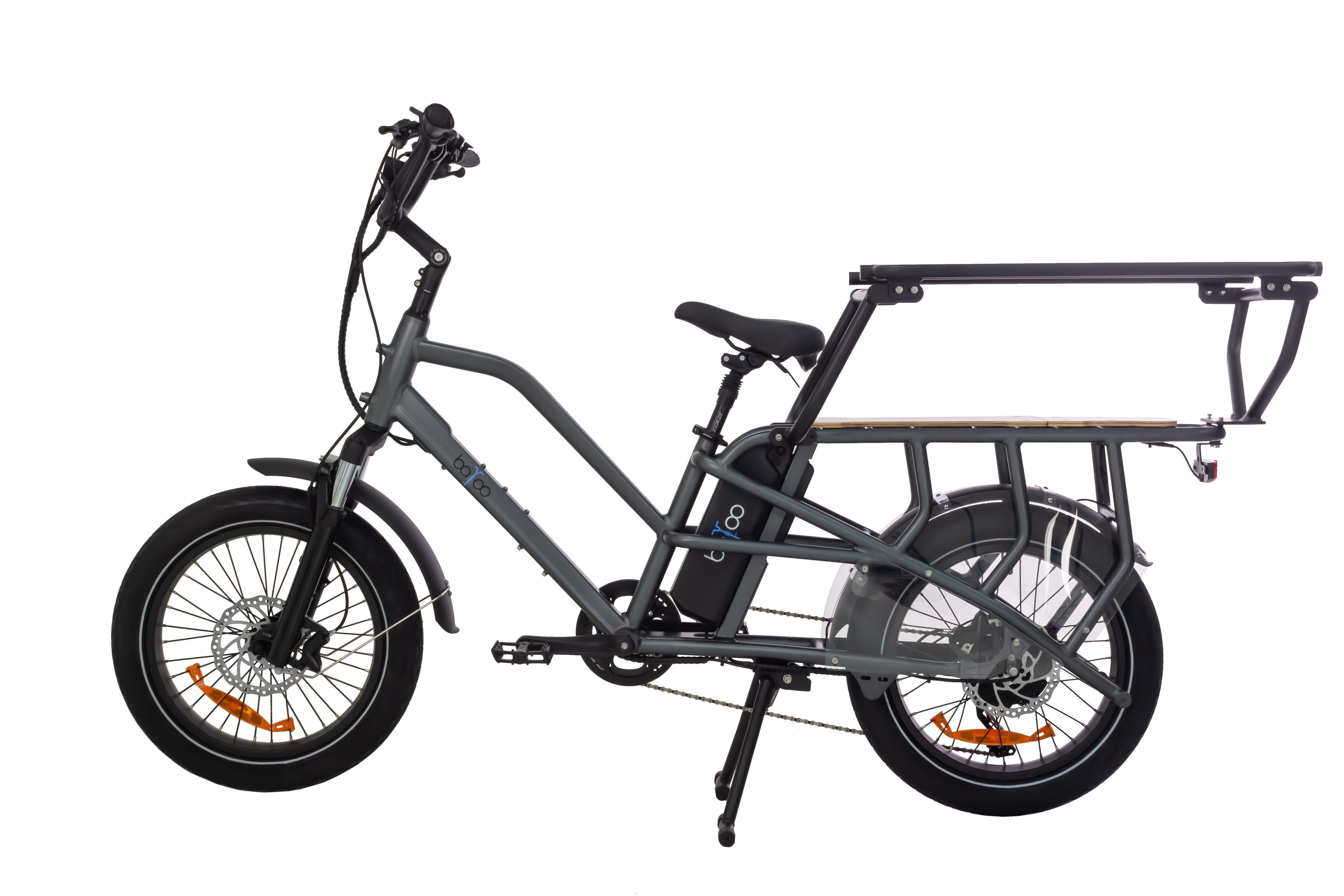
For most urban or suburban journeys, a 25 km/h e-bike is perfectly adequate and much easier to manage. At BatooBike, models like the NCM Paris or the NCM Moscow Plus are approved for use in Switzerland, limited to 25 km/h, and offer a comfortable range for commuting, shopping, and leisure.
By choosing a 25 km/h Batoo e-bike rather than a pseudo -speedbike capable of 50 km/h , you stay within a clear category, without administrative hassles, without speeding tickets for e-bikes, and with reasonable insurance and maintenance costs. To learn more about legal speeds, you can also consult the Batoo article "What is the maximum speed of an electric bike? " which summarizes the situation very well.
FAQ – Electric bikes with a top speed of 50 km/h in Switzerland
Are there electric bikes in Switzerland that can reach 50 km/h?
You can find vehicles capable of reaching 50 km/h, but these are no longer standard e-bikes. They are either electric motorcycles or scooters certified as such, speed pedelecs limited to 45 km/h of assistance, or modified bicycles that no longer comply with regulations. Swiss law officially regulates e-bikes up to 25 and 45 km/h, but not beyond.
Is an e-bike with a top speed of 50 km/h legal?
An electric two-wheeler capable of traveling at 50 km/h can be legal if it is registered as a moped or electric motorcycle, with the appropriate license, registration, and insurance. However, a bicycle presented as a simple e-bike but configured for 50 km/h assistance does not fall into the established categories and raises legal issues regarding its 50 km/h capability.
What rules apply to a modified electric bike capable of speeds up to 50 km/h?
A modified electric bike capable of 50 km/h is considered unrestricted. It no longer meets its original specifications, loses its status as a light or fast moped, and can be treated as a non-compliant vehicle. If stopped by the police, you risk a fine, and in the event of an accident, your insurance company may refuse to cover the damages.
What are the risks associated with using an e-bike modified for 50 km/h?
With a modified e-bike limited to 50 km/h , you expose yourself to several levels of risk: penalties for riding a non-compliant vehicle, lack of insurance coverage, personal liability in case of an accident, and loss of warranty on the bike. Added to this are the mechanical risks (brakes, frame, tires) which were not designed for these speeds.
Sources: